

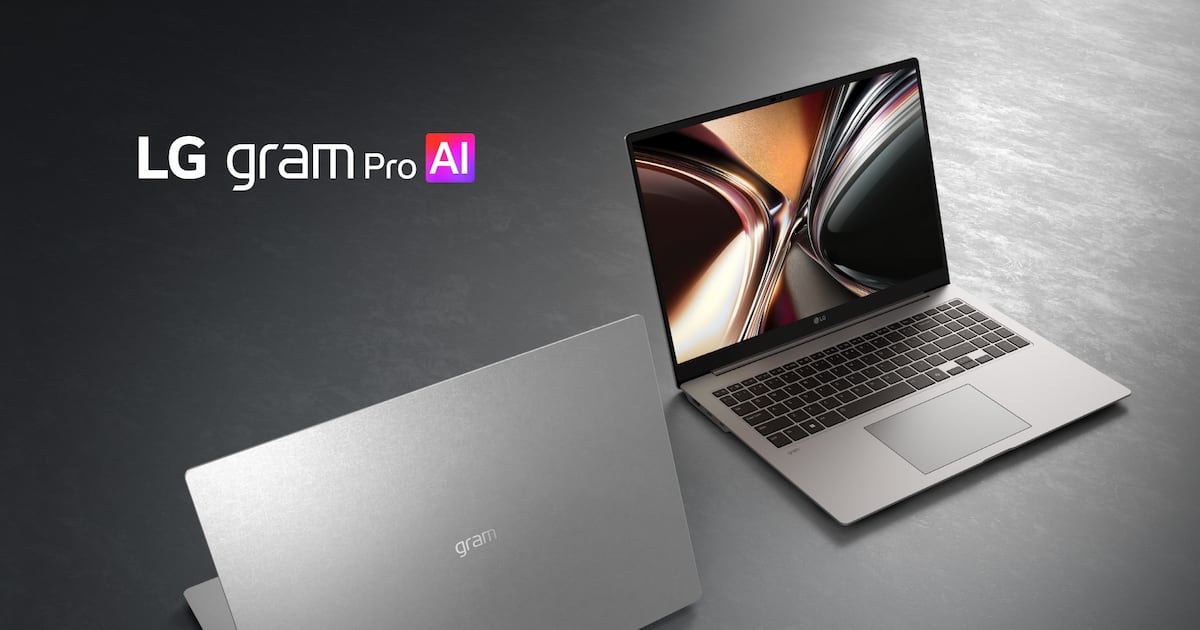
Weight Comparison
| Model | Weight (grams) | Screen Size |
|---|---|---|
| LG Gram Pro 16 (2026) | 1,199 | 16-inch |
| MacBook Air 15 (M4/M3) | 1,510 | 15-inch |
| MacBook Pro 14 (M5/M3) | 1,550-1,600 | 14-inch |
| MacBook Pro 16 (M3+) | 2,140-2,200 | 16-inch |
| Model | Weight (grams) | Screen Size |
|---|---|---|
| LG Gram Pro 16 (2026) | 1,199 | 16-inch |
| MacBook Air 15 (M4/M3) | 1,510 | 15-inch |
| MacBook Pro 14 (M5/M3) | 1,550-1,600 | 14-inch |
| MacBook Pro 16 (M3+) | 2,140-2,200 | 16-inch |
After 5y the 5900HS is still a compelling alternative to the M4.
If one would run a 2t cinebench vs 1t on the Apple silicon the 5900 would have competitive single core performance too. (Apple lacks SMT)
This is two nodes behind and with 2 cores less. If people stopped using geekbench for laptops and PCs, this stupid Apple narrative would go away. Apple makes great laptops but they aren’t the best and are arguably worse because they lock you into Apple’s commercial relationships with software providers. There’s HW acceleration for Adobe software but none for D’Assault software or Siemens software. Apple is the machine for the dilletante, and because most content creators are dilletantes, the message that passes is Apple centric. If Apple and Apple users were to evaporate, the world would carry on as usual, if linux machines would disappear overnight it would be utter chaos.
In multithreaded, yes, it gets close using 16 threads. Which of course is what matters if your application can make full use of all 16 threads, but that’s uncommon sadly. I’d argue that even the 10 threads of the M4 at full load are an unrealistic workload. Most applications are not embarrassingly parallel.
Single threaded, it loses to the M1 which was available in the Macbook Air, a significantly cheaper laptop than the G14.
It would be a completely useless benchmark. The entire reason single threaded performance is tested is for applications that run most or all of their workload in a single thread. Which unfortunately is still pretty common even today, and for many applications isn’t really a problem that could feasibly be solved.
For applications that aren’t embarrassingly parallel, but also aren’t fully single threaded, the truth lies somewhere between the single threaded benchmark (in which the 5900HS isn’t very good) and the multi threaded (in which the 5900HS IS very good).
If you’re going to sing the 5900HS’s praises, maybe mention the fact that in multithreaded Cinebench, it (barely, but still) beats out the M1 Max, which was a MONSTER of a CPU for its time, it was such an improvment over the core i9 in the previous 16" MBP that it wasn’t even funny. Unlike the M4, it was also only available in a much more expensive laptop than the G14.
If you go current gen, the R9 270/8945HS in the G14 still loses to the M4 in single thread. And the M4 Air is 1000 euros cheaper than the G14 where I live. AMD wins in the multi core, but once you get to the M4 Pro you can have in a laptop that has a similar price (just a little bit more expensive) to the G14, Apple wins in multi core too. Also the M4 is getting on in age, you can now get the M5 in a Macbook Pro for a bit less than a G14. Sadly it’ll be a few more months till we can get it in the Air.
TL;DR: Comparing same generation, Apple’s cheapest CPU has a lower multi core Cinebench score than AMD’s highest, but higher single core. Go up in price and Apple has higher multi core too. Cross-gen comparisons are pointless. This all falls apart if you prioritize GPU over CPU, in which case you should stay far away from Apple.
FYI, Ryzen 9 270 is last gen, anyways:
Here’s a nice link to the passmark forum. You can clearly see a deranged Apple fanboy that has difficulty grasping anecdote is not the singular of data.
Back on topic:
The M4 air lets you run console and a bunch of daily tasks well enough, however, it really isn’t a work machine. It’s an iPad pro with a keyboard. Apple has troves of data on what the people who buy their HW do so they adapt fixed function for HW acceleration as needed. The single threaded benches are also wildly misleading as if you try to edit music on an Air you’ll be pulling your hair out due to latency on the “best single threaded portable CPU” due to thermal constraints (and yes, I know RTINGS recommends Apple for music production, sadly, they don’t really test latency propper, especially for music production). Run Izotope Ozone 10 with some oversampling and curse your life for going with Apple. Oh, and if you want to do anything remotely useful, get ready to shell out some extra money for RAM and storage that brings the price of the air up to par with the G14…
Apple laptops are Veblen goods, the battery life is great, when using popular software it works well (Adobe 🤮🤮🤢🤮🤮) but even Apple finds the M4 so underwhelming it had to compare it to the M1 instead of M3.
Given its age, the 5900HS has no place being as competitve with the M4 10core as it is, and yet, here we are.
The Ryzen 9 270 is what’s currently in the G14 much like the M4 is last gen but it’s what’s currently in the Air.
Apple compares the M4 to the M1 because the M1 is so good most M1 users don’t see a reason to upgrade yet unless they have the 8 GB model. I’m not even joking. People are still debating whether to upgrade from the M1 to the M5. Apple Silicon made their laptops so good there was no longer need to upgrade every 5 years like with Intel in the past.
I think you just have a chip on your shoulder. If you’re looking for a work machine, why are we talking about the cheap base model CPU? You should be comparing to the M1 Pro. Not the Max, since that’s more expensive, but the Pro is an apt comparison.
That’s for the cheaper GA403U models, the GA403W models have the 370.
Apple compared the M4 with the M1 because the M3 beats the M4 in several scenarios, especially in comparable SKUs where the M4 downgrades memory bandwidth. Now, of course, I could be a fanboy and preach that it’s because the M1 is so good.
I think you need this since you start resorting to ad hominem.
So for comparing to Apple, I shouldn’t be using the model that’s only 1000 euros more expensive than Apple, but rather one that’s even more expensive than that?
I think you can see where the comparison falls apart then.
You can get a 5900HS G14 today for 800€
You can get an M1 Air for like 300 used. For 800 you should be able to get an M3 with warranty. Either one is a faster CPU than the 5900HS in single threaded perf and the M3 is faster in multi as well.
I just don’t see the value proposition of the G14. But that’s because I have a desktop so the GPU on a laptop is useless for me. Like I said in a previous comment, economics change if you have use for a GPU.