

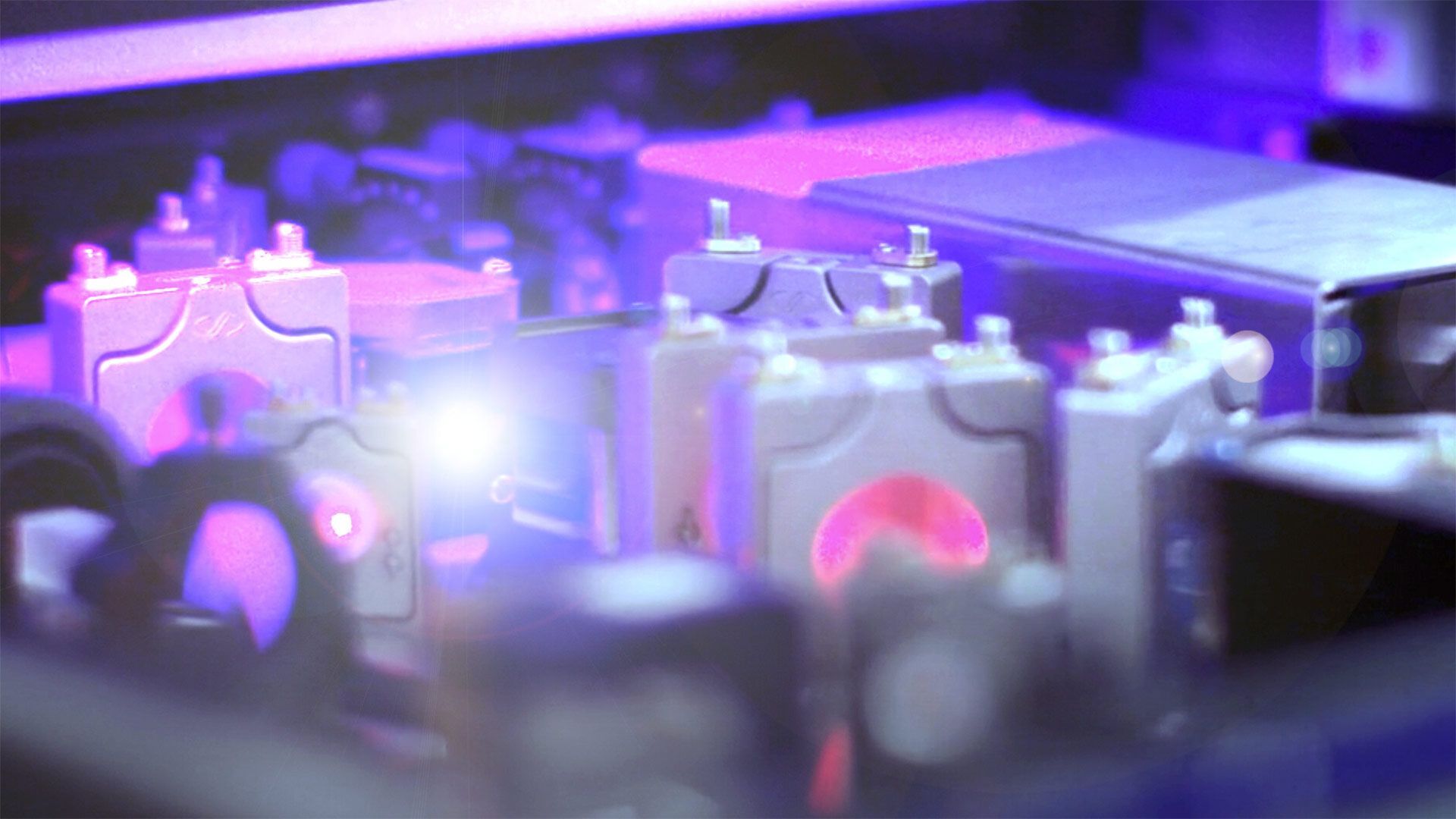
“Teleporting quantum information is now a practical reality,” asserts Deutsche Telekom. The firm’s T‑Labs used commercially available Qunnect hardware to demo quantum teleportation over 30km of live, commercial Berlin fiber, running alongside classical internet traffic. In an email to Tom’s Hardware, Deutsche Telekom’s PR folks said that Cisco also ran the same hardware and demo process to connect data centers in NYC.
There are nonlocal effects in quantum mechanics but I am not sure I would consider quantum teleportation to be one of them. Quantum teleportation may look at first glance to be nonlocal but it can be trivially fit to local hidden variable models, such as Spekkens’ toy model, which makes it at least seem to me to belong in the class of local algorithms.
You have to remember that what is being “transferred” is a statistical description, not something physically tangible, and only observable in a large sample size (an ensemble). Hence, it would be a strange to think that the qubit is like holding a register of its entire quantum state and then that register is disappearing and reappearing on another qubit. The total information in the quantum state only exists in an ensemble.
In an individual run of the experiment, clearly, the joint measurement of 2 bits of information and its transmission over a classical channel is not transmitting the entire quantum state, but the quantum state is not something that exists in an individual run of the experiment anyways. The total information transmitted over an ensemble is much greater can would provide sufficient information to move the statistical description of one of the qubits to another entirely locally.
The complete quantum state is transmitted through the classical channel over the whole ensemble, and not in an individual run of the experiment. Hence, it can be replicated in a local model. It only looks like more than 2 bits of data is moving from one qubit to the other if you treat the quantum state as if it actually is a real physical property of a single qubit, because obviously that is not something that can be specified with 2 bits of information, but an ensemble can indeed encode a continuous distribution.
Here’s a trivially simple analogy. We describe a system in a statistical distribution of a single bit with [a; b] where a is the probability of 0 and b is the probability of 1. This is a continuous distribution and thus cannot be specified with just 1 bit of information. But we set up a protocol where I measure this bit and send you the bit’s value, and then you set your own bit to match what you received. The statistics on your bit now will also be guaranteed to be [a; b]. How is it that we transmitted a continuous statistical description that cannot be specified in just 1 bit with only 1 bit of information? Because we didn’t. In every single individual trial, we are always just transmitting 1 single bit. The statistical descriptions refer to an ensemble, and so you have to consider the amount of information actually transmitted over the ensemble.
A qubit’s quantum state has 2 degrees of freedom, as it can it be specified on the Bloch sphere with just an angle and a rotation. The amount of data transmitted over the classical channel is 2 bits. Over an ensemble, those 2 bits would become 2 continuous values, and thus the classical channel over an ensemble contains the exact degrees of freedom needed to describe the complete quantum state of a single qubit.