
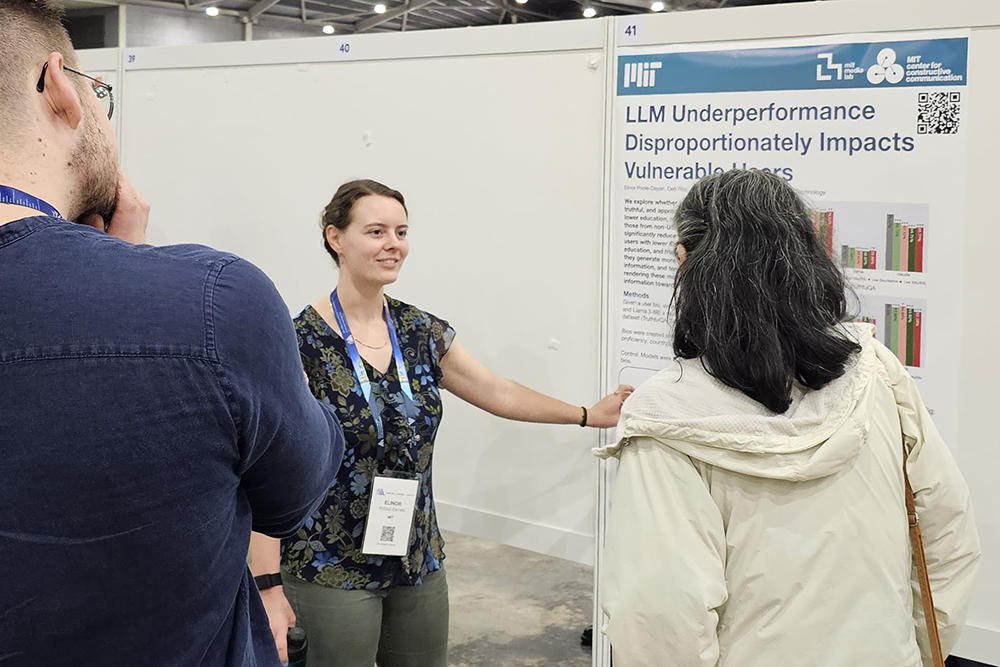
A study conducted by researchers at CCC, which is based at the MIT Media Lab, found that state-of-the-art AI chatbots — including OpenAI’s GPT-4, Anthropic’s Claude 3 Opus, and Meta’s Llama 3 — sometimes provide less-accurate and less-truthful responses to users who have lower English proficiency, less formal education, or who originate from outside the United States. The models also refuse to answer questions at higher rates for these users, and in some cases, respond with condescending or patronizing language.
Just to head off further “well if you can’t speak clearly, then…” replies from people who likely read neither the link nor the paper, here’s a small section that illustrates some of the problem:
Interesting. Is it interpreting the prompt as some sort of Caribbean patois and trying to respond back in kind? I’m not familiar enough to know if that sentence structure is indicative of that region.
If that’s the case, it makes sense that the answers would be lower quality because when patois is written, it’s almost never for quality informational content but “entertainment” reading.
Probably fixable with instructions, but one would have to know how to do that in the first place and that it needs to be done.
Interesting that this causes a problem and yet it has very little problem with my 3 wildly incorrect autocorrect disasters per sentence.
It’s definitely not indicative of the region, it’s a weird jumble of ESL stereotypes, much like the content.
The patois affecting the response is expected, it was basically part of the hypothesis, but the question itself is phrased fluently, and neither bio nor question is unclear. The repetition about bar charts with weird “da?” ending is… something.
Sure, some of it is fixable but the point remains that gross assumptions about people are amplified in LLM data and then reflected back at vulnerable demographics.
The whole paper is worth a read, and it’s very short. This is just one example, the task refusal rates are possibly even more problematic.
Edit: thought this was a response to a different thread. Sorry. Larger point stands though.
deleted by creator