If loot boxes are illegal then send Valve a cease and desist for selling games that have loot boxes and be done with it.
Because you can do the same thing by buying the required hardware from any of those companies and selling it with the digital items on it for cash. That’s not really supposed to be allowed (plenty of companies including steam do crack down on selling accounts). But while I agree that lot boxes are gambling there really needs to be a hard line that doesn’t require the ability to convert assets to cash. Otherwise the loot box problem will persist and we will have shittier resulting services with no real added benefit.
People were selling animal crossing residents on eBay. People have been selling accounts for things like WOW and Call of Duty. I believe there was even a market for Destiny accounts at one point.
By NY’s definition of gambling, buying a pack of Pokemon cards is gambling.
Or, alternatively, sue the game developers themselves. Because I note they aren’t suing Xbox, Nintendo, or PlayStation.
This lawsuit is targeting Valve not because they are a platform or storefront that provides games with gambling, but rather is due to gambling in games that they themselves have developed. From the first line in the article:
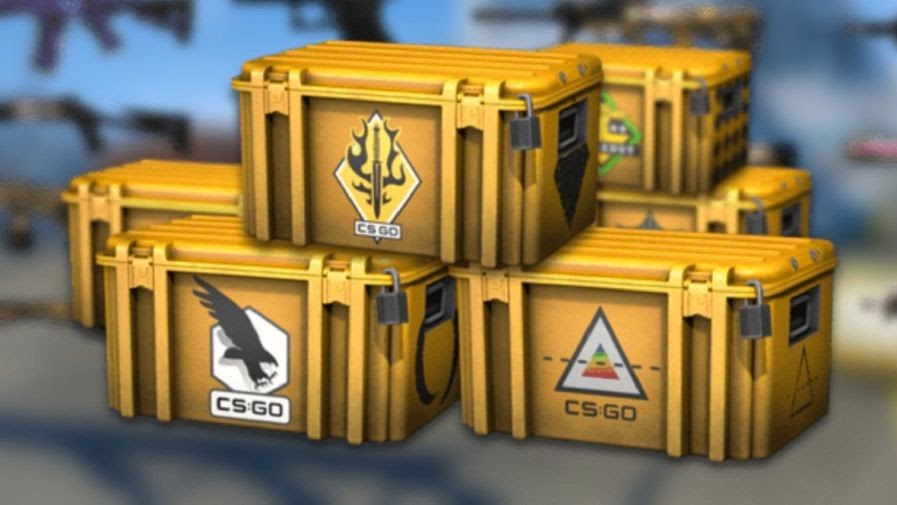
New York state has filed a lawsuit against Valve alleging that randomized loot boxes in games like Counter-Strike 2, Team Fortress 2, and Dota 2 amount to a form of unregulated gambling, letting users “pay for the chance to win a rare virtual item of significant monetary value.”
The suit is not claiming that lootboxes are gambling in and of themselves, it’s claiming that the lootboxes in valve’s own games counts as gambling because you can sell the items for steam wallet funds through the steam community market, which can then be converted into cash via multiple methods, most notably by purchasing a steam deck with wallet funds and then selling the steam deck for cash, which is not against any laws or steam’s terms of service.
Personally, I agree that the line needs to be drawn more strictly than just requiring the possibility of converting the winnings into cash, and that lootboxes are predatory regardless. But this case isn’t about lootboxes in general, it’s about the very real problem of valve actively enabling and encouraging gambling with actual monetary value. We can’t easily change the laws, but valve is (allegedly) breaking the laws as they already exist.
It’s particularly the bit about buying a steam deck, loading it with the high price items, and selling it that I latched onto when I read the article.
Specifically that’s important because that’s literally something you can do with any system and more importantly with any account. You don’t even need to load up and sell a steam deck, you absolutely can just sell the steam account.
If this is simply about providing a marketplace for loot box goods on where you can convert those assets easily to real world currency then that’s different. I still don’t agree that it should eliminate loot boxes from being gambling (because that’s exactly what it is), but I do understand why they might consider the steam asset market as part of a casino or similar.
I don’t play the types of games that give out loot boxes like that, and my only experience with the asset market is the trading cards you can get by playing some games. Those strike me as very similar to Pokemon cards and TCG has already got a “black market” going on for those.
I would definitely argue that it’s telling that they even mention children in this lawsuit. Because honestly, there’s lots of games that are for children that include the loot box mechanic (not even just digital games but trading cards), and nothing has been done about reselling assets from those.
The root of the problem is that the loot box assets can be purchased instead of just traded (within the limits of the law), and so I’d wager that should be the change Valve makes.
I still think they should just make the loot boxes illegal if we’re doing this.
the main argument seems to be not that steam has games with loot boxes in them, but that steam allows people to exchange the assets for steam wallet cash, which allows people to buy real products (games AND hardware), so it is equivalent to money. And steam is obviously enabling that system. as far as i know, xbox, nintendo and playstation don’t have that in their systems
(also, NY argues that valve knew about and did not enough to stop third-party marketplaces that work with real money, based on internal communications, which might not be the same (or just be harder to prove) for the other companies)
Their argument is just “this is gambling, gambling is illegal in ny”
But it is also “you should be doing more to prevent this, this is your responsibility”
But then also "you let kids gamble*
And then sort of ALSO “therefore, you’re evil and all of your profits are ill begotten and you’ve built an industry around 100% preying on gambling for children and circumventing our moral highground laws that outlaw sin”
So, just based on the first one, yeah, guilty.
The second one, maybe. Requiring Valve to do all that suddenly would be a massive undertaking. I’d be curious to see what they could turn out. They’d go from game devs, to store owners, to a small government.
Letting kids gamble though… Like, this is such bullshit. Fuck off with that nonsense. This is unfair targeting on THAT issue. For what’s actually happening everywhere, this is such a targeted and unreasonable change of expectation of consequence. Yeah it has to happen somewhere, but can it happen to fucking EA instead? Or even Pokemon. Do it to the TCG market or the console market. Why the PC market’s best platform? Not muh boy Gaben. He’s been so good to us all. OUR LORD AND SAVIORRRRRRRRRR
I’m curious to see what happens though. If Valve does lose, I hope things change for the better and not for the worse. I wonder what the Trump admin and other Nazi benefactors and idealists want. Probably to see Valve fall.
I’m not necessarily bothered that it happened to Valve. I honestly do see the other commenters point about the secondary market Valve runs as part of their platform.
On the other hand though I’m almost certain that WoW has basically the same thing (I’ve never actually played WOW, so I can’t be 100% positive), and if literally the only problem is them running the secondary market, the lawsuit makes more sense.
But the fact that they included selling hardware to sell the digital assets makes me suspect that they don’t know you could essentially do the same thing with a switch or PlayStation and that’s wild to me.
They didn’t memtion selling hardware as a way of selling digital assets. They included selling hardware as a way to convert the digital currency in steam wallet to real cash. The process of “selling skin in marketplace -> use those funds to buy a steam deck -> selling the deck for cash” is straightforward, and all allowed by valve.
Other platforms have people circumventing the rules and restrictions in order to sell digital assets for cash. In steam, they are included and supported by valve (and valve profits immensely from it, by selling the keys and getting a cut of most sales)
I haven’t played wow in like 15 years, so I don’t know either.
I do know that many other games have this system, some worse. I get the issue where you can get your money back out being actually a draw for people who could see it at profitable, that’s a helllllla dark pattern.
I don’t think Valve runs any of the third party platforms though. They only run the Steam marketplace, to my knowledge. I refuse to gamble on CS2 skins though, it goes against my values.
Being able to launder assets into money, while potentially being a draw (“wow, if I spend $20, I could make $1,000,000!”), seems really fucking obtuse as soon as you realize that it’s through buying sold out steam decks or valve indexes. If that is happening though, I wish it wouldn’t, because that encourages scalping.
I proposed a system for cs2 in a different thread:
You only get so many crates per week or hour played or whatever, and those crates are free to open and random. But, you can buy keys for specific crates where you can manually choose what you get out of said crate. The profits for that crate is split between the different skins in that crate, with more percentage going to the skin maker of the skin you chose.
I do think, if gambling is to be allowed anywhere, it should only be in places that can verify age; just like alcohol delivery services. But, given the trend of using age verification as an inroad for data collection and Palentir spying, I mostly think of that requirement as a jury-rigged guillotine for the casino, or for the loot boxes. Either get rid of gambling, or set up a monolithic roadblock to users. I’d be appalled if Valve were somehow required to collect drivers’ licenses of people playing Dark Souls.
But the argument as to why valve is enabling gambling and other companies that also have lootboxes arent relies on that the skins in valve’s games have monetary value that is both directly influenced by valve (by making some skins rare), that players open loot boxes in hopes of getting the rare skins (because the common skins can be bought in steam’s marketplace for cents) and that the skins can be exchanged for real money (either by buying hardware with steam wallet cash and selling it, or in the third party marketplaces that valve allows, protect and promotes (yes, valve has closed accounts of some third party marketplaces, but only those with gambling. The ones that just allow buying and selling for cash are explicitly protected by valve, as shown in the filing).
I do agree that the children argument is weird. Gambling in illegal in ny for all, not just children


If loot boxes are illegal then send Valve a cease and desist for selling games that have loot boxes and be done with it.
Because you can do the same thing by buying the required hardware from any of those companies and selling it with the digital items on it for cash. That’s not really supposed to be allowed (plenty of companies including steam do crack down on selling accounts). But while I agree that lot boxes are gambling there really needs to be a hard line that doesn’t require the ability to convert assets to cash. Otherwise the loot box problem will persist and we will have shittier resulting services with no real added benefit.
People were selling animal crossing residents on eBay. People have been selling accounts for things like WOW and Call of Duty. I believe there was even a market for Destiny accounts at one point.
By NY’s definition of gambling, buying a pack of Pokemon cards is gambling.
Or, alternatively, sue the game developers themselves. Because I note they aren’t suing Xbox, Nintendo, or PlayStation.
This lawsuit is targeting Valve not because they are a platform or storefront that provides games with gambling, but rather is due to gambling in games that they themselves have developed. From the first line in the article:
The suit is not claiming that lootboxes are gambling in and of themselves, it’s claiming that the lootboxes in valve’s own games counts as gambling because you can sell the items for steam wallet funds through the steam community market, which can then be converted into cash via multiple methods, most notably by purchasing a steam deck with wallet funds and then selling the steam deck for cash, which is not against any laws or steam’s terms of service.
Personally, I agree that the line needs to be drawn more strictly than just requiring the possibility of converting the winnings into cash, and that lootboxes are predatory regardless. But this case isn’t about lootboxes in general, it’s about the very real problem of valve actively enabling and encouraging gambling with actual monetary value. We can’t easily change the laws, but valve is (allegedly) breaking the laws as they already exist.
Well…
You can use your steam wallet money to buy DDR5 RAM and HDDs!
Yeah this would include WoW because drops are randomized and you can sell them and cash out with tokens.
It’s particularly the bit about buying a steam deck, loading it with the high price items, and selling it that I latched onto when I read the article.
Specifically that’s important because that’s literally something you can do with any system and more importantly with any account. You don’t even need to load up and sell a steam deck, you absolutely can just sell the steam account.
If this is simply about providing a marketplace for loot box goods on where you can convert those assets easily to real world currency then that’s different. I still don’t agree that it should eliminate loot boxes from being gambling (because that’s exactly what it is), but I do understand why they might consider the steam asset market as part of a casino or similar.
I don’t play the types of games that give out loot boxes like that, and my only experience with the asset market is the trading cards you can get by playing some games. Those strike me as very similar to Pokemon cards and TCG has already got a “black market” going on for those.
https://www.ign.com/articles/pokmon-tcg-pocket-trading-has-spurred-a-strange-black-market-for-high-rarity-cards
I would definitely argue that it’s telling that they even mention children in this lawsuit. Because honestly, there’s lots of games that are for children that include the loot box mechanic (not even just digital games but trading cards), and nothing has been done about reselling assets from those.
The root of the problem is that the loot box assets can be purchased instead of just traded (within the limits of the law), and so I’d wager that should be the change Valve makes.
I still think they should just make the loot boxes illegal if we’re doing this.
the main argument seems to be not that steam has games with loot boxes in them, but that steam allows people to exchange the assets for steam wallet cash, which allows people to buy real products (games AND hardware), so it is equivalent to money. And steam is obviously enabling that system. as far as i know, xbox, nintendo and playstation don’t have that in their systems
(also, NY argues that valve knew about and did not enough to stop third-party marketplaces that work with real money, based on internal communications, which might not be the same (or just be harder to prove) for the other companies)
Their argument is just “this is gambling, gambling is illegal in ny”
But it is also “you should be doing more to prevent this, this is your responsibility”
But then also "you let kids gamble*
And then sort of ALSO “therefore, you’re evil and all of your profits are ill begotten and you’ve built an industry around 100% preying on gambling for children and circumventing our moral highground laws that outlaw sin”
So, just based on the first one, yeah, guilty.
The second one, maybe. Requiring Valve to do all that suddenly would be a massive undertaking. I’d be curious to see what they could turn out. They’d go from game devs, to store owners, to a small government.
Letting kids gamble though… Like, this is such bullshit. Fuck off with that nonsense. This is unfair targeting on THAT issue. For what’s actually happening everywhere, this is such a targeted and unreasonable change of expectation of consequence. Yeah it has to happen somewhere, but can it happen to fucking EA instead? Or even Pokemon. Do it to the TCG market or the console market. Why the PC market’s best platform? Not muh boy Gaben. He’s been so good to us all. OUR LORD AND SAVIORRRRRRRRRR
I’m curious to see what happens though. If Valve does lose, I hope things change for the better and not for the worse. I wonder what the Trump admin and other Nazi benefactors and idealists want. Probably to see Valve fall.
I’m not necessarily bothered that it happened to Valve. I honestly do see the other commenters point about the secondary market Valve runs as part of their platform.
On the other hand though I’m almost certain that WoW has basically the same thing (I’ve never actually played WOW, so I can’t be 100% positive), and if literally the only problem is them running the secondary market, the lawsuit makes more sense.
But the fact that they included selling hardware to sell the digital assets makes me suspect that they don’t know you could essentially do the same thing with a switch or PlayStation and that’s wild to me.
They didn’t memtion selling hardware as a way of selling digital assets. They included selling hardware as a way to convert the digital currency in steam wallet to real cash. The process of “selling skin in marketplace -> use those funds to buy a steam deck -> selling the deck for cash” is straightforward, and all allowed by valve.
Other platforms have people circumventing the rules and restrictions in order to sell digital assets for cash. In steam, they are included and supported by valve (and valve profits immensely from it, by selling the keys and getting a cut of most sales)
I haven’t played wow in like 15 years, so I don’t know either.
I do know that many other games have this system, some worse. I get the issue where you can get your money back out being actually a draw for people who could see it at profitable, that’s a helllllla dark pattern.
I don’t think Valve runs any of the third party platforms though. They only run the Steam marketplace, to my knowledge. I refuse to gamble on CS2 skins though, it goes against my values.
Being able to launder assets into money, while potentially being a draw (“wow, if I spend $20, I could make $1,000,000!”), seems really fucking obtuse as soon as you realize that it’s through buying sold out steam decks or valve indexes. If that is happening though, I wish it wouldn’t, because that encourages scalping.
I proposed a system for cs2 in a different thread:
You only get so many crates per week or hour played or whatever, and those crates are free to open and random. But, you can buy keys for specific crates where you can manually choose what you get out of said crate. The profits for that crate is split between the different skins in that crate, with more percentage going to the skin maker of the skin you chose.
I do think, if gambling is to be allowed anywhere, it should only be in places that can verify age; just like alcohol delivery services. But, given the trend of using age verification as an inroad for data collection and Palentir spying, I mostly think of that requirement as a jury-rigged guillotine for the casino, or for the loot boxes. Either get rid of gambling, or set up a monolithic roadblock to users. I’d be appalled if Valve were somehow required to collect drivers’ licenses of people playing Dark Souls.
But the argument as to why valve is enabling gambling and other companies that also have lootboxes arent relies on that the skins in valve’s games have monetary value that is both directly influenced by valve (by making some skins rare), that players open loot boxes in hopes of getting the rare skins (because the common skins can be bought in steam’s marketplace for cents) and that the skins can be exchanged for real money (either by buying hardware with steam wallet cash and selling it, or in the third party marketplaces that valve allows, protect and promotes (yes, valve has closed accounts of some third party marketplaces, but only those with gambling. The ones that just allow buying and selling for cash are explicitly protected by valve, as shown in the filing).
I do agree that the children argument is weird. Gambling in illegal in ny for all, not just children