
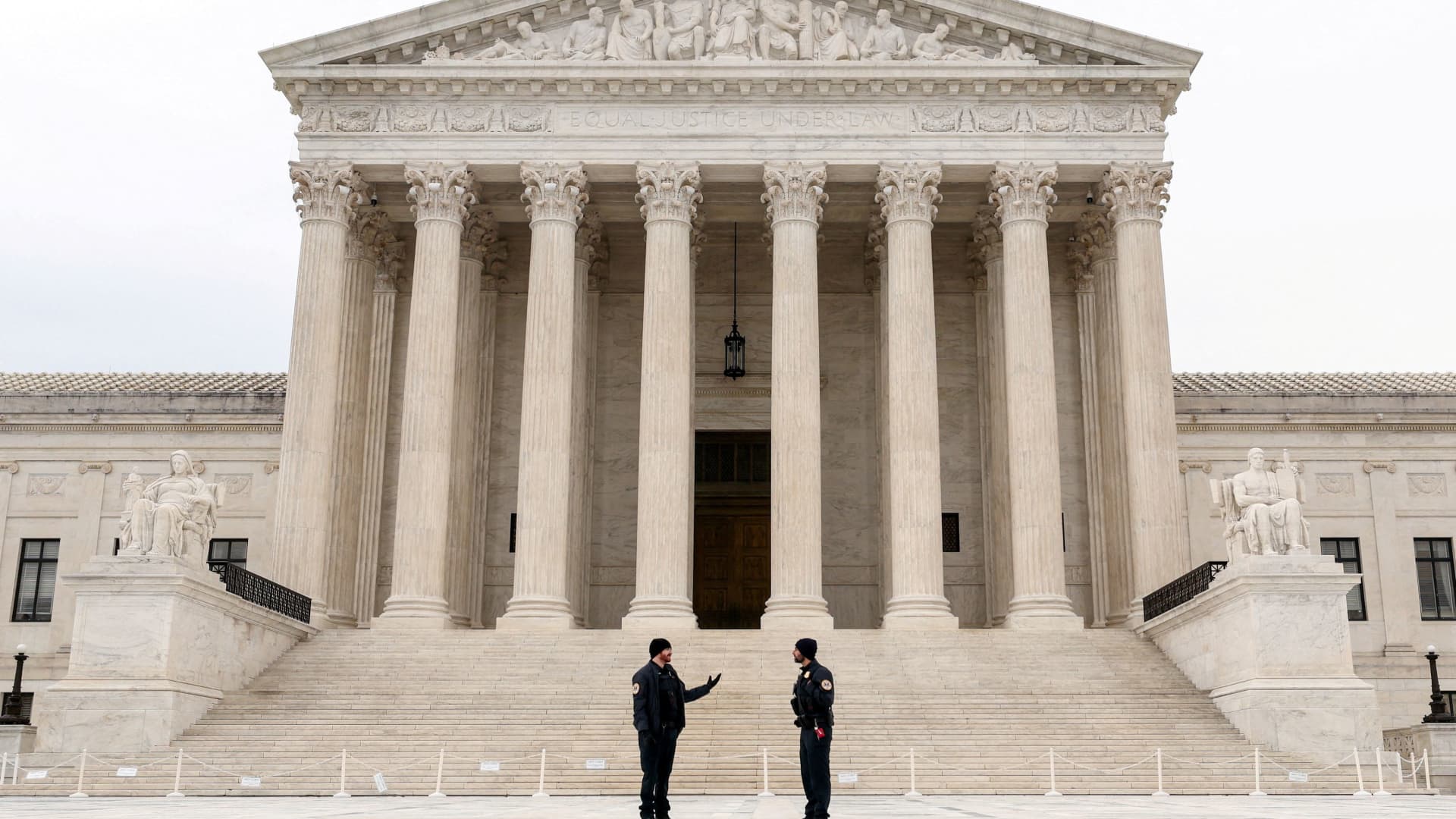
The U.S. Supreme Court declined on Monday to take up the issue of whether art generated by artificial intelligence can be copyrighted under U.S. law, turning away a case involving a computer scientist from Missouri who was denied a copyright for a piece of visual art made by his AI system.
Plaintiff Stephen Thaler had appealed to the justices after lower courts upheld a U.S. Copyright Office decision that the AI-crafted visual art at issue in the case was ineligible for copyright protection because it did not have a human creator.
Thaler, of St. Charles, Missouri, applied for a federal copyright registration in 2018 covering “A Recent Entrance to Paradise,” visual art he said his AI technology “DABUS” created. The image shows train tracks entering a portal, surrounded by what appears to be green and purple plant imagery.
The Copyright Office rejected his application in 2022, finding that creative works must have human authors to be eligible to receive a copyright. U.S. President Donald Trump’s administration had urged the Supreme Court not to hear Thaler’s appeal.
I don’t know how to write code myself, but intuitively it seems a little different in this case.
When it comes to photography, I can show the original unedited RAW file with full resolution and full metadata and everyone else just has a lower-resolution JPG. The same thing applies to most digital art.
Can you, though? What if you didn’t save it?
This is how you get a reputation as being a troll, FaceDeer
Says the guy who follows me around and dredges through months of my Reddit history looking for vaguely relevant comments to try to play “gotcha” with.
You could just block me, you know.