highlights the real reason so much money has gone into FDM processes.
That’s really a stretch. Fdm printing was held back for decades because of patents. If militaries/governments actually knew what it was worth they would’ve worked to fix that a lot quicker.
More likely is that fdm printing became so popular because of how easy it is to make a cheap printer and how useful a tool it is for, frankly, most anything. Weapons are only a small slice of what a good printer can actually do.
Of note, the reaction to having 3d printers capable of making weapon parts has resulted in legislation to limit 3d printer access, not to expand it.
Additive manufacturing (of which FDM is one of the most accessible techniques) has been a MASSIVE funding source amongst world governments over the past 20+ years. And much of the research that made Reprap (et al) came out of scientists who specialized in those technologies for those grants.
Why? Because NO country is ready for a war. The US military is the most bloated military on the planet and Iran (and supporting Ukraine prior) has made it clear that we are desperately terrified of actually using our stockpiles.
Because, as Ukraine has reminded us, basically EVERYTHING is a consumable. The numbers get murky and depressing but I want to say I saw reports that small arms had a lifespan of less than a year under heavy use (either lost due to casualties or just degraded to the point that full replacement parts become a need). And if you roll back to the last time there was such mass industrialization to support war efforts… it is basically WW2. And there is a reason the guns in 1939 had wood furniture and were “built to last” and the guns in 1944 were basically stamped sheet metal where you were more likely to die of tetanus than lead poisoning (I mostly kid).
So what does that have to do with additive manufacturing? Because the push to convert factories meant basically ANYTHING with a lathe or even an early CNC machine were required and the only way to convert those factories involved incredibly expensive processes as essentially the entire floor was rebuilt and restructured to shift from cars to tanks or saxophones to stens.
Whereas additive manufacturing? Regardless of process, the Dream is that you just upload a new STL file and that gets you 90% of the way there. You still need to do some reconfiguring for finishing processes but it is MUCH MUCH MUCH cheaper. And, in theory, you can have the same factory output tank, jet, boat, and gun parts depending on the need.
And… from a homefront defense perspective, you can have hitler youth groups or resistance fighters making a lot of their own replacement parts in a closet rather than an automotive garage. Let alone print farms. Need a new upper receiver because yours caught a bullet? Go ask the kid from Home Alone 5 to print you one and you are back in action.
But, much like with drones, the inevitable happened. By using consumers to subsidize so much of the R&D work (there is a reason bambu et al insist that EVERYONE needs a multi-filament system and the ability to switch toolheads and…) means that the capability of the hobbyist caught up really quick. And, much like with drones, there is a frantic attempt to use legislature to put the genie back in the bottle.
Additive manufacturing (of which FDM is one of the most accessible techniques) has been a MASSIVE funding source amongst world governments over the past 20+ years.
If you want to do a deep dive into funding and grant structure, I suggest actually looking up your favorite country’s call for proposals venues. In the US that used to be the NSF (https://www.nsf.gov/focus-areas/manufacturing). Or you can look up how big various research groups are (the UK have some truly massive additive manufacturing groups).
Or just plug your ears because… I don’t even know why. You do you.
Or just plug your ears because… I don’t even know why. You do you.
If you ever received any pushback on this theory, this is why. Asking for evidence is not “plugging my ears”. Incredible claims require incredible evidence, and you have provided nothing beyond a single link to the NSF, which is literally a government agency made for funding research into making literally everything. That’s not funding additive manufacturing for war purposes. That’s funding for all of the manufacturing methods because it’s just good fucking sense as a government to keep your technological edge.
You also included all (or many) of the wofld governments, not just the USA in your claim. Your half ass source doesn’t even include any government other than the USA.
Forgive me for not immediately trusting that the world governments are all funding additive manufactueing specifically to make war more efficient when you can’t even try to source anything beyond just the USA nsf.
Because it isn’t an “incredible claim”. ANYONE who has done STEM research in the past 20 years has likely worked on or known someone who worked on a grant related to additive manufacturing. Like, even a lot of the more pure math/CS folk have likely gotten some funding related to that. Even if it is just stealing food from a material science/mechanical engineering buffet table (or they weren’t paying attention to what kind of science those big computers were supposed to run…).
Not to mention the massive rise of additive manufacturing in the consumer space which comes from the industrial space which is what said government funding drives.
I told you how to look things up. I didn’t look up the specific funding source and country you live in because you have google. And, honestly, you seem like you are just looking for an excuse to not believe this for whatever reason. So I could have used archive.org or whatever to get a list of all the NSF grants from 2005 related to this. And it is very obvious you would have then gotten angry that i didn’t do it for 2004 or 2006 and I only did the NSF and not the French equivalent or… We call that “arguing in bad faith”, by the way.
Being skeptical is good. Rather than throw a hissy and ignore everything else (where I explained WHY governments want this and even put it into the context of what happens when a war moves beyond subjugating Brown People™), consider actually doing some basic research yourself.
I can’t be arsed to remember the major funding sources that UK researchers rely on (been quite some time) but “queen liz science org additive manufacturing” is a good search string.
But hey, if you want to keep believing nobody could possibly have foreseen any of this and all those mechanical engineers with a focus on manufacturing who drove RepRap came out of nowhere and Bambu Labs is the entire reason that there is a pretty big industry based around smaller versions of industry tools… have fun?
Sorry. Do you need me to prove that Bambu Labs exists for you? Or that the UK had a Queen named Liz? Or has royalty at all? Because your tuchus has google.
… Shit. Did you need me to document that there was a World War 2 (which would, of course, require proving that there was a World War 1. And then explaining that most documents on that refer to it as “The Great War” until after the 1940s and…)? Or that stamped metal guns existed? Oh, except that is irrelevant because rifles still tended to have wooden stocks all throughout the war so obviously a discussion of cheap machine guns is irrelevant and people are trying to get one over on you.
You’ve missed my point. Obviously governments fund manufacturing stuff, including 3d printing. Obviously governments also fund research into better war technology, like with boing and everyone else. You’ve proved the point of that several times over.
What I’m asking for is evidence that 3d printing was funded specifically with war in mind, especially from 20 years ago (as compared to five years ago with the advent of the ukraine/russia war).
When I first asked about this, I didn’t think it would be such a hassle, and I had actually hoped to see a neat article about the history of 3d printing and how it’s been specifically developed as a way to make better weapons for over twenty years. What I got was scorn, mocking, and questioning of my basic mental capacity because I … Couldn’t do the research myself?
Correlation is not causation. The government funds boatloads of shit that doesn’t work out, in the hopes that it becomes eventually useful. The covid19 vaccine was under development since the early 2000s because of swine flu. Is it right for me to say that government expected the swine flu to be used for war purposes because they funded research into it, or would you ask for more details about how the swine flu vaccine was specifically war-related research before beleiving my wild claims?
What I’m asking for is evidence that 3d printing was funded specifically with war in mind, especially from 20 years ago (as compared to five years ago with the advent of the ukraine/russia war).
Why would I provide evidence for something I never claimed?
Additive manufacturing (of which FDM is one of the most accessible techniques) has been a MASSIVE funding source amongst world governments over the past 20+ years. And much of the research that made Reprap (et al) came out of scientists who specialized in those technologies for those grants.
I deeply apologize for not being able to argue the point that you made up in your own head due to a lack of reading comprehension. I suggest talking to chatgpt in the future. It will make everyone happier.
This is a really cool project and really speaks to the changing nature of warfare. And, once again, highlights the real reason so much money has gone into FDM processes.
If warfare is not “the real reason so much money has gone into fdm” why did you say it was?


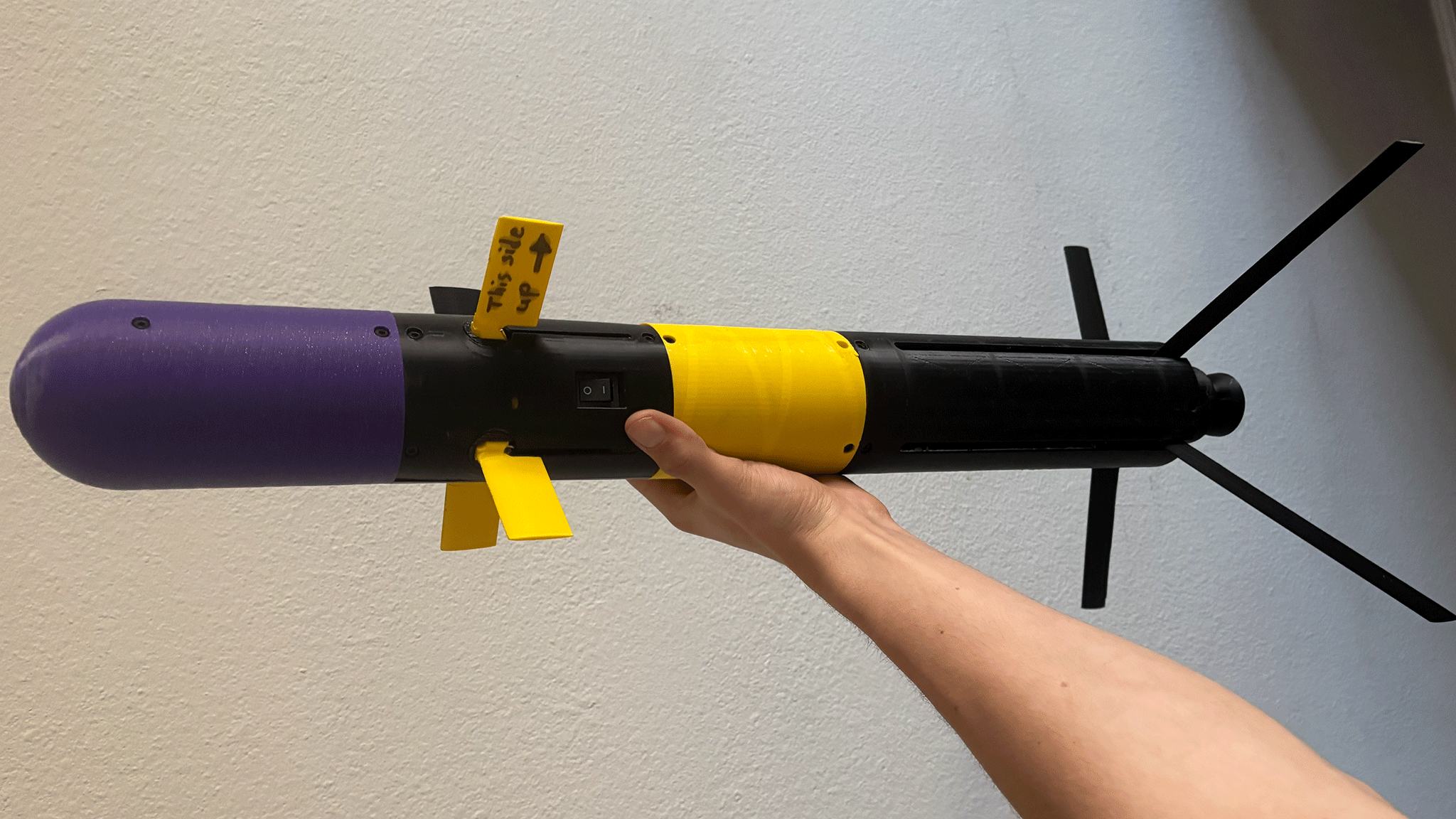
That’s really a stretch. Fdm printing was held back for decades because of patents. If militaries/governments actually knew what it was worth they would’ve worked to fix that a lot quicker.
More likely is that fdm printing became so popular because of how easy it is to make a cheap printer and how useful a tool it is for, frankly, most anything. Weapons are only a small slice of what a good printer can actually do.
Of note, the reaction to having 3d printers capable of making weapon parts has resulted in legislation to limit 3d printer access, not to expand it.
https://3dprintingindustry.com/news/new-bill-seeks-to-limit-3d-printed-firearms-faces-legal-and-practical-hurdles-248275/
https://www.theregister.com/2026/02/05/ghost_gun_legislation_3d_printing/
Additive manufacturing (of which FDM is one of the most accessible techniques) has been a MASSIVE funding source amongst world governments over the past 20+ years. And much of the research that made Reprap (et al) came out of scientists who specialized in those technologies for those grants.
Why? Because NO country is ready for a war. The US military is the most bloated military on the planet and Iran (and supporting Ukraine prior) has made it clear that we are desperately terrified of actually using our stockpiles.
Because, as Ukraine has reminded us, basically EVERYTHING is a consumable. The numbers get murky and depressing but I want to say I saw reports that small arms had a lifespan of less than a year under heavy use (either lost due to casualties or just degraded to the point that full replacement parts become a need). And if you roll back to the last time there was such mass industrialization to support war efforts… it is basically WW2. And there is a reason the guns in 1939 had wood furniture and were “built to last” and the guns in 1944 were basically stamped sheet metal where you were more likely to die of tetanus than lead poisoning (I mostly kid).
So what does that have to do with additive manufacturing? Because the push to convert factories meant basically ANYTHING with a lathe or even an early CNC machine were required and the only way to convert those factories involved incredibly expensive processes as essentially the entire floor was rebuilt and restructured to shift from cars to tanks or saxophones to stens.
Whereas additive manufacturing? Regardless of process, the Dream is that you just upload a new STL file and that gets you 90% of the way there. You still need to do some reconfiguring for finishing processes but it is MUCH MUCH MUCH cheaper. And, in theory, you can have the same factory output tank, jet, boat, and gun parts depending on the need.
And… from a homefront defense perspective, you can have hitler youth groups or resistance fighters making a lot of their own replacement parts in a closet rather than an automotive garage. Let alone print farms. Need a new upper receiver because yours caught a bullet? Go ask the kid from Home Alone 5 to print you one and you are back in action.
But, much like with drones, the inevitable happened. By using consumers to subsidize so much of the R&D work (there is a reason bambu et al insist that EVERYONE needs a multi-filament system and the ability to switch toolheads and…) means that the capability of the hobbyist caught up really quick. And, much like with drones, there is a frantic attempt to use legislature to put the genie back in the bottle.
I’d love your sources for this.
If you want to do a deep dive into funding and grant structure, I suggest actually looking up your favorite country’s call for proposals venues. In the US that used to be the NSF (https://www.nsf.gov/focus-areas/manufacturing). Or you can look up how big various research groups are (the UK have some truly massive additive manufacturing groups).
Or just plug your ears because… I don’t even know why. You do you.
If you ever received any pushback on this theory, this is why. Asking for evidence is not “plugging my ears”. Incredible claims require incredible evidence, and you have provided nothing beyond a single link to the NSF, which is literally a government agency made for funding research into making literally everything. That’s not funding additive manufacturing for war purposes. That’s funding for all of the manufacturing methods because it’s just good fucking sense as a government to keep your technological edge.
You also included all (or many) of the wofld governments, not just the USA in your claim. Your half ass source doesn’t even include any government other than the USA.
Forgive me for not immediately trusting that the world governments are all funding additive manufactueing specifically to make war more efficient when you can’t even try to source anything beyond just the USA nsf.
Because it isn’t an “incredible claim”. ANYONE who has done STEM research in the past 20 years has likely worked on or known someone who worked on a grant related to additive manufacturing. Like, even a lot of the more pure math/CS folk have likely gotten some funding related to that. Even if it is just stealing food from a material science/mechanical engineering buffet table (or they weren’t paying attention to what kind of science those big computers were supposed to run…).
Not to mention the massive rise of additive manufacturing in the consumer space which comes from the industrial space which is what said government funding drives.
I told you how to look things up. I didn’t look up the specific funding source and country you live in because you have google. And, honestly, you seem like you are just looking for an excuse to not believe this for whatever reason. So I could have used archive.org or whatever to get a list of all the NSF grants from 2005 related to this. And it is very obvious you would have then gotten angry that i didn’t do it for 2004 or 2006 and I only did the NSF and not the French equivalent or… We call that “arguing in bad faith”, by the way.
Being skeptical is good. Rather than throw a hissy and ignore everything else (where I explained WHY governments want this and even put it into the context of what happens when a war moves beyond subjugating Brown People™), consider actually doing some basic research yourself.
I can’t be arsed to remember the major funding sources that UK researchers rely on (been quite some time) but “queen liz science org additive manufacturing” is a good search string.
But hey, if you want to keep believing nobody could possibly have foreseen any of this and all those mechanical engineers with a focus on manufacturing who drove RepRap came out of nowhere and Bambu Labs is the entire reason that there is a pretty big industry based around smaller versions of industry tools… have fun?
Sorry. Do you need me to prove that Bambu Labs exists for you? Or that the UK had a Queen named Liz? Or has royalty at all? Because your tuchus has google.
… Shit. Did you need me to document that there was a World War 2 (which would, of course, require proving that there was a World War 1. And then explaining that most documents on that refer to it as “The Great War” until after the 1940s and…)? Or that stamped metal guns existed? Oh, except that is irrelevant because rifles still tended to have wooden stocks all throughout the war so obviously a discussion of cheap machine guns is irrelevant and people are trying to get one over on you.
You’ve missed my point. Obviously governments fund manufacturing stuff, including 3d printing. Obviously governments also fund research into better war technology, like with boing and everyone else. You’ve proved the point of that several times over.
What I’m asking for is evidence that 3d printing was funded specifically with war in mind, especially from 20 years ago (as compared to five years ago with the advent of the ukraine/russia war).
When I first asked about this, I didn’t think it would be such a hassle, and I had actually hoped to see a neat article about the history of 3d printing and how it’s been specifically developed as a way to make better weapons for over twenty years. What I got was scorn, mocking, and questioning of my basic mental capacity because I … Couldn’t do the research myself?
Correlation is not causation. The government funds boatloads of shit that doesn’t work out, in the hopes that it becomes eventually useful. The covid19 vaccine was under development since the early 2000s because of swine flu. Is it right for me to say that government expected the swine flu to be used for war purposes because they funded research into it, or would you ask for more details about how the swine flu vaccine was specifically war-related research before beleiving my wild claims?
Why would I provide evidence for something I never claimed?
I deeply apologize for not being able to argue the point that you made up in your own head due to a lack of reading comprehension. I suggest talking to chatgpt in the future. It will make everyone happier.
From the top since you seem to have forgot;
If warfare is not “the real reason so much money has gone into fdm” why did you say it was?