Nice. My wife and I are one different carriers purely for disaster purposes. I used to have a wifi router on a third as my travel/work-backup. This is a good step for major disasters.
The downside is that, in the event of large-scale power outages, it will only be so helpful. When I lived in the US, I rode out hurricane Ike in Houston and we had no cell service as the battery backups on the cell towers slowly expired. Some in 24 hours, the longest I think in 72.
NoOoOo tHaTs SoCiaLisMMMMM
Very surprising. We’ve had roaming for decades here, and its been free since like 2008. Wild they took this long when so much other tech they have is more advanced.
Both factors are related, I couldn’t find the article I was looking for but this one touches on it too. There’s a section for cell phones specifically
https://en.wikipedia.org/wiki/Galápagos_syndrome
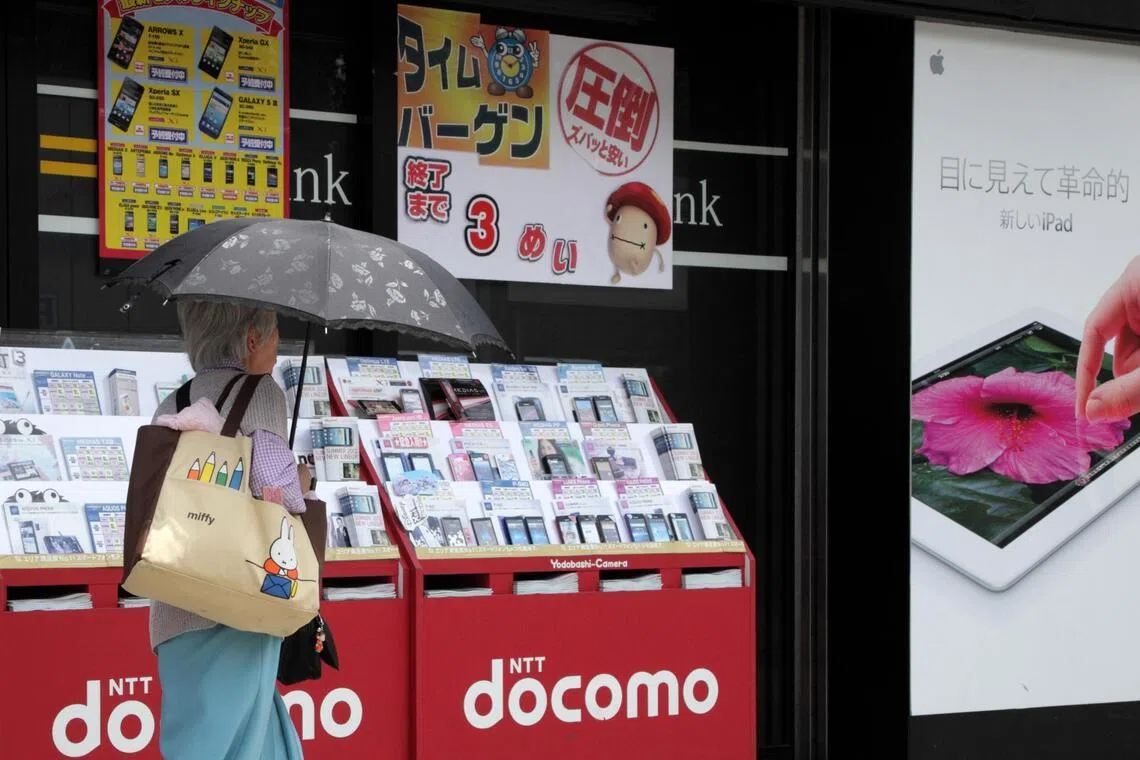
The term “Galápagos syndrome” was originally coined to refer to Japanese 3G mobile phones, which had developed a large number of specialized features that were widely adopted in the Japanese market, but were unsuccessful abroad.[6][7] While the original usage of the term was to describe highly advanced phones that were incompatible outside of Japanese networks, as the mobile phone industry underwent drastic changes globally, the term was used to emphasize the associated anxiety about how the development of Japanese mobile phones and those in the worldwide economy went along different paths.
When a technology advances quickly and gets adopted in the local region (ex. Japan), it can be difficult to change when other parts of the world move forward with a different standard.
The opposite can also happen, where a region is slow to change and then haphazardly moves forward when the benefits are proven elsewhere. American payment systems for example
Have you seen websites in Japan?
You mean being able to find whatever I need without clicking through 5 links?
Their public transportation and a lot of their other infrastructure is advanced, their IT infrastructure is not.
Eh. Their public transit is also a mess of different private services. At least they already have interlining, which is the rail equivalent of cell service roaming. Sort of.
The usage rates in Japanese cities are among the highest in the world, as are the punctuality and reliability of the intercity trains.
Could the system be less convoluted? Absolutely. But IMO most European countries aren’t in much of a position to criticize given that they aren’t even willing to step up to the plate to anywhere near the same degree, to say nothing of North America.
Now, one might argue that this has more to do with city form than it does with the quality of the PT infrastructure, but that is infrastructure too, and those two types of infra are two sides of the same coin. And yeah, the city form isn’t completely perfect either, but when it comes to moving a greater proportion of people in the safest and most energy and space efficient way, the numbers are just higher than most other places.
Very surprising indeed. Ever since GSM, i.e. 1992/93, roaming has been a thing.