

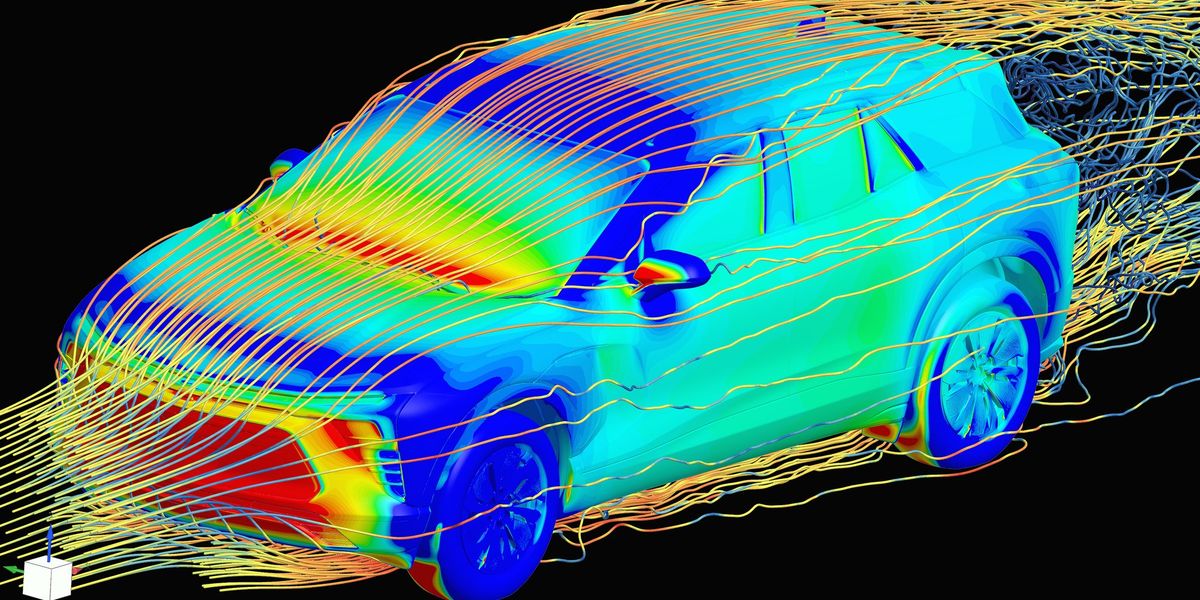
…Previously, a creative design engineer would develop a 3D model of a new car concept. This model would be sent to aerodynamics specialists, who would run physics simulations to determine the coefficient of drag of the proposed car—an important metric for energy efficiency of the vehicle. This simulation phase would take about two weeks, and the aerodynamics engineer would then report the drag coefficient back to the creative designer, possibly with suggested modifications.
Now, GM has trained an in-house large physics model on those simulation results. The AI takes in a 3D car model and outputs a coefficient of drag in a matter of minutes. “We have experts in the aerodynamics and the creative studio now who can sit together and iterate instantly to make decisions [about] our future products,” says Rene Strauss, director of virtual integration engineering at GM…
“What we’re seeing is that actually, these tools are empowering the engineers to be much more efficient,” Tschammer says. “Before, these engineers would spend a lot of time on low added value tasks, whereas now these manual tasks from the past can be automated using these AI models, and the engineers can focus on taking the design decisions at the end of the day. We still need engineers more than ever.”
I don’t know if this is the full explanation, but the article does touch on how the LPM can be tweaked to match physical tests: