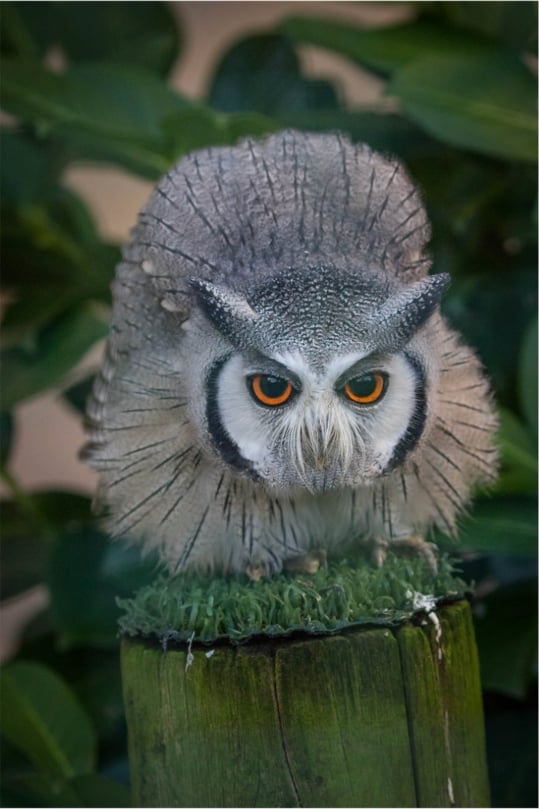
Chonkadonkdonk… they got junk in da trunk,
In the spirit of “if you can’t fix it, feature it”, the code does have impeccable error recovery,
Man, I hope he failed.
Well.
You see. J-douche up there? He likes ‘em young and thinks every guy does, too.
To be fair, they did say “biological job”
So I’d go with Rosalind Franklin who was 30ish when she did the X-ray diffusion thing and found dna was molecular.
Or Barbara McClintock, 46, for her work on “jumping genes”.
;)


So… if it’s something that’s going to set on a shelf or something like a wh figurine, you don’t need to prime with acrylic or enamel.
If it’s something that’s going the handled (like say, a cosplay prop,) your mileage will vary.
I’d recommend printing off small test parts to see how the paint cures and such. I use small shot-glass-size vase mode prints. (Any one the vases will work, but I suggest anything with more complex contours and a few hard edges.)
Then they get double use as a glue pot when I’m doing glueups with barges cement or similar adhesives (and painting too.)
If you find you do need primer… the stuff I’ve found to work best is rustoleum filler-primer. (Yes. The spray can.) you’ll lose surface details, since it’s designed to fill that in, but makes a wonderful foundation.
Also scuff the surface with a coarse sand paper before you do anything else. This will give whatever base layer you’re using a bit more to bite into.


It’s also important to note that things like rub n buff and metallic paints lose their metallic finish if you use most clear coats on them.
Iirc there’s some kinds of clear coat that are fine, but it’s like one product/brand.
If you like round numbers, 69 is all curves.


i;ve never used pressurized vapor baths, for anything. I’d certainly stay away from pressurized vapor baths using heated solvents that are also rather flammable (that’s… got some exciting possibilities that I would let my worst enemy do first.) I’d use picture glass (or cheap ikea mirrors.) to build up a box. set it up outside where the vapors aren’t a problem.
alternatively, a cheap-ass-fuck stock pot with a glass lid will also work fine, but don’t seal it… and certainly don’t use it for food when you’re done.
as for if it should boil, it’s boinling point is about 80 deg. C, so if you’re seeing boiling, you either have somewhat impure MEK (which is fine,) or your temp measurement is off. It should still put enough vapor into the box that you can see it working though… it’ll just work faster. its less advised to boil it off because, well. it works too fast usually.
please tell me you’re doing all of this outside or with a ginormous fume hood that goes outside. (seriously, MEK is not to be underestimated.)
For what it’s worth, if you have a pressure vessel and you want to make it go differently, reducing the pressure will have better effect (or so I’m told.)


I’ve not used MEK personally, all of my petg parts are structural. What I’m seeing online says 60-80c.
What I’d do is kick it up by 5c at a time.
swap in failed test prints and see how that changes things. Keep in mind if you stay in the cold range and give it more time, it might create a better finish.
Too hot and it’ll start melting.
Maybe also “priming” the chamber with a heat gun so the air is also warm. (Do this before placing the MEK!)
Also, a small hole someplace that’ll get covered and a toothpick to lift the part will help retain its shape.


a MEK vapor bath would likely give you a smooth finish. But, Uhm, personally the raw print is probably preferable as MEK is some nasty shit. (not so nasty you can’t buy it at your local big box hardware store, but it’s not something you can just pour into a kitchen pot and be safe around.)
it would work similar to an acetone vapor bath for ABS.
I’d okay with that. As long as it’s still technically a planet. (what? it’s my favorite!)
Pluto is a dwarf planet, which is still a planet.
Also, they absolutely should have just made an exception for Pluto so science teachers everywhere could have used that as a fun teaching point.


Very few printers are going to be able to do 90 degree overhangs even close to nicely. Bridging? Sure. With significant overhangs, it’s always going to wiggle a bit until you get some more layers.
If OP weren’t using this to get as close as possible, I’d say the answer was organic supports coming in from the bed.
Try Changing the width and Hight of the First Layer to smaller Values, no clue Why, but it Fixed this kinda issue before for me!
reducing the width of the first layer seems counter intuitive to me. usually adhession is improved by using widths wider than the nozzle since the plastic has to get smooshiefied into the surface. I don’t know there’s much difference on the first layer 125%-200% of the nozzle width, but I find going over definitely helps. (I use 150% for stronger parts in general.)
or at least that’s been my experience. nozzle height/z offset would be the first thing for me to check, but PLA shouldn’t be warping that bad, IMO, so there might be some thermal issues as well.
I was making an observation, rather than speculation.
I once made a joke about sea urchins and rule34…. Several people rule 35’d it
I’m sure there’s something out there. Rule 34 and all that.


I know, right?
for the record, this might give you an idea of how much floof that thing has. They’re where we get angora wool from.
a moth.
the computer was a Harvard Mark II, though it should be noted that “bug” was used in engineering to refer to flaws in machines since before electronic computers existed, so it might not be the origin, but it’s the first time someone logged finding a bug in a computer,