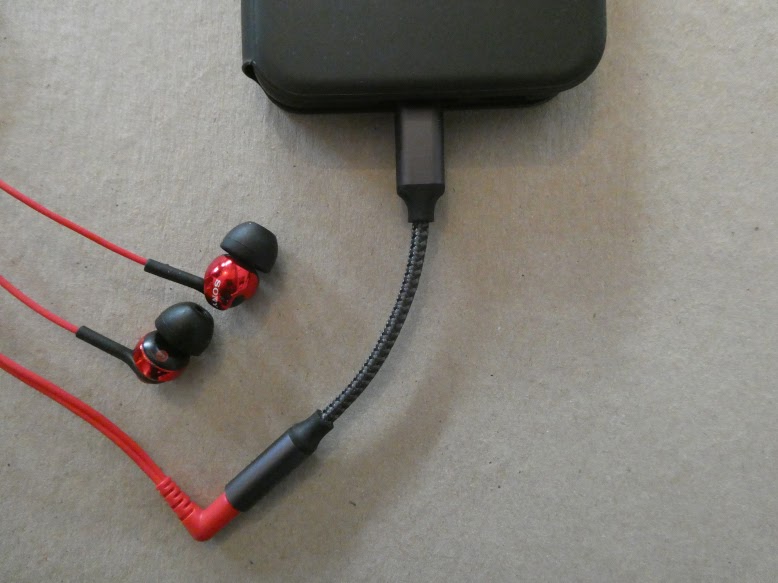
If only there was some kind of hole they could put in a phone to plug your headphones into without a shitty dongle being involved… Sadly such technology remains beyond our reach.
I just plug my headphones directly into USB-C without a dongle for both phone and laptop. Works just as well and 3.5mm used to.
I’m all for plugging in but I don’t really understand the outrage now that everything is super standardized.
You can’t charge your phone and use your USB headphones at the same time, without a dongle.
If this isn’t a use case for you, you should understand that it is a use case for others, and it’s a problem that was solved before manufacturers forced it on it. Give me two USB ports and maybe I’ll be satisfied, though I’m sure others still have a use case for 3.5mm and will still need a dongle…
Things are in no way “super standardized”. My headphones aren’t USB. My aux jack isn’t USB. None of my audio shit plugs into USB.
I just recently went back to a dedicated mp3/flac player. I wanted to go back to actually thinking about the music I hear and discover music myself without an algorithm telling me what to do. Even my rather cheap Shure se215, which are meant to be IEMs for musicians rather than for listening to music, sound leagues better than the Sony wf-1000xm5 I have. And they’re even better at isolating noise, without ANC. Plus no Bluetooth bullshit. Fuck that noise.
I’m sick of the way tech is going. It’s also the reason I’ve started building a home server.
I use my phone as one. All my music files are stored locally on the SD card. One of many reasons I hate the direction phone design has gone in. My phone is from 2017 and I can’t find one today that will allow even the day to day shit I use it for, let alone everything.
Admittedly, I could be smarter and/or less sleep deprived, then maybe I wouldn’t be having trouble taking in all the technical information. So I’m not saying this is a bad article. But is there a thesis hidden somewhere (even a tl;dr, as the cool kids say)? I made it about half-way through without knowing what the actual problem is before I gave up (see above lack of smarts and sleep). I THINK it’s suboptimal audio quality? (Which, admittedly again, probability says it is, given this is about headphones)
tl;dr: me no brain good but me interested, eli5?
The observation is that most USB-C to 3.5mm (“aux jack”) audio dongles are supporting high quality audio but only support the USB Full Speed (FS) data rate which is not enough for the high quality audio. This causes problems.
“High Quality Audio” in terms of the sample rate and bit depth, but considering the quality of most of these DAC/ADCs you get integrated in cables like this, I somehow doubt the data rate is actually the limiting factor on quality.
Personally I can’t tell the difference between 192kHz and 96kHz samples rates, or 16bit and 24 bit either (maybe a young kid with perfect ears could, but they’ll probably also notice background noise due to most of these using unfiltered USB power). The dongle manufacturers seem to care more about the marketing value of bigger numbers than actual usability.
Plus, your source files would also have to actually be in that format. As an example, Spotify apparently supports up to 24-bit/44.1 kHz FLAC only
Ironically, the conclusion is that the stupidly high claimed sample rates are a good indicator that these dongles won’t be afflicted by this bandwidth-scheduling problem. Though they can have various other issues.
Agreed, and this article is written backwards.
Problem: Audio is a low power (relatively low data) signal that goes over wire. Audio data (not audio) sent via USB needs decoding into audio before it gets sent down the headphone wire. Implementation fails due to insufficient bandwidth. Graphs and textual details go into details about the bottlenecks.
I have never owned a phone where the USB port remains functional.
Buzzing, buttons not working, other devices not working in the same bus. I’d just read it when you’ve had some sleep
Not really relevant to the subject, but I think the word “dongle” is absolutely gimmicky.
It’s basically just a synonym for any adapter cable, but usually more specifically, ones that have a short cable so they dangle from the port if they don’t have anything plugged in.
It is absolutely not gimmicky.
I dunno, sounds gimmicky to me, like some weird slang term.
Perhaps it is an ESL thing? We were using it in the States in the 90’s to describe a hardware authenticator key on parallel port that allowed CAD software to run, in a drafting class.
Later (00’s) i heard it used for all manner of peripheral USB accessories.
I’m trying to imagine what the gimmick would be.
The word “dongle” itself. The actual hardware is serious business, I’m not disputing that.
Well, English isn’t a prescriptive language, so if we just start saying “dongus” they’ll put it in the dictionary.
Anyone got a recommendation for a good bluetooth dongus?
I remember it as far back as the 90’s. Usually referred to things like SCSI dongles that authorized the use of expensive software like Maya (which was ~$50k at the time), because online DRM activation wasn’t really a thing yet. Probably goes back further than that.
The 80s, I think, thanks to AutoDesk. AutoCAD required their DB9 serial dongle (in-line with the mouse) for the software to function.
As you say, well before DRM was the default for everything. I thought they were an awful company for it, but little did I know how things would pan out due to the DMCA… 😒
Lol, tell me about it.
And the serial dongle sounds much more sensible than requiring what amounted to a SCSI terminator, of which you could typically only have one. Need to use other software with a SCSI dongle? Shut down your machine, swap them out, and start it up again, 'cause SCSI don’t like that hot swapping.
I’d forgotten about that. How dumb. 🤦🏻♂️
It’s unclear to me what this person is on about. USB type c uses alt mode for audio. The adapters should be simple wires plus a few resistors. There is no adc or dac or amplifier in the dongle…
All two dongles I have used (Google, Apple) have a DAC.
I’m pretty sure the analog ones are the exception, not the rule.
Analog ones require the USB host to support it. USB DACs on the other hand only require the OS to support them since they just use standard USB features. That’s much more compatible.
I’m pretty sure the analog ones are the exception, not the rule.
That is correct, and at least part of the reason for that is that most notebooks, and even many smartphones, don’t support them. DACs are so incredibly cheap nowadays that it costs the manufacturer less to put one in the adapter, than to deal with the cost of half their customers returning the adapter because it doesn’t work with their device.
A lot of phones require DACs, because “internal DACs are noisier”.