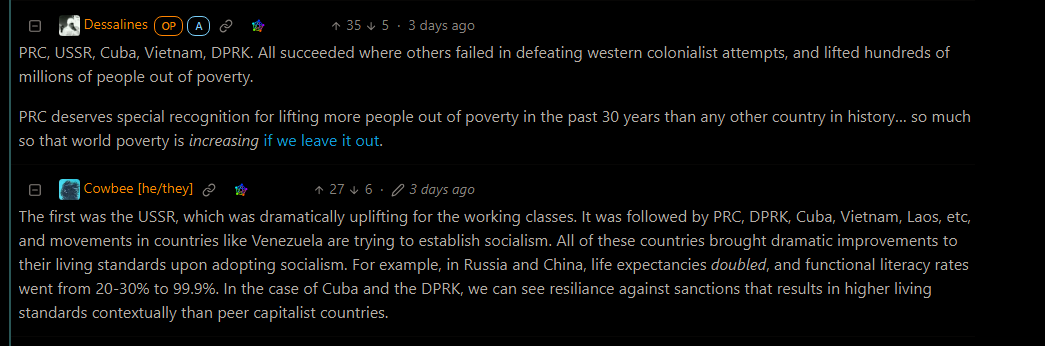
Love it when they suddenly start celebrating imperialism. You just know they’re going to argue that the cultures China and the USSR subjugated were barbaric and deserved to be wiped out, you know, classic power to the workers stuff.
The Socialist Man’s Burden
For reference, average life expectancy across the world has doubled in most places which had low-to-average life expectancy in the 1920s. In other words, China and the Soviet Union did not make any exceptional stride in that area.
Relying on the 99.9% number requires taking official government numbers (and definition of literacy) as gospel, which is dubious. That being said, a significant increase in literacy in both states mentioned was effected. It’s just that that was another common trend of the 20th century as a whole, not an achievement of Marxist-Leninist systems.
“China lifted people out of world poverty!” is particularly amusing considering the great mass of people lifted out of poverty occurred in the process of…
… adopting capitalism.
Isn’t there still a great mass of people living in poverty in China?
Yes, but legitimately, conditions have improved since the 1990s.
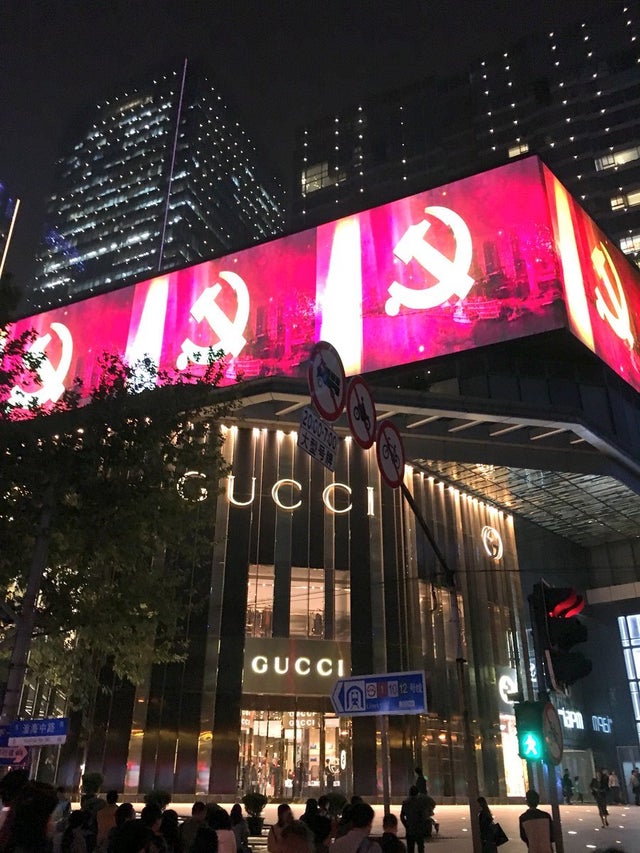
The issue is that they only improved after Deng’s reforms which were capitalism with a coat of red paint, which… calls into question the exact ‘socialist’ nature of the success.
China can’t even have independent worker unions.
So socialist
And part of the issue with trader right now is that Chinese consumption is well below other countries, in part due to poor retirement benefits.
Yes.
Keep in mind when I say this, that I’m here to be better informed, so if I say something wrong please correct me.
“China lifted people out of world poverty!”
My understanding of Chinese initiatives like Belt and Road is that they aren’t just altruistic investments in places like Southeast Asia and Africa, they are actually enormous loans with some promise of a return in the indeterminate future. In effect, China is indebting these countries to them, so it can then coerce them into adopting more pro-China policies, adopting Chinese manufacturered technology, etc. Not to say that the US didn’t do this too, mind you.
Most of China’s action in reducing world poverty is related to improving the economic conditions of its people, mainly through state capitalism and taking on enormous debt.
It is likely that China is presenting other countries with economic conditions that are near the conditions that the Chinese government will accept and the infrastructure has a higher probability of being built than other forms of economic aid. Major issues with Chinese deals is that the payment plan for a lot of these deals is on the order of a century and Chinese engineers don’t design for economics. So, Chinese infrastructure tends to be overbuilt and doesn’t always serve the economics of the region. After that, the countries with this infrastructure built have issues paying off the debt.
When people talk about China lifting folk out of poverty, they generally mean domestically. Belt-and-road initiatives haven’t had enough time to had that kind of effect, even assuming that is the effect they will have.