It is not always the case that the side you disagree with is just a bunch of Nazis, and furthermore sometimes it is you who are wrong. That is why it is important not to be too zealous in shutting out everyone you disagree with on any issue.
Nonetheless, that does not mean that everyone should be platformed, and I am not a fan of some of the choices that the Washington Post has made in this regard, which is why I am no longer a subscriber. However, I did not think that this particular article was that bad, because it is essentially just saying that order results in far greater peace and prosperity than no order, especially when it incorporates increasingly large scales of people, but that it unfortunately requires violence to bring this about. One can very reasonably disagree, but one needs to do more than what many have done, which is to just read the title, assume that one knows what the article was arguing, and then criticize it based on that assumption.
War is bad. Good things coming about from bad things does not make the bad thing good. Especially when that bad thing is the death of who knows how many people, combatants and civilians alike. One should not need to carefully consider the idea that “maybe mass death and untold suffering is good?” because it is objectively bad. Also you type like a redditor.
Obviously war is bad, which is why the idea that was actually being considered was actually “maybe mass death and untold suffering is not the worst thing, if it buys peace and prosperity for subsequent generations by building a civilization of greater scale”. As @inputzero@lemmy.world says below, one’s thoughts on this probably depends on exactly how one feels about utilitarianism.
And… is the best attack you could come up with that I “type like a redditor”? Really?


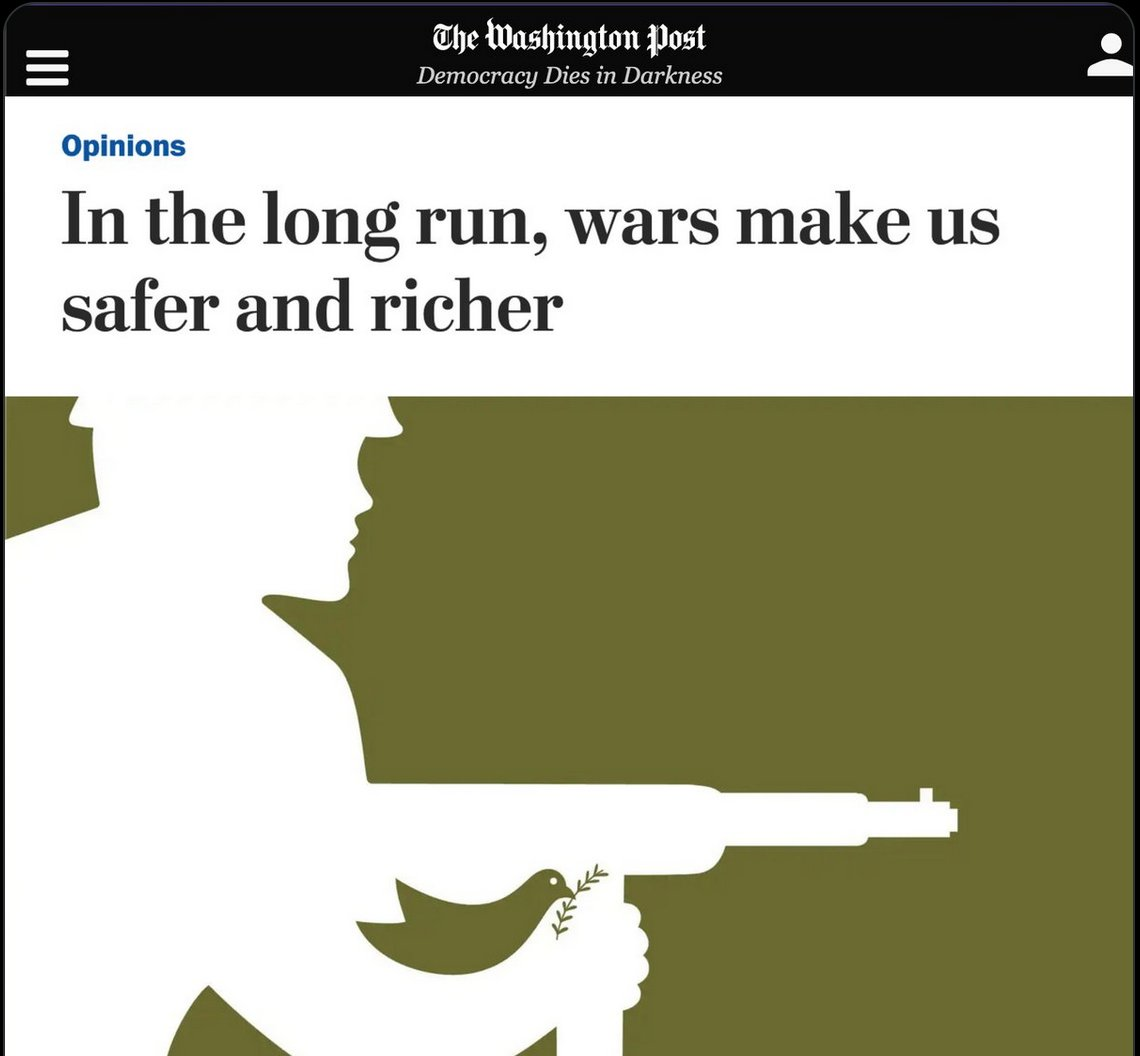
It is not always the case that the side you disagree with is just a bunch of Nazis, and furthermore sometimes it is you who are wrong. That is why it is important not to be too zealous in shutting out everyone you disagree with on any issue.
Nonetheless, that does not mean that everyone should be platformed, and I am not a fan of some of the choices that the Washington Post has made in this regard, which is why I am no longer a subscriber. However, I did not think that this particular article was that bad, because it is essentially just saying that order results in far greater peace and prosperity than no order, especially when it incorporates increasingly large scales of people, but that it unfortunately requires violence to bring this about. One can very reasonably disagree, but one needs to do more than what many have done, which is to just read the title, assume that one knows what the article was arguing, and then criticize it based on that assumption.
War is bad. Good things coming about from bad things does not make the bad thing good. Especially when that bad thing is the death of who knows how many people, combatants and civilians alike. One should not need to carefully consider the idea that “maybe mass death and untold suffering is good?” because it is objectively bad. Also you type like a redditor.
Something something, act utilitarianism something something.
Obviously war is bad, which is why the idea that was actually being considered was actually “maybe mass death and untold suffering is not the worst thing, if it buys peace and prosperity for subsequent generations by building a civilization of greater scale”. As @inputzero@lemmy.world says below, one’s thoughts on this probably depends on exactly how one feels about utilitarianism.
And… is the best attack you could come up with that I “type like a redditor”? Really?