I don’t have a single favorite, but every now and then a critter will become the subject of my latest ADHD hyperfixation. I remember thinking skunks were cool in 5th grade. They’re like badgers with chemical weapons. For the months leading up to getting my first guide dog I devoured stuff about dogs in general. I had always had pet dogs so it wasn’t a new subject, just a more intense interest.
For a while it was octopi, then parrots. For some time in 2015 or early 2016 it was possums, the US’s only marsupial.
Right now it’s monkeys. I used to think monkeys were gross and disturbing in an uncanny valley sort of way, so humanlike but not human at the same time. But I’ve taken a shine to orangutans. They’re quiet and introverted like me. Also new world monkeys like capuchins and woollies. Having a prehensile tail would be awesome.
You must log in or register to comment.
Snakes. I was glad to see one be an important character in Zootopia 2 and to see them be kings of the reptiles in Hoppers
Foxes are cool. Like cat software on dog hardware.
I like foxes, too. Red fox fathers help take care of their pups. Foxes also make all sorts of weird very un-doglike noises.
I’ve had a very shallow interest in hares for some time.
Now someone tell me a terrifying fact about them.
Never heard of the mi’raj. That’s got a 65% chance to stick as a hyper obsession on which I base game handles.
Lynx - those big cuddly paws
Maybe a capybara. Here’s me dying when I met some.

Guinea big
Look at you, living the dream!

Birds
Favorite bird? The Corvids, specifically crows and ravens.
Freakishly intelligent and once you befriend them the Murder will stay friendly for generations. My grandparents owned a farm and my grandfather made it a point to be friendly toward the local Murder. By the time I was old enough to ask him why the crows all flocked around him some 30 years had passed. He barely had to do anything. He would put out straw during the mating season and food at other times. The Murder would be your friend too, if they saw you with him.
I grew up with cats, always loved cats. If I saw a cat on the street I’d always say hello (or at least try to).
Last year my girlfriend brought home a rabbit.
Rabbits are fucking cool.
Don’t see as many on the street though
Don’t see as many on the street though
Rabbits are all over in many places. Not the type people keep as pets though.
Magpies (the corvids, not the distantly related assholes in Australia) are so fascinating. They’re self-aware (they pass the mirror test) and they’re able to plan for future needs (for example, they’ll cache food and then hide tools nearby to later break into their cache). They have a huge variety of vocalizations that vary by region, sort of like dialects. They also engage in play just for the fun of it, like sliding down snowy hills and tossing and then catching objects. I could go on and on about magpies, such cool birds.

There’s a magpie couple that regularly visits my backyard, I really want to befriend them but I don’t know how.
Lucky you!
There was a family of magpies in my yard at a place where I used to live. They’re so observant that they would look through my windows and watch me while I prepared food or cleaned or whatever in my kitchen. They recognize individual human faces. If you go out of your way to be nice or mean to them then they’ll remember that interaction for a long time and adjust their behavior around you accordingly.
Him. I never could have imagined these animals have much personality at all but he did.

Cats of all sizes, owls & corvidae and frogs.
Edit: I forgot to list stag beetles.
@early_riser@piefed.social @asklemmy@lemmy.world
Both due to ADHD hyper-fixation and for spiritual/religious reasons, Athene noctua.

Owl religion? Go on… 🤔
c/superbowl
@anon6789@lemmy.world @asklemmy@lemmy.world
Sort of.
I don’t know an easy way to label whatever my religion is, for it’s a personal belief system syncretized from many different religions: Sumerian and Egyptian, going through Abrahamic, all the way to Thelema, Hermeticism, Luciferianism, Gnosticism, Quimbanda, Wicca, Goetia, among others. Scientific knowledge is part of this too, despite the religiosity.
The highest figure I worship is The Dark Mother Goddess, a spiritual synthesis of chthonic goddesses. Just like the Tree of Shadow and its Qlippoths have depths, so has Mother with different emanations, which (in my belief) were seen as different figures with different names and backgrounds across history, similarly to “my name is Legion for we are many” from Samael/Lucifer (also part of my worship, btw, although I focus more on Her).
One of Her emanations, the emanation She chose when unexpected gnoses began to me, still being the main emanation She manifests, is Mother Lilith, Queen of Night.
Lilith has a whole long history, going all the way back to Mesopotamia and Sumerians. I’m limited to 3k chars in my instance so I’m unable to go into the depth I wished for a single text.
Basically, Lilith is a Hebrew name, appearing once in biblical canon, namely Isaiah 34:14. Sometimes is translated as “screech owl”, but there are no screech owls, as in Megascops genus, in Levant (where Bible is set). The closest are scops owls (Otus), considered screech owls in the past.
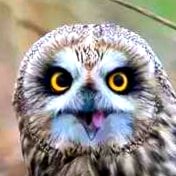
Then, during my researches, I stumbled upon this specific, chilling species: Athene noctua lilith. Lives exactly in semi-deserts (thresholds) in Middle East, and… this gaze, these hauntingly beautiful eyes (as in the photo), I quite recognized them from gnosis… I mean, look at these eyes! Her eyes are not that scary and that’s exactly what make 'em scary.
Then I found a paper from L. R. Guillén debunking a common premise in Spain culture where Goddess Athena is associated with barn owls (Tito alba) due to Spanish grammatical quirks, going through historical evidences to trace Athena back to Athene noctua owls. This is how I found out this specific species resonated with me precisely bc it was associated with one of Her emanations.
Then there are Inanna and Ereshkigal, Sumerian goddesses, also emanations, closely related to Lilith (esp. if we see the sisters as One, similarly to how Hecate is Triple Goddess).
Details may change over time, it’s still an ongoing research of mine bc I follow a solitary “temple of one devotee” (myself, preaching to myself), I wasn’t able to find others who somehow got the same… call from Her, so I rely on things I stumble upon (essentially gnosis, sudden knowledge, from Her).
There are other figures in my “pantheon”: Stolas, Great Prince, is also an owl, but masculine. Differently from Goetia where demons are “serfs” to be trapped into a sigil and banished upon fulfillment, I see them as high teachers to be humbly asked, especially Stolas.
Thank you for sharing all that! You’ve given me a lot to read up on. I was intrigued when you mentioned the Owl of Athena/Owl of Minerva in modern religious context.
Also very interesting about the confusion in Spanish about the confusion of the barn owl and screech owl. There is another person here I talk with about the confusion of them in Mesoamerican religion, so I’ll have to see that paper.
Owls are present in many belief systems, in good and bad incarnations, so I’m always curious to hear about them.
@anon6789@lemmy.world @asklemmy@lemmy.world
Also very interesting about the confusion in Spanish about the confusion of the barn owl and screech owl. There is another person here I talk with about the confusion of them in Mesoamerican religion, so I’ll have to see that paper
The paper I mentioned is this one: https://digibuo.uniovi.es/dspace/handle/10651/23598
It’s an open paper, but it’s entirely in Spanish. Also, the things thereby described can’t find much parallels in English because it involves gendered nouns (missing from English language which has just “the”; curiously it’s a thing in German (“die/der/das”), with which English shares origins).
However, here’s how I’d summarize it: in Spanish, both “lo buho” and “la lechuza” translate to English “the owl”, but the latter is specifically a word for barn owls and it’s a feminine noun (“la”, the-she), while the former is the more broad of a word and it’s a masculine noun (“lo”, the-he). Given this context where owls are to be linked to feminine, it became consensus to use “lechuza”, instead of “buho”, to refer to the “Owl of Athene” (the Little owl), because Athene is feminine so the noun should be feminine as well. Hence the confusion.
In other romance languages, such as French and, to some extent, Portuguese, Strigidae owls (especially Athene noctua Little owl) is correctly feminine gendered.
French has chouette (Strigidae without prominent ear tufts, which includes Little owl), chevêche (specific word for Little owl) and chevêchette (Pygmy owl and other very small owls) are all feminine nouns (but they got hibou, which is masculine, for “horned” owls).
Portuguese varies. Here in Brazil, owl names are often compounds with the root “coruja” or “corujinha” (“corujinha-do-mato” screech-owl, “coruja-buraqueira” burrowing owl… even Tytonidae have no specific differentiation over here as she’s called “coruja-das-torres”; not native from Brazil, but the Little owl would be called “Coruja de Atena”, “corujinha” ou “coruja-pequena”), all feminine (except for the augmentative “corujão” which isn’t exactly used for owls, rather a slang to refer to nocturnal people). In Portugal (and I suppose Angola, Moçambique and others), I learned they use the word “mocho”, which is masculine, including for Little owl (“Mocho-galego”).
When it comes to Latin, noctua is feminine, but būfus (seems to be specifically for eagle owl) is masculine. Greek has gláfka and koukouvágia, both feminine (but also got Latin cognate boúfos).
Linguistics in this regard is fascinating. My personal research also involves words across languages (including “dead” languages, such as Sumerian thanks to Halloran’s Lexicon with transliterated entries e.g. “nínnamušen” owl, “mušennínna” is fearsome owl-woman). Many of the words for owl (“owl” itself) are onomatopoeias for hoot (Hindi uhoo, Japanese fukurō, etc), which quite of reminds me of the phenomenon in which “m” is a universal phoneme shared among words for “mother”.
I really appreciate all the time put into your replies!
If you haven’t discovered us yet on !superbowl@lemmy.world, you should join us. The French and German communities there have been very helpful there, and there is also a person that researches Aztec religion where we have discussed some of their linguistics as well and the trouble people have with determining what kind of owl Chiquatli is supposed to be.
Hearing some of the Portuguese owl words is helpful as well. I try to find photos and articles from all over the world, and having you all explain the languages to me helps me greatly.
@asklemmy@lemmy.world @early_riser@piefed.social
The italic font isn’t rendering on your Piefed side. The missing part between the comma and the full stop is “Athene noctua”.
I’ve been fascinated by pterosaurs lately. The book Pterosaurs by Mark P Witton is great.
Pterosaurs interest me because of their wing morphology. Instead of having the wing membrane between all the “fingers” like a bat, it’s attached to their equivalent of a pinky finger in such a way it can fold up enough that they could use all four limbs to navigate on land. They just have such an interesting body shape that no animal today really has.
They also got much bigger than birds. Like, to the point that I want to write a fantasy book where the premise is that dragons are like …the only pterosaur that survived extinction. Because it would be cool to have a dragon that’s directly not related to modern reptiles, birds, or mammals…but still is speculatively based on a flying animal that did once exist.
(Moth|serval)s !
I love how you answered this with a regular expression.
I’m a biologist, so all of them. Yes, even cockroaches (they’re so cute when eating cookies ❤️), parasites like horsehair worms and Demodex folliculorum, spiders (all of them!), mosquitoes and centipedes.