

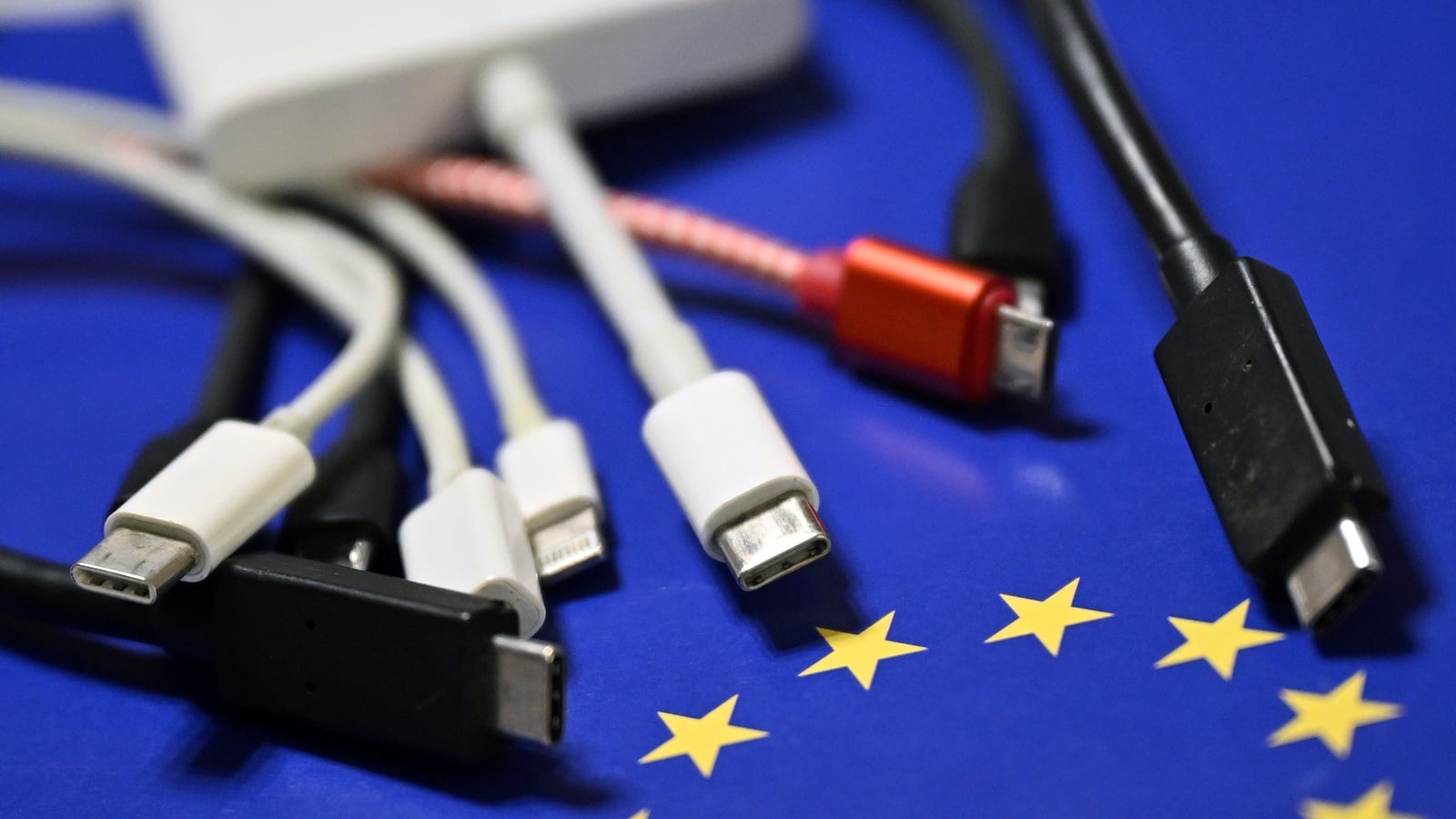
EU rules on common chargers apply to laptops from today. It means that all new laptops sold in the European Union must now support USB-C charging.
In December 2024, the rules came into force for mobile phones, tablets, digital cameras, headphones, videogame consoles, and portable speakers.
Laptop manufacturers were given a longer lead in time to allow for redesign and transition to the common charging system.
The article doesn’t mention the requirement’s 100W limit.
Edit: Per reply, the regulation is designed with 240W accounted for, and updatable in case of further improvements to the standard.
Glad you did, because I was gonna make a comment about how high end gaming laptops are now illegal in the EU.
Not sure there’s a 330w USB C going around I could use.
The limit should really be 240W, because that’s what the USB-C PD 3.1 spec goes up to.
Edit: Per reply, the regulation is designed with 240W accounted for, and updatable in case of further improvements to the standard.
It is 240 W actually. Seems Techpowerup was wrong. See my first comment: https://discuss.tchncs.de/post/59511400/25528592
When you make minimum requirements, you dont go for max. All laptops shouldnt be able to take 240W.
Laptops can be rated for whichever power level the manufacturer prefers; USB-C PD is used between the power supply and device to negotiate the maximum power level allowed for by both, so a consumer that purchases a 100W or 240W cable and power supply could still use them with a lower-rated device.
A 60W USB-C laptop can therefore stay at 60W without issue, but if a 240W laptop is produced, it should also be made to use USB-C under such a regulation.
Fair point. But it will still be overkill to require 240W for a device that will never take it.
I know it will regulate output. But requirements should make sense.
Nope, still perfectly legal. Proprietary charging ports are allowed but have to be accompanied by a USB PD port that supports the same wattage (or 240 W if the device needs more than that).
So basically the law says “devices must support USB PD”, not “devices must only support USB PD”.
Mines not a barrel either, big ol rectangle
Can’t the provider just make two charging ports?
They can.
USB-C goes up to 240 W now and the law has been amended to acknowledge the new USB PD spec. Devices are also allowed to have proprietary charging ports but must include a USB-C port capable of showing the full power draw of the device (or 240 W of they need more than that).
So a big gaming laptop might have a USB PD-capable port that supports 240 W and a barrel jack that supports 350 W.