Multi monitor has never been more reliable for me than it is on Linux. The downside is that it’s not automated and I need to connect/disconnect them through the terminal.
Ah, what you’re looking for is called udev. It supplies the system with device events from the linux kernel.
This gist of it is, to use this command
udevadm monitor --environment--udev
then unplug and plug in your monitor. You should see the events on screen. You then write a rule and place it in /etc/udev/rules.d. To run a script add something like
I’m familiar with udev rules. But it’s going to be more effort to write something that works with everything I might connect to than it is to just run xrandr each time. The way it is right now, it never fails and I don’t have to spend more than a minute tinkering with projector settings when I give a presentation.


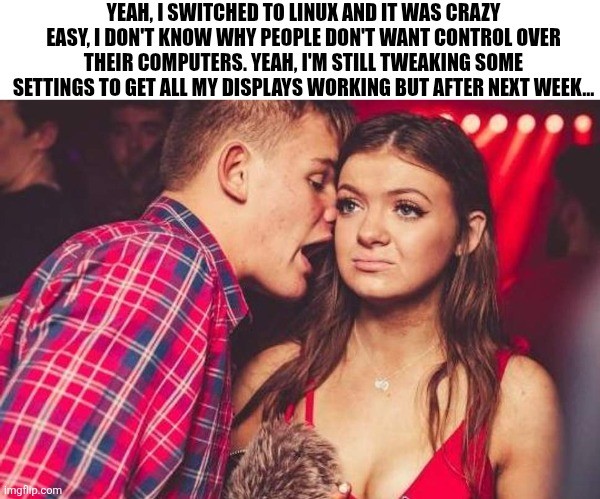
Multi monitor has never been more reliable for me than it is on Linux. The downside is that it’s not automated and I need to connect/disconnect them through the terminal.
Ah, what you’re looking for is called udev. It supplies the system with device events from the linux kernel.
This gist of it is, to use this command
udevadm monitor --environment --udevthen unplug and plug in your monitor. You should see the events on screen. You then write a rule and place it in /etc/udev/rules.d. To run a script add something like
ACTION=="change", SUBSYSTEM=="drm", KERNEL=="card0-HDMI-A-1", \
  RUN+="/usr/local/monitor-script.sh"
See the man udev page for more info (☞゚ヮ゚)☞
I’m familiar with udev rules. But it’s going to be more effort to write something that works with everything I might connect to than it is to just run xrandr each time. The way it is right now, it never fails and I don’t have to spend more than a minute tinkering with projector settings when I give a presentation.