

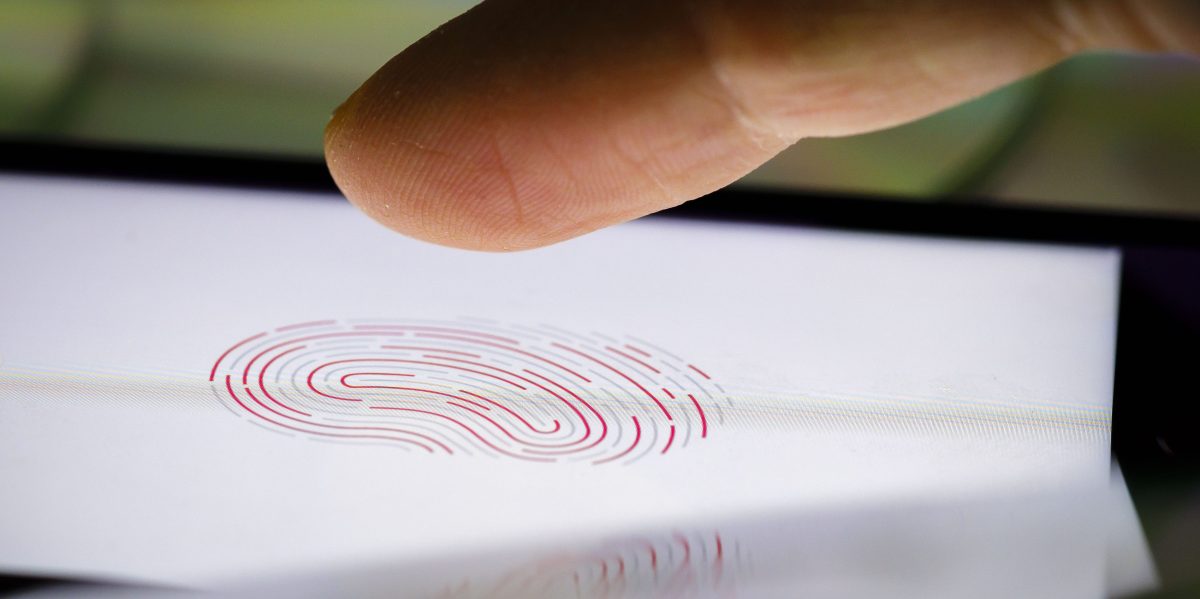
The recent federal raid on the home of Washington Post reporter Hannah Natanson isn’t merely an attack by the Trump administration on the free press. It’s also a warning to anyone with a smartphone.
Included in the search and seizure warrant for the raid on Natanson’s home is a section titled “Biometric Unlock,” which explicitly authorized law enforcement personnel to obtain Natanson’s phone and both hold the device in front of her face and to forcibly use her fingers to unlock it. In other words, a judge gave the FBI permission to attempt to bypass biometrics: the convenient shortcuts that let you unlock your phone by scanning your fingerprint or face.-
It is not clear if Natanson used biometric authentication on her devices, or if the law enforcement personnel attempted to use her face or fingers to unlock her devices. Natanson and the Washington Post did not respond to multiple requests for comment. The FBI declined to comment.
Even better, set it to 1234567890 or 00000000 or similar easy to guess pin, and change it to the length of your actual pin, now if someone tries to bruteforce your phone it will instantly wipe and you can make a case that it was the law enforcement who destroyed any “evidence” by their own actions if in comes up In court.
This sounds like a convenient way to have all your locally saved photos wiped by your kid
Always back up anything you don’t want to loose.
How should I protect the backups? Same story?
Your backups aren’t nearly as likely to be subject to an immediate civil forfiture as a phone is. Cops don’t need a judicial warrent to take your phone, but they do need one to search your home legally, and if you do your offsite backups in another country, they would need the cooperation of the local authorities of that country. Strong encryption can provide a relatively safe barrier for offsite backups.
Also, it’s possible to have some things that may only exist on your phone and not your server/backup system(easy biometric unlock for a password manager, or encrypted chat logs, to name a few examples).
These practices and tips are not for everyday people but for high targets and work devices
Actually, these tips are for every day people (just not people whose kids can get to their phones). High targets get their ram frozen with liquid nitrogen, their PSU spliced into a battery pack, and the entire system-state backed up for retries.
You mean you’re not having your photos automatically, immediately encrypted and backed up on remote servers? ente.io will do that for you and their free plan comes with 10G of storage which is quite a few pics.
In this economy??!
Don’t they make a copy of the phone before they go about trying to unlock it?
This kind of security is only going to work against a careless or incompetent atta-- oh. I see…
That requires USB connection to even be possible with a locked phone.
Yes, and you can disable usb completely on graphene.
It also will not accept new USB connections while the screen is locked.
Not for state sponsored campaigns. They’ll cut the damn chips from your phone and send signals directly to the individual pins if they have to. They’ll freeze your ram into super cold state to make it nonvolatile. They’ll do some crazy shit, man.
that implies competence
Holy Christ, what are you guys doing on your phones to fuel this much paranoia? I have a constitutional right to privacy and i dont want my information/data (the very essence that makes me me) harvested and sold – for those reasons im opposed to most searches and i’ve never used biometrics. But the need to nuke my phone because a cop got it is so far from a necessity that I cant think of what im doing that I would need it.
Other than literally everything I think and feel you mean? I think it’s perfectly reasonable to not want to allow police or especially federal agents into my own head. My note taking apps, my password manager which links to all of my online accounts, and my entire web browsing and search history are all linked through my phone. Also signal and discord and lemmy, and on and on…
Exactly this.
Read about the Hawthorne effect: https://en.wikipedia.org/wiki/Hawthorne_effect and how people change their behaviors when they are being observed. Being free of observation is vital to being able to think your own thoughts without outside influence.
If the problem is with the usage framing the hypothetical adversary as a country’s law enforcement, pretend you live in a cyber North Korea and have a cellphone. The idea of an adversary is just a means of thinking about the problem. You want to build a system so that they can’t capture your flag (your flag being some digital information that you want private).
Whatever the opposite of TL;DR is:
It isn’t intended to be read as ‘do this to avoid law enforcement so you can do crimes’.
When thinking about security/privacy (same thing), you don’t know what kind of attack you may eventually have to defend against, maybe you have a partner who has decided to stalk you and so they screen read your PIN or a strong arm robbery where they’ll try to use your phone to access your bank.
Instead of trying to imagine every single possible scenario, you imagine one model scenario. In this model scenario, the adversary has every possible capability that is available and your goal is to keep your flag safe, or be able to pass a flag between two people without it being seen, or various other scenarios (which are themselves just model problems of types of system that you need to secure).
This hypothetical adversary, in order to have these capabilities in real life, would be the equivalent of a sovereign nation with unlimited funding and access to all technologies that are possible (and some that are only hypothetical). This description fits one country pretty well and so, as shorthand, people often just write ‘the feds’. I guess they could also write ‘Eve’ but that is a specific adversary in one kind of scenario and not the general Adversary.
In a situation where you are raided like the journalist, it may be worth nuking the phone. Consider the sources that could be exposed.
Having your phone available to law enforcement is the equivalent of forfeit your right to remain silent.
And more, once they have access, what is stopping them from planting false evidence? In this fascist fever that US is living… I would prefer to avoid the risks.
Not anymore you don’t
constitutional? never did. implicit? went away recently
I still have the right, but it’s being routinely violated and not upheld by a supreme court that’s clearly in the tank.
If a right can be violated without repercussion, you never actually had it to begin with. We’re seeing the same up in Canada with the Conservative’s use of the not-withstanding clause. Basically, “you have rights until they get in the way of what we’re doing”.
If you’ve got nothing to hide you e got nothing to fear…?
It’s easier if you think of it like a car. Say you get arrested while in or around your car: doesn’t mean you did anything wrong or broke a law, just that you were arrested. Now there’s a million ways for cops to do the backflip jetpack gymnastics to get to search your car.
Once arrested, some stuff happens but importantly, a prosecutor starts building a case against you.
Maybe you took the recycling out and a crumpled up beer can is in the back seat, that’s an open container. Maybe you picked up some starting fluid for the cold mornings, they found it in the glove compartment in a paper bag, better do that blood test on you to rule out inhalant use, that would give them dwi. Got a significant amount of cash in the locked center console, that’s drug money. Maybe you keep the sporterized bring back hunting rifle your uncle gave you in the trunk, now you have an unregistered firearm in your possession, intent to menace? How will that allow upgrading the charges they’re already building against you? Who can say?
And remember, they’re going to use any method they can to deny you your property if you somehow end up beating the laundry list of charges. You’re losing the gun and cash no question. Civil asset forfeiture will see to that. If there’s anything wrong with your car that would keep it from passing inspection even if it had a valid inspection at the time of impound they can choose not to return it to you and instead sell it at auction for their own gain or just crush it.
Now what lines and spirals are drawn in the cloud chamber of your life when that cop particle strikes your phone instead of your car?
But I don’t have a self destruct button on my car. I don’t know anybody that does.
Of course you don’t. The point of my reply wasn’t to encourage you to rig your car to explode but to explain some of the reasons why it’s perfectly understandable to take every possible precaution about your phone if you think it’s possible cops will get it.
You suppose in your earlier reply that a persons unique actions must be the precursor to a level of paranoia around law enforcement that approaches destroying the phones contents. I was trying to illustrate that everyone should be extremely apprehensive about cops getting their phones, not just those who are engaged in some clandestine bullshit ala the old mad magazine marginalia.
Of course, just turning your phone off if you’ve sufficiently hardened the settings is enough for four or five years of safety on ios and at least a year or two on android.