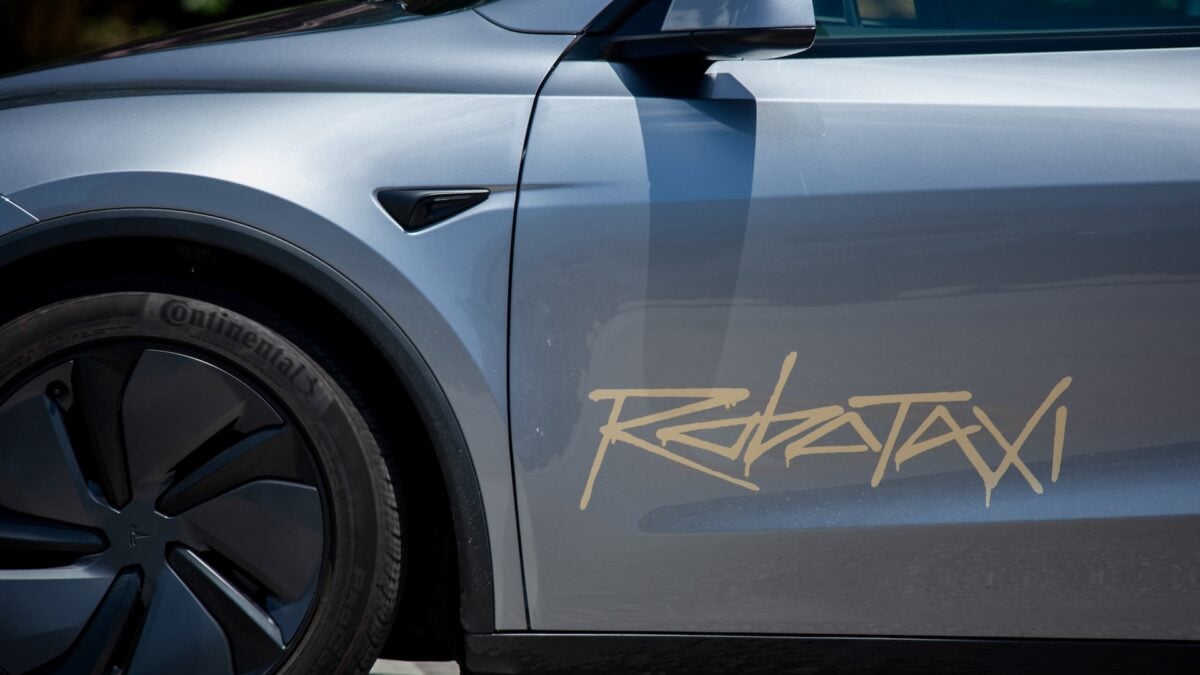
Self-driving cars are often marketed as safer than human drivers, but new data suggests that may not always be the case.
Citing data from the National Highway Traffic Safety Administration (NHTSA), Electrek reports that Tesla disclosed five new crashes involving its robotaxi fleet in Austin. The new data raises concerns about how safe Tesla’s systems really are compared to the average driver.
The incidents included a collision with a fixed object at 17 miles per hour, a crash with a bus while the Tesla vehicle was stopped, a crash with a truck at four miles per hour, and two cases where Tesla vehicles backed into fixed objects at low speeds.
Optical recognition is inferior and this is not surprising.
Yeah that’s well known by now. However, safety through additional radar sensors costs money and they can’t have that.
Nah, that one’s on Elon just being a stubborn bitch and thinking he knows better than everybody else (as usual).

deleted by creator
Even if they were, would it not be better to give the car better senses?
Humans don’t have LIDAR because we can’t just hook something into a human’s brain and have it work. If you can do that with a self-driving car, why cut it down to human senses?
Exactly, with this logic why have motors or wheels?
You don’t have wheels so you shouldn’t use cars
deleted by creator
“So long as the AI has the same intelligence as a human brain” is a pretty big assumption. That assumption is in sci-fi territory.
deleted by creator
Except humans have self cleaning lenses. Cars don’t.
Except if I get something to replace me, it better do better than me, not just just as good. So I would expect better sensors.
Cameras are inferior to human vision in many ways. Especially the ones used on Teslas.
Lower dynamic range for one.
Genuinely asking how so?
Are tesla cameras even binocular?deleted by creator
Also the Human brain is still on par with some of the worlds best supercomputers, I doubt a Tesla has that much onboard processing power.
deleted by creator
I am a Human and there were occasions where I couldn’t tell if it’s an obstacle on the road or a weird shadow…
And, we humans have built-in binocular vision that we’ve been training for at least 1.5 decades by the time we’re allowed to drive.
Also, think about what you do in that situation where there’s a weird shadow. Slow down, sure. But, also move our heads up and down, side to side, trying to use that powerful binocular vision to get different angles on that strange shadow. How many front-facing cameras does Tesla have. Maybe 3, and one of those is mounted on the bumper? In theory, 3 cameras could give it 3 different “viewpoints” for binocular vision. But, that’s not as good as a human driver who can shift their eyes around to multiple points to examine a situation. And, if one of those 3 cameras is obscured (say the one on the bumper) you’re down to basic binocular vision without even the ability to take a look from a different angle.
Plus, we have evidence that Tesla isn’t even able to use its cameras to achieve binocular vision. If it worked, it shouldn’t have fallen for the Wile E. Coyote trick.
deleted by creator
I feel like camera only could theoretically pass human performance, but that hinges entirely on AI models that do not currently exist, and that those models, when they do exist, are capable of running inside of a damn car.
At that point, it’d be cheaper to just add LiDAR…
deleted by creator
Well I mean if you believe that it is possible in a safe way it’s the one thing that Tesla’s got going for it compared to Waymo which is way ahead of them. Personally I don’t but I can see the sunk cost.
just one more AI model, please, that’ll do it, just one more, just you wait, have you seen how fast things are improving? Just one more. Common, just one more…

I NEED ONE MORE FACKIN’ AI MODEL!!
I don’t think it’s necessarily about cost. They were removing sensors both before costs rose and supply became more limited with things like the tariffs.
Too many sensors also causes issues, adding more is not an easy fix. Sensor Fusion is a notoriously difficult part of robotics. It can help with edge cases and verification, but it can also exacerbate issues. Sensors will report different things at some point. Which one gets priority? Is a sensor failing or reporting inaccurate data? How do you determine what is inaccurate if the data is still within normal tolerances?
More on topic though… My question is why is the robotaxi accident rate different from the regular FSD rate? Ostensibly they should be nearly identical.
Regular FSD rate has the driver (you) monitoring the car so there will be less accidents IF you properly stay attentive as you’re supposed to be.
The FSD rides with a saftey monitor (passenger seat) had a button to stop the ride.
The driverless and no monitor cars have nothing.
So you get more accidents as you remove that supervision.
Edit: this would be on the same software versions… it will obviously get better to some extent, so comparing old versions to new versions really only tells us its getting better or worse in relation to the past rates, but in all 3 scenarios there should still be different rates of accidents on the same software.
The unsupervised cars are very unlikely to be involved in these crashes yet because according to Robotaxi tracker there was only a single one of those operational and only for the final week of January.
As you suggest there’s a difference in how much the monitor can really do about FSD misbehaving compared to a driver in the driver’s seat though. On the other hand they’re still forced to have the monitor behind the wheel in California so you wouldn’t expect a difference in accident rate based on that there, would be interesting to compare.
There are multiple unsupervised cars around now, it was only the 1 before earnings call (that went away), then a few days after earnings they came back and weren’t followed by chase cars. There’s a handful of videos over many days out there now if you want to watch any. The latest gaffe video I’ve seen is from last week where it drove into (edit: road closed) construction zone that wasn’t blocked off.
I would still expect a difference between California and people like you and me using it.
My understanding is that in California, they’ve been told not to intervene unless necessary, but when someone like us is behind the steering wheel what we consider necessary is going to be different than what they’ve been told to consider necessary.
So we would likely intervene much sooner than the saftey driver in California, which would mean we were letting the car get into less situations we perceive to be dicey.
Yeah I seen that video and another where they went back and forth for an hour in a single unsupervised Tesla. One thing to note is that they are all geofenced to a single extremely limited route that spans about a 20 minute drive along Riverside Dr and S Lamar Blvd with the ability to drive on short sections of some of the crossing streets there, that’s it.
Edit: my bad, that’s was about the January reporting period. Ignore my other message if you saw it.
Which one gets priority?
The one that says there’s a danger.
Alright, so the radar is detecting a large object in front of the vehicle while travelling at highway speeds. The vision system can see the road is clear.
So with your assumption of listening to whatever says there’s an issue, it slams on the brakes to stop the car. But it’s actually an overpass, or overhead sign that the radar is reflecting back from while the road is clear. Now you have phantom braking.
Now extend that to a sensor or connection failure. The radar or a wiring harness is failing and sporadically reporting back close contacts that don’t exist. More phantom braking, and this time with no obvious cause.
Now you have phantom braking.
Phantom braking is better than Wyle E. Coyoteing a wall.
and this time with no obvious cause.
Again, better than not braking because another sensor says there’s nothing ahead. I would hope that flaky sensors is something that would cause the vehicle to show a “needs service” light or something. But, even without that, if your car is doing phantom braking, I’d hope you’d take it in.
But, consider your scenario without radar and with only a camera sensor. The vision system “can see the road is clear”, and there’s no radar sensor to tell it otherwise. Turns out the vision system is buggy, or the lens is broken, or the camera got knocked out of alignment, or whatever. Now it’s claiming the road ahead is clear when in fact there’s a train currently in the train crossing directly ahead. Boom, now you hit the train. I’d much prefer phantom breaking and having multiple sensors each trying to detect dangers ahead.
FYI, the fake wall was not reproducible on the latest hardware, that test was done on an older HW3 car, not the cars operating as robotaxi which are HW4.
The new hardware existed at the time, but he chose to use outdated software and hardware for the test.
Hardware that was still on the road, or something that had been recalled?
Bro, anybody who has watched a Predator movie knows this is fact.
Just how much K do you need to take to argue this?
Wow, thank goodness nobody gutted the authority in charge of making sure that wouldn’t happen…
The AI companies put out a presser a few years back that said “Um, aktuly, its the humans who are bad drivers” and everyone ate that shit up with a spoon.
So now you’ve got Waymos blowing through red lights and getting stuck on train tracks, because “fuck you fuck you stop fighting the innovation we’re creatively disruptive we do what we want”.
That doesn’t mean that waymo is more error prone than human drivers.
Humans are awful at driving and do stuff like stop on train tracks and blow through red lights all the time.
Edit: I’m still waiting on someone to prove me wrong with actual data, because this article is about Tesla, not Waymo.
The article is about Robotaxis crashing 4x as much as human driven cars.
Meanwhile, Waymo has logged over 127 million fully driverless miles, with no safety driver, no monitor, no chase car, and independent research shows Waymo reduces injury-causing crashes by 80% and serious-injury crashes by 91% compared to human drivers. Waymo reports 51 incidents in Austin alone in this same NHTSA database, but its fleet has driven orders of magnitude more miles in the city than Tesla’s supervised “robotaxis.”
Point me to where Waymo taxis are just as bad as Tesla.
And what manufacturer is the article about? Is it waymo?
deleted by creator

They’ll work perfectly as soon as AI space data center robots go to Mars. I’d say a Robovan will be able to tow a roadster from New York to Hong Kong by… probably July. July or November at the latest.
I really fucking hate how his fans can just listen to him lie like this over and over and it doesn’t affect their opinion of him. I remember falling for it a couple times before I started asking “Is this like the last time you promised dates?”
By that time it was a moot point, however, because that “pedo guy” comment was just around the corner. Now anyone who likes him after that needs to go to therapy to figure out a few things.
I won’t comment on people who support him after the other things.
I will! They’re fucking stupid sheep
Use lidar you ketamine saturated motherfucker
Can’t do that. Then he would have to upgrade all legacy cars. And he is missing the lidar dataset.
The best time to add lidar would have been years ago, the second best time is right now. I don’t think he would have to update the old cars, it could just be part of the hardware V5 package. He’s obviously comfortable with having customers beta testing production vehicles so he can start creating a lidar set now or he can continue failing to make reliable self-driving cars.
Agree, but since he stated multiple time that all cars since xxx years were hardware capable of L5 self-driving next year (no need to precise the year, the statement is repeated every year), adding LIDAR now would be opening the way to a major class action. So he painted himself in a corner, and like all gigantic-ego idiots, he doubles down every time he’s asked.
I agree with you. Musk’s ego doesn’t.
But then he would have to admit being wrong for removing radar…
Who insures these things?
Tesla
Are they even insured like typical insurance?
If Tesla owns it, don’t they just pay out of pocket as needed, they don’t actually have a monthly payment to themselves or anything?
Companies routinely purchase insurance against their own liabilities.
What auto insurance company would insure an unproven tech like this at a reasonable rate?
If someones willing to insure it, it must cost an arm and a leg at least at this point in time in the cycle?
There’s no way, then why can’t I drive around “uninsured” with the promise I’ll pay out of my pocket for any damage.
I’m not sure if this is available everywhere, but in California you can put up a bond in lieu of insurance with the DMV, either with your own money or with a surety bond company.
So you can do it, they just require proof in the form of the bond that the money is available when needed. They won’t just take your word for it. They might take the word of a company with a $1.3 trillion market cap, which is probably a bad idea. You get hit with one of these fuckers and instead of the admittedly shitty but known process of dealing with an insurance company, now you have to deal with a huge company that doesn’t want to admit their dumb camera only system is at fault.
This is what I was thinking was possible ya. If they have enough money, they could just cover it themselves.
I really don’t know if that can be done everywhere though.
And ya, as an individual self insuring this way, it would be a disaster going against a behemoth like Tesla.
Musk = POS Nazi.
POS Nazi *pedophile
Mentally challenged POS Nazi Pedophile
Hey, let’s not denigrate the mentally challenged now.
I think it needs to be acknowledged, Musk is mentally challenged, has mental illness, call it what you will, he has a diagnosable condition, and as such has been tooled by Peter Thiel. Perhaps blackmailed as well, alongside the carrots of going along. His faults aren’t solely because of the mental illness perhaps, but it’s a factor in why he does what he does, and how acts, made worse by his drug use.
If he was an ordinary person he would be recognized as such, if not committed involuntarily at some point, but being filthy rich he’s just eccentric as far as the system is concerned. Just a fat out of shape slob throwing seig heils representing nazis that championed the idea of killing undesirables including fat out of shape slobs. But he gets a pass because he’s rich. Nazis also killed mentally ill people, just as a matter of course.
Point being Musk would be eliminated by the Nazis he wants to resurrect and put in absolute power, that he was compelled to represent and put in power. He obviously didn’t appreciate whomever gave him that black eye, and I would guess it was thiel or yarvin or one of them, the actual brains behind doge and musk that are using him, that groomed those kids from sex and drug fueled parties, to secretly export all fed agency data to their secret data servers, under the guise of cutting costs.
Fuck off, a lot of people are mentally ill and aren’t psychopathic Nazi pedophiles because of it. He’s a shit person, and his mental illness has nothing to do with it.
Clearly, AI isn’t just challenging human performance, it’s exceeding it. Four times the crash rate is just the beginning. Just imagine the crash rate when super intelligence comes!
🚘💥🚗
It’s important to draw the line between what Tesla is trying to do and what Waymo is actually doing. Tesla has a 4x higher rate, but Waymo has a lower rate.
Not just lower, a tiny fraction of the human rate of accidents:
https://waymo.com/safety/impact/
Also, AFAIK this includes cases when the Waymo car isn’t even slightly at fault. Like, there have been 2 deaths involving a Waymo car. In one case a motorcyclist hit the car from behind, flipped over it, then was hit by another car and killed. In the other case, ironically, the real car at fault was a Tesla being driven by a human who claims he experienced “sudden unintended acceleration”. It was driving at 98 miles per hour in downtown SF and hit a bunch of stopped cars at a red light, then spun into oncoming traffic and killed a man and his dog who were in another car.
Whether or not self-driving cars are a good thing is up for debate. But, it must suck to work at Waymo and to be making safety a major focus, only to have Tesla ruin the market by making people associate self-driving cars with major safety issues.
Not just lower, a tiny fraction of the human rate of accidents:
https://www.iihs.org/research-areas/fatality-statistics/detail/state-by-state
Well, no. Lets talk fatality rate. According to linked data, human drivers
1.26 deaths per 100 million miles traveled
Vs Waymo 2 deaths per 127 million miles :)
Well, Waymo’s really at 0 deaths per 127 million miles.
The 2 deaths are deaths that happened were near Waymo cars in a collision involving the Waymo car. Not only did the Waymo not cause the accidents, they weren’t even involved in the fatal part of either event. In one case a motorcyclist was hit by another car, and in the other one a Tesla crashed into a second car after it had hit the Waymo (and a bunch of other cars).
The IIHS number takes the total number of deaths in a year, and divides it by the total distance driven in that year. It includes all vehicles, and all deaths. If you wanted the denominator to be “total distance driven by brand X in the year”, you wouldn’t keep the numerator as “all deaths” because that wouldn’t make sense, and “all deaths that happened in a collision where brand X was involved as part of the collision” would be of limited usefulness. If you’re after the safety of the passenger compartment you’d want “all deaths for occupants / drivers of a brand X vehicle” and if you were after the safety of the car to all road users you’d want something like “all deaths where the driver of a brand X vehicle was determined to be at fault”.
The IIHS does have statistics for driver death rates by make and model, but they use “per million registered vehicle years”, so you can’t directly compare with Waymo:
https://www.iihs.org/ratings/driver-death-rates-by-make-and-model
Also, in Waymo it would never be the driver who died, it would be other vehicle occupants, so I don’t know if that data is tracked for other vehicle models.
I seem to recall a homeless woman that got killed like right away when they released these monstrosities on the road, because why pay people to do jobs when machines can do them for you? I’m sure that will work out for everyone, with investment income.
That was Uber’s attempt at self driving after they had to give up the stolen Waymo data. Waymo is probably the best at self driving, but even they spend too much time blocking traffic when they can’t reach the Indian call center to fix the situation they’ve gotten themselves in.
Backed up by AI, Actually Indians.
You seem to recall wrongly.
Unless you found the video I will trust my memory.
The video of the thing that didn’t happen?
When there’s two deaths total it’s pretty obvious that there just isn’t enough data yet to consider the fatal accident rate. Also FWIW like was said neither of those was in any way the Waymo’s fault.
That’s the problem, you can’t trust these companies not to use corrupt influence to blame others for their mistakes. It’s you verses a billions of dollars companies with everything at stake, that owns (senior tiered leasing rights,) your politicians, both locally, in state, and federally, and by extension the regulators up and down the line.
Do you not know how things work in this country? Given their outsized power we don’t want them involved in determining blame for accidents, dash cam footage or no, we’ve seen irrefutable evidence is no guarentee of justice, even if it’s provided to you.
Well Waymo isn’t assigning blame, it’s a third party assessment based on the information released about those accidents. The strongest point remains that fatal accidents are rare enough that there simply isn’t enough data to claim any statistical significance for these events. The overall accident rate for which data is sufficient remains significantly lower than the US average.
They have influence with the police and regulators, and insurance companies, to avoid blame.
They are on limited routes, at lower speeds, so they won’t have a higher fatality rate. If you compared human drivers for that same stretch of road it would also be zero. You can’t compare human drivers on expressways during rush hour with waymo’s trip between the airport and the hotels on a mapped out route that doesn’t go on the expressway.
It is obviously false that fatal accidents would be “zero” on the roads Waymos are limited to, it’s ridiculous to even suggest such a thing. What is true that such accidents are even more rare there though. It’s another good reason for why it makes no sense to solely focus on fatal accidents as they are unlikely to be involved in them anyway due to these limits. That’s in addition to the fact that the statistical analysis is simply impossible with current vehicle miles.
Now, I’m not saying we know for certain Waymo is much safer than a human as the current statistics imply, that is going to require more rigorous studies. I would say what we’ve got is good enough to say that nothing points to them being particularly unsafe.
The “fault” means nothing to “deaths per miles” statistic though?
I immediately formed a conspiracy theory that Teslas automatically accelerate when they see Waymo cars
And it’s not out of aggression. It’s just that their image recognition algorithms are so terrible that they match the Waymo car with all its sensors to a time-traveling DeLorean and try to hit 88 mph… or something.
They crash for the memes. Sounds about right considering who’s in charge.
Isn’t Waymo rate better because they are very particular where they operate? When they are asked to operate in sligthly less than perfect conditions it immediately goes downhill https://www.researchgate.net/publication/385936888_Identifying_Research_Gaps_through_Self-Driving_Car_Data_Analysis (page 7, Uncertainty)
Edit: googled it a bit, and apparently Waymo mostly drives in
Waymo vehicles primarily drive on urban streets with a speed limit of 35 miles per hour or less
Teslas do not.
We are talking about Tesla robotaxis. They certainly do drive in very limited geofenced areas also. While Waymo now goes on freeways only in the Bay Area with the option being offered to only some passengers Tesla Robotaxis do not go on any freeways ever currently. In fact they only have a handful of cars doing any unsupervised driving at all and those are geofenced in Austin to a small area around a single stretch of road.
Tesla Robotaxis currently also cease operations in Austin when it rains so Waymo definitely is the more flexible one when it comes to less than perfect conditions.
That is certainly true, but they are also better than humans in those specific areas. Tesla is (shockingly) stupid about where they choose to operate. Waymo understands their limitations and choose to only operate where they can be better than humans. They are increasing their range, though, including driving on the 405 freeway in Los Angeles… which is usually less than 35mph!!
Because Waymo uses more humans?
Because Waymo doesn’t try and do FSD with only cameras.
Are they doing FSD if there are human overseas? Surely that is not “fully”.
So human overseas and not only cameras.
All these services have the ability for a human to solve issues if the FSD disengages. Doesn’t mean they’re not driving on their own most of the time including full journeys. The remote assistant team is just ready to jump in if there’s something unusual that causes the Waymo driver to disengage and even then they don’t usually directly control the car, they just give the driver instructions on how to resolve the situation.
I think Waymo are right to do what they do. I just wouldn’t call it “fully”. If Telsa are doing the same and still doing badly, or should be doing the same and aren’t, it still makes them worse than Waymo either way.
No, they don’t.
Searching for “Waymo human overseas” brings up results about it. Doing similar for Telsa isn’t finding anything. Also I’ve not heard about like I have with Waymo. I don’t think Waymo are wrong to do this at all. It not making a decision when unsure is safer.
Waymo has a capability for remote control of their cars in niche situations. They don’t do it all the time like Tesla has been doing. It is for when they get boxed in to a street by moving trucks and the only way to move past is to break a driving rule like passing in a no passing zone. They have one remote driver for every 40 cars. Tesla has one remote driver for every one car.
You got a link for those numbers? Very damning if true. 40x the humans and still worse stats?
“It turns out Waymo has about one remote assistance operator for every 40 vehicles.”
https://www.t3.com/auto/teslas-first-robotaxis-are-actually-manned-by-humans
https://www.motorbiscuit.com/tesla-robotaxis-crash-higher-humans/
“Making the numbers look even worse for Tesla, “virtually every single one of these miles was driven with a trained safety monitor in the vehicle who could intervene at any moment, which means they likely prevented more crashes that Tesla’s system wouldn’t have avoided.””
Fair enough. Doesn’t surprise me Telsa are more hot air and bluster then Waymo.
I do (sarcastically) love knowing Leave the World Behind is a documentary.

Thanks Obama.
Even for the first piss poor epigone of Neuromancer, the name “Robotaxi” would’ve been laughed at.
Mulon Esk made the dumbest name happen for the xth time.
a crash with a bus while the Tesla vehicle was stopped
Okay, idk why we would blame this one on the self driving car…
a collision with a heavy truck at 4 mph, and two separate incidents where the Tesla backed into objects, one into a pole or tree at 1 mph and another into a fixed object at 2 mph.
The difference is a lot of these are never reported when it’s done by a human driver. I very highly doubt the rate is 4x higher than humans. I’m not saying the self driving cars are good. I am just saying human drivers are really bad.
4mph is close to the maximum speed in downtown Austin traffic.
What does that spy bloke with the crooked teeth have to do with it?
Anyway, 4mph is the maximum speed in center Rotterdam traffic.
a crash with a bus while the Tesla vehicle was stopped
Uuh…wouldn’t that be the fault of the bus? I mean, the system is faulty as fuck so there’s really no need to mix in shit like this, it reduces legitimacy of the otherwise very valid criticism.
That depends entirely where the Tesla stopped, and under what conditions.
I’m betting it stopped in the path of it. Either by pulling out in front of it, or sitting on the inside of the truck whilst turning.
Eh, not really though. Generally if your car is stopped, even in the middle of the road, you are not at fault if someone else hits you. You can still get fined for obstruction of traffic, but the incident is entirely the fault of the moving vehicle.
If you stop in the middle of a highway you absolutely are at fault.
Tesla robotaxis don’t go anywhere near highways currently.
If there is a massive object in the road and you stop on the highway, and someone rear ends you, the person rear ending you is at fault. The person behind you needs to leave enough space to be able to stop, and needs to be paying attention for any emergency braking situations. Regardless, these aren’t on the highway
Entirely possible, but all incidents are counted as it would probably be difficult to produce reliable stats where you’re leaving out some based on some kind of an assessment of blame.
Because Tesla hides most of the details unlike the competition we can’t really look at a specific one and know.
Got this saved next time someone tells me that a robot can drive better than a human. They almost had me there, but data doesn’t lie.
A robot can theoretically drive better than a human because emotions and boredom don’t have to be involved. But we aren’t there yet and Teslas are trying to solve the hard mode of pure vision without range finding.
Also, I suspect that the ones we have are set up purely as NNs where everything is determined by the training, which likely means there’s some random-ass behaviour for rare edge cases where it “thinks” slamming on the accelerator is as good an option as anything else but since it’s a black box no one really understands, there’s no way to tell until someone ends up in that position.
The tech still belongs in universities, not on public roads as a commercial product/service. Certainly not by the type of people who would at any point say, “fuck it, good enough, ship it like that”, which seems to be most of the tech industry these days.
This is more specific to Tesla than self driving in general, as Musk decided that additional sensors (like LiDAR and RADAR on other self driving vehicles) are a problem. Publicly he’s said that it’s because of sensor contention - that if the RADAR and cameras disagree, then the car gets confused.
Of course that raises the problem that when the camera or image recognition is wrong, there’s nothing to tell the car otherwise, like the number of Tesla drivers decapitated by trailers that the car didn’t see. Additionally, I assume Teslas have accelerometers so either the self driving model is ignoring potential collisions or it’s still doing sensor fusion.
Not to mention we humans have multiple senses that we use when driving; this is one reason why steering wheels still mostly use mechanical linkages - we can “feel” the road, we can detect when the wheels lose traction, we can feel inertia as we go around a corner too fast. On a related tangent, the Tesla Cybertruck uses steer-by-wire instead of a mechanical linkage.
This is why many (including myself) believe Tesla has a much worse safety record than Waymo. I’ve seen enough drunk and distracted drivers to believe that humans will always drive better than a
humanrobot. Don’t get me wrong, I still have concerns about the technology, but Musk and Tesla has a history of ignoring safety concerns - see the number of deaths related to his desire to have non-mechanical handles and hide the mechanical backup.humans will always drive better than a human
Typo, or what did you mean?
Whoops! Definitely a typo. Thanks for the catch!
Other robots might be able to, but I wouldn’t trust a Tesla RoboTaxi get me safely across a single street.
Reddit loved that idea.
Tbf this is just where ex-redditors go, so don’t think we are immune here.
They’re 4 times as capable of crashing as a human driver. How efficient!
Whaaa how do you do subscript (?) text! Aaaaah!
Tildes: ~subscript~ ~text~ = subscript text.
Nice! Thanks!
Oh, you sexy escapist!