A surprising breakthrough could help sodium-ion batteries rival lithium—and even turn seawater into drinking water. Scientists discovered that keeping water inside a key battery material, instead of removing it as traditionally done, dramatically boosts performance. The “wet” version stores nearly twice as much charge, charges faster, and remains stable for hundreds of cycles, placing it among the top-performing sodium battery materials ever reported.


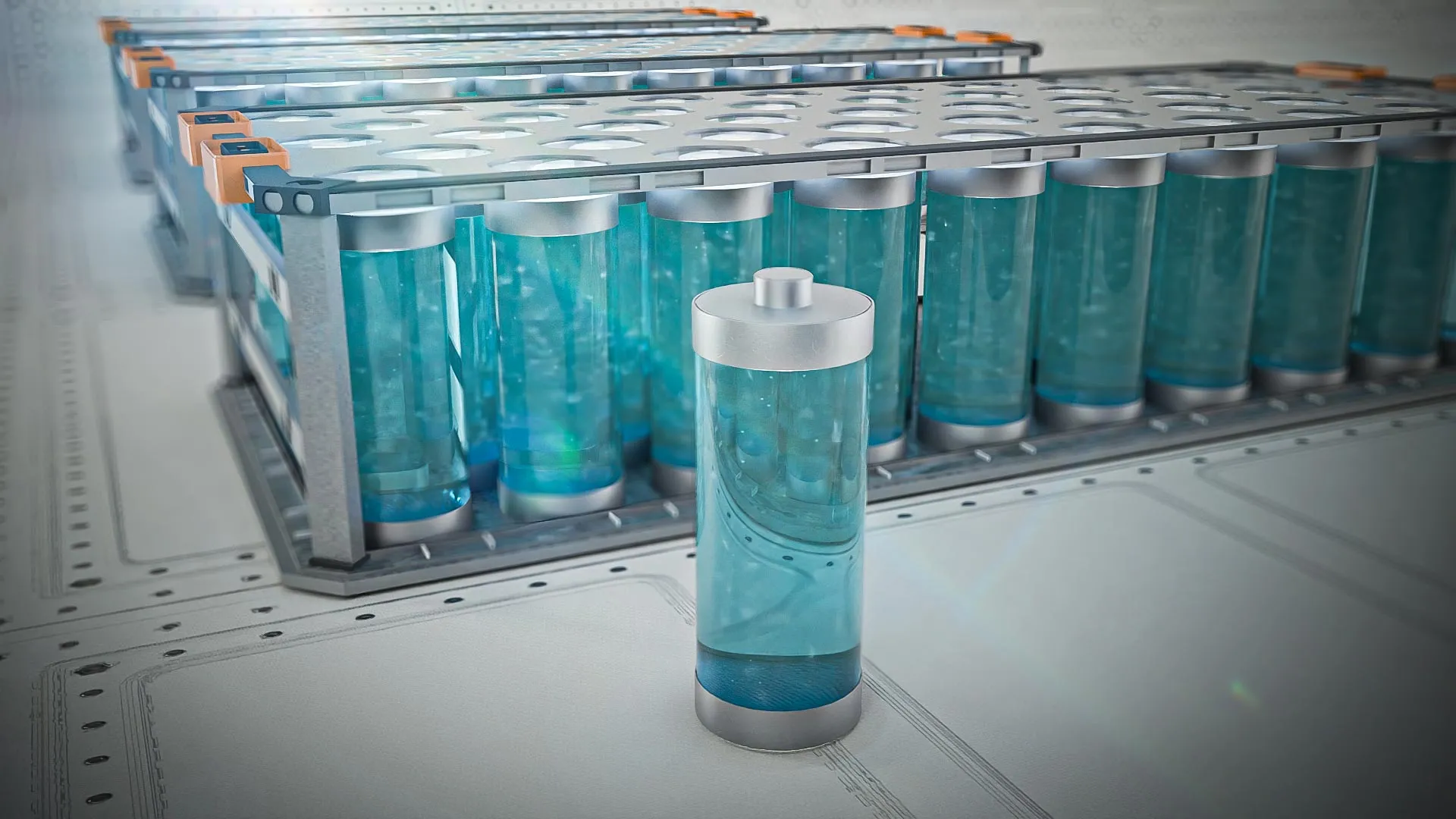
Sodium ion batteries have less energy density as opposed to Lithium ion (100-150 WH per Kg instead of 150-250). I’m curious how much these “wet” batteries improve that. The article doesn’t say.
Nonetheless, even if it’s not the new battery for your car, it could be useful as energy storage for the grid, storing green (solar) energy for the night, and desalinating seawater at the same time.
We hear about a new battery chemistry like every week. Do most never get to commercialization?
They mostly these articles are showing new avenues for research. Most are deadends usually due to issues with production/scalability.
Sodium Ions batteries are coming to market, however the issue is that Lithium Ion are just improving faster and making it harder for Sodium Ion batteries to compete.
Unless other situations where the established technology wins due to inertia, sodium ion batteries have two benefits that make them interesting regardless:
Firstly, they are safer. A punctured sodium ion battery doesn’t catch fire, which massively simplifies safety design. That makes them very attractive for certain scenarios, especially ones where density is a secondary concern. That in turn means they get further development money instead of withering on the vine.
Secondly, they require fewer hard-to-obtain materials, which makes them attractive from a strategic perspective. This one should be less important than the safety factor but it’s also relevant.
I’m pretty sure we’ll actually see wet sodium cells in the wild if they are actually practical. Sodium ion tech is already being commercialized and if this brings it within the same ballpark as lithium ion then it becomes a very interesting choice for vehicles due to instant crash safety gains.
They also perform better in the cold making them a better choice for EVs in cold regions. This is why I think CATL saw the videos of cars getting killed by cold and pulled the trigger on retooling even with the lithium price crash.
Not to mention from a human rights perspective, it’s not just easier to obtain sodium than lithium but also more humane.
There is an industry for ethically-sourced materials, and even if this doesn’t completely replace lithium it can still significantly reduce the amount needed to meet demand, which can also encourage more ethical practices in that supply chain too, such as sourcing it from areas with stronger labor laws.
Too bad the market doesn’t care about human rights
That’s why sodium ion batteries are good. The market only cares when it effects their bottom line, and a few more years of development should see more Na+ battery market share
The harder to obtain materials aspect, while long term relevant, is barely a factor right now. Lithium production has exploded and resulted in a massive drop in prices that’s making the main consumer appeal for sodium batteries, price, a non-factor and driving some sodium battery producers out of business
R&d on these I’m guessing takes a little while. And it greatly depends on what niche they fill. Like the poster above said these might have lower density. For applications that move, that’s not usually good. How sensitive are they to hot and cold? That could necessitate thermal management.
They have slightly lower density right now, but there is work to increase the density, and it could very well get up to about 210wh/kg which would put it directly on par with current lithium ion batteries. So it could replace the low end of the EV market without any significant change except for a reduction in price by a lot.
One in ten of chemistries in the lab work in real world conductions. One in ten of those are cheap enough to consider production. One in ten of those can scale up to mass manufacturing. Most research works like that. You have to keep going until you hit jackpot.
Its that way with many technologies. The lead time on such research is long enough that market factors alter the viability by the time it is ready to get commercialized.
Quite often innovations from prototype technology can be transplanted into existing tech for part of the benefit, without having to build new production capacity. So the new technology does not commercialised, but the learnings from it does.
No, that’s why we use the same batteries Voltaire did on his frogs.
Voltaire was a French poet.
Alessandro Volta was the electrochemist.
JFC…what do they teach in schools any more?
Well, I know the difference between alkaline, NiCd, NiMH, and lithium batteries, and that they don’t grow on trees, so at least I have that.
probably too expensive and inefficient. LI-ion is pretty efficient compared to NA-ION.
at room temperature, but in the real world, where it gets cold, sodium batteries have an advantage.
Li-ion technology has huge factories behind it, so economies of scale apply here. The first Na-ion battery factories have just started, so everything is more expensive to manufacture on a small scale. However, the ingredients are cheaper and easily available. Once they ramp up production, we can make a fair comparison between the two.
I have a feeling LIBs are going to be more expensive, but they won’t disappear since high energy density is very handy in mobile applications like cars and phones. NIBs are probably going to end up being a lot cheaper, which should make them a popular option in all the less demanding applications, like grid energy storage, kitchen scales, and anything in between.
All I could find. This isn’t a statement about capacity(?) Units are wrong(?)
Its worth noting how preliminary this research is. Currently these “batteries” are just jars with chemicals.
https://pubs.rsc.org/en/Content/ArticleLanding/2025/TA/D5TA05128B
https://www.rsc.org/suppdata/d5/ta/d5ta05128b/d5ta05128b2.mp4
Fairly sure those units are milliamp•hour per gram which makes sense for energy density.
mAh/g (milliamp-hours per gram) is essentially still a measurement of capacity, but in terms of current instead of power.
We can do a little dimensional analysis here to translate between them. Power = Current x Voltage, so you’d multiply this (Current x Time)/(Weight) value by the nominal voltage of the cell to get to (Power x Time)/(Weight).
Phone batteries are often specified in units of Current*Time (e.g. milliamp-hours), but I’m not completely sure why. I think it has to do with voltages being standardized for certain types of cells, so the only real variable in the battery capacity is the current.
Edit: rearranged some ideas to make more sense
I think it’s marketing
5000 mAh is much a bigger number than 19 Wh and marketing loves huge numbers
Kinda like BMW did with the i3.
In 2013 Tesla was selling a model with a 60 kWh battery so BMW had the genius idea to install a 20 kWh battery BUT refer to it as “60 Ah” battery.
Tesla introduced the 90 kWh battery? BMW responds with a 94 Ah battery (28 kWh)
Newest Tesla has 100 kWh battery now? BMW has 120 Ah battery (38 kWh)
“See? Higher number!”, says the marketing
And in order to have a comparable range number they had to implement heavy weight reduction techniques like using carbon fiber for the body, negating any cost saving from the smaller battery AND giving the owner a total loss after small collisions as it shatters instead of bending
That’s an incredibly longwinded way of saying “mahh Tezlur burns three times as much ‘clean coal’ per mile as a commie BMW, yee-haw”.
This is the part that annoys me. The nominal voltage could vary between different batteries. 200Ah/g means different capacity for a 6v battery verses a 48v battery. I’m guessing battery scientists are using standardized nominal voltages for these tests or are seeing the same Ah/g capacity at different voltages (that I may have simply missed in the paper because I skimmed it and I don’t claim any deeper knowledge on battery research)
And instead of charging them, you can drink them! Unlike Lithium Ion batteries, which you have to chew.
Its got electrolytes! It’s what plants crave!
Me: looking at plants after realizing that I’m full of ions
“KEEP IT IN YOUR PANTS!”
Sounds like a win/win!
But can you drink them after they were charged?
And how does that affect the taste?
My dream is to taste lightning.
Should have checked out Benjamin Franklin’s dinner parties when you had a chance.
My very uneducated understanding is that sodium batteries can be produced virtually anywhere.
Not every battery application needs to maximize energy density, so sodium batteries are good where that is the case.
I also did not read about sodium ion batteries characteristics versus lithium ion, so there might also be other use cases where sodium ion batteries are better.
No thermal runaway if I remember correct as those are not prone to exploding (unlike li-ion/li-po)
Well it’s a pretty big deal, especially for large power storage.
Exactly this, there’s a huge market for energy storage, where cost, power and cycle life matter way more than size and weight. And Na-ion can be produced in countries that do not have access to lithium mines, making transport less of an issue and countries more self-sustaining.
Hilarious…all of these batteries are coming out of one country because only one country is doing serious R&D.
If the data is available for mass production, you just need to copy paste the factory and establish the trading partners for supply chains.
Not the same issue as, for example, ASML and China.
There is a branch of battery research that is only focused on grid storage. It’s the last piece to make solar and to a less extent wind unbeatably affordable.
In a home solar setup, batteries are the other half of the cost and have not fallen as fast as the cost of the panels themselves, the other half of the cost. For fully off grid setups, they quickly become the main cost.