

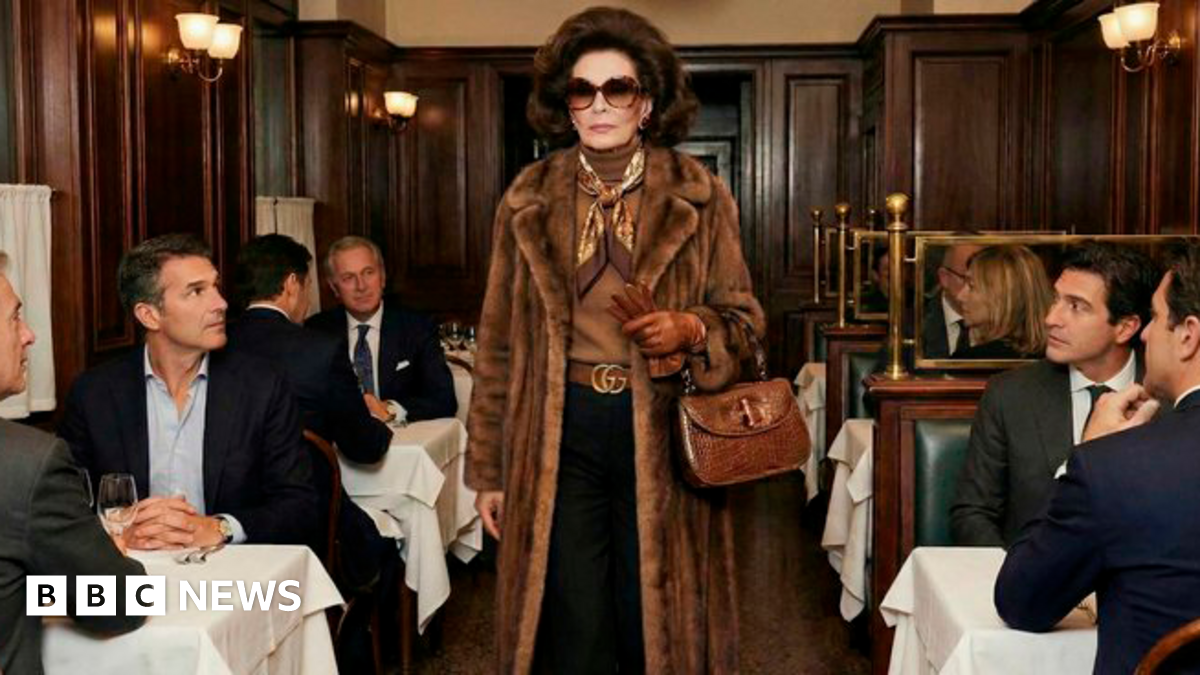
Users of social media - where the marketing campaign has been launched - say it is out of keeping with Gucci’s reputation for luxury.
Users of social media - where the marketing campaign has been launched - say it is out of keeping with Gucci’s reputation for luxury.
No, that’s only the particular type of “luxury” slop that multinationals sell. There are lots of “luxury” items that don’t fit that definition: traditionally-made bespoke suits and shoes, for example. There’s a guy in the town next to mine who handmakes leather boots. They cost about $500 and he sells only double digits per year. Luxury? Yes. Made as cheaply as possible and sold through brute-force marketing? No. The Gucci crowd will never notice what you’re wearing, but it’s luxury nonetheless.
Yeah, it’s more of a late stage capitalism “luxury” where the difference isn’t so much in the quality as in the price because people conflate “price” with “quality” and “desireability”.
And I do understand it, at least to a degree. I try to do research on more expensive items or ones I’m looking for quality in, but it’s kinda exhausting, and often a cycle of “I want thing, see it in store and remember I want it, look at options, no idea which (if any) are decent and which suck, start looking online, decide I don’t want to do this right now, move on, forget to do research, repeat next time I’m at that store”.
The easy mode of doing that would be look at options, assume cheapest ones suck, most expensive is too much, get one of the ones a little cheaper. At which point, the seller just needs to set a higher price to get a sale on the crappy ones.
It is really hard. IME the tactic with the highest success rate is buying older luxury goods - something from the 70s or earlier. Obviously this doesn’t work for clothing, but for things like furniture it’s great, or even houses themselves; high-end homes built before the 90s are enormously higher quality than modern “luxury” houses made of OSB and gray-painted cardboard. Clothing is much more difficult, especially outside of Europe, where they still have companies making things with care using high-quality fabric.
I guess the crux of the issue is that luxury used to mean quality, not ostentation. A Mercedes from the 70s doesn’t “seem” luxurious to the modern eye until you start interacting with the switchgear or opening and closing doors. Same thing for the sofa framed with real wood and metal springs and upholstered in outstanding fabric - you can’t tell why it’s better than IKEA by looking at a photo.
Going for less known names can also help, as they are trying to build/maintain a reputation in addition to sales.
IKEA is an interesting brand because it spans from incredibly cheap to nice quality, and personally, I find the cheapness is more in the material selection than the design. Like the furniture I got from them at my last place all survived the move to my current place, even the one I got frustrated with and stopped caring if it made it when taking it apart, it still stands solid today. They are one of the few that has decent value, though their prices can get pretty high at the high end.
Fair enough, but I think when the average person says “luxury apparel” they specificity mean Veblen goods distributed by companies that intentionally hamstring their own logistics in order to manipulate the price point regardless of quality. At that point you’re just selling deliberately manufactured exclusion as a commodity. The one-off artisan bootmaker is to luxury goods what the single family farm that hugs their cow every morning is to industrial agriculture.
Possibly, but the average person is wrong about a lot of things, especially those they aren’t familiar with. The average person is no more an authority on luxury than they are on, to reuse your example, the logistics of running a farm. It’s probably also important to draw a distinction between parvenu countries like the USA and China, where “pop luxury” item are considered luxury, and old money countries like France or Switzerland where that’s much less the case.
I guess a better term would be 'pop luxury ’
Aspirational brands
That’s perfect, I’m stealing it!
Enjoy!