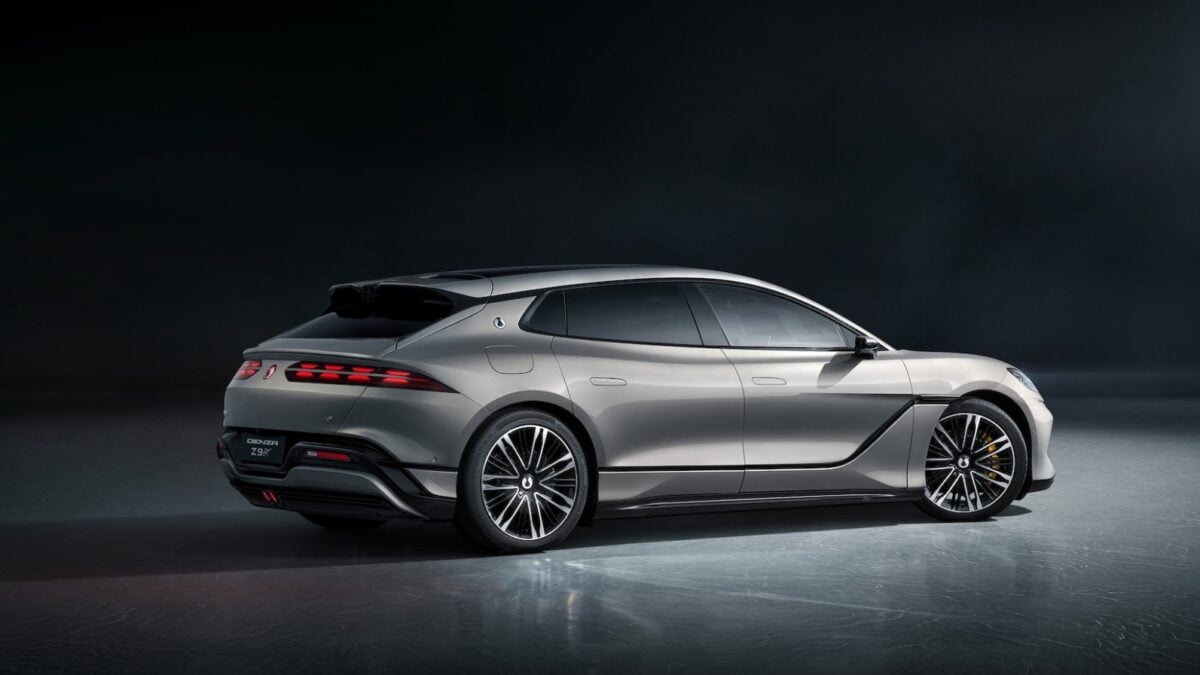
It’s amusing to me that the same folks to deride Chinese car manufacturers because they are somehow cheating by getting support from the government are the same people demanding that the US government artificially protect the US car industry by blocking Chinese imports. The point being that neither side actually objects to government participation in the market. But, one side uses it to make better products and service consumers, and the other does it to protect worse products from market forces.
“A free market is self regulating” until someone makes a better product for less money, I guess.
We tasted some of that self regulating ‘free market’ a while ago. Banks were having huge profits from the housing bubble until the subprime crisis hit, banks went into default, and the losses were picked up by public money.
My profit. Our losses.
My profit. Your losses.
After that it’s “unfair competition” and the state has to intervene
The point both of you deliberately overlook is that China is not participating in a free market anyway. They never played by those rules so there‘s no point in treating them the same way as anyone who does. There is a lot of hypocrisy to be found in politics and economics around the world and China itself is a prime example of that. But a measure to defend yourself from an obvious case of economic warfare is the most understandable thing in history. Your criticism is misplaced and irrational. I mean do you seriously think a monopoly is desirable?
We’ve had of ecocomic warfare already. It was just fine for US companies to hollow out domestic manufacturing so China could build the manufacturing infrastructure that could have been built in the US.
But now that a Chinese company is building things that undercut a US company, you want protections for US billionaires that weren’t afforded to US workers.
American companies only make up a small portion of the US auto industry.
Are you ignoring the whole subsidies thing on purpose? This is not BYD attacking Tesla. This is the Chinese government attacking western industries.
USA subsidized Detroit $80B since 2008, and that’s ignoring state graft for building assembly plants. What the fuck did they do with that money, attack Eastern industries?
Well, it was $79.7B to be exact. And what the US government did with that was not cut checks, but rather, purchased stock in the companies.
When it sold the stock it bought from manufacturers, it sold for around $70B. When they sold the approximately $2.4B invested into Ally (an auto financing firm), it sold for $17.2B.
So the money spent in 2008 actually made a profit. It was not distributed to the manufacturers or finance companies at all. Just used to shore up their value to prevent them from going out of business – and more importantly, probably, make sure investors didn’t lose money, or at least not too much.
Well, it was $79.7B to be exact.
oh, touche! but that was only after 2008, and not including previous bailouts to Ford. Then, every state, everywhere is paying to either get or keep assembly plants but that does not factor into your selective math.
When you take into account inflation and the overall market gains over that time, they absolutely did not make their money back.
This is BYD selling cars for less than the billionaires you care about want to.
Nothing more.
If an American company badge engineered these cars and sold them in the US at US prices, you would be fine with it just like you’re fine with the economic warfare against the poor that US manufacturers and China have been allies in for decades.
If the Chinese government is losing money on each car they export, soon China will be bankrupt. It only makes sense to buy more China cars at cheap rates and bankrupt their country.
Also, there is no proof of subsidy, it’s just made up Western cope.
The US government has been propping up Detroit for over 20 years with over $100B in subsidies and tax relief, plus every state government grafts to get a new assembly plant.
BMW is not in South Carolina for the quality of workers.
There no such thing as a free market. It’s a constant pull between monopolistic forces and government restriction.
Ideally, although the US is trying our best for monopolies…
And there never will be. Not so long as it is possible to hide information from the consumer, and any sort of barrier to entry exists for market competition to spring up.
My point was it’s literally impossible.
Yup.
There are very niche situations where a free market actually works - situations where there is no hidden information and no barrier to entry, where monopolies can’t arise due to the nature of the specific market. By the nature of these restrictions, nothing of any importance will ever be supplied by these markets.
China defends its interests and follows what rules it deems advantageous. Just like everyone else does. It may upset you but they’re just better at playing this game than most countries nowadays.
Because they don’t have a class of politicians and billionaires stuffing their pockets.
Nobody’s immune to that
When has the US ever participated in a free market?
Man…interweb really drinks that anti-China koolaid.
Decades of propaganda works. Centuries of racism helps as well.
I don’t think anyone is denying Chinese aggressive intent here, just our response. Give us a response where we can get onboard, a response that is more legitimate than their approach, and wecan all be mad at China.
Or think of it this way. We all agree on all the ways China are the bad guys, but our behavior is making them look like the good guys. wtf are we doing?
there’s no point in treating them the same way as anyone who
doespretends to.ftfy
We should be critical of our manufacturers but we should also not forget China is basically getting its R&D for free by stealing tech from everybody (all do, but some more than others).
Removed by mod
Removed by mod
deleted by creator
@yabbadabaddon @technology Unfortunately this is no longer the case. While China 10-20 years ago definitely bootstrapped itself with corporate espionage and reverse engineering, so did every country including the United States. The China of today produces its own fundamental research at a rate comparable to the US, and given the structural failures of our educational system, will exceed the US over the next 5 years.
Not recognizing that and making excuses is the sign of a country in decline.
A company in Europe has to respect patents. Same for a company in the USA. Not a company in China. Of course this has an impact. Failing to grasp this is at best naive at worst purposefully misleading.
People CONSTANTLY harp on Chinese government support of the EV industry.
Name one ICE manufacturer not taking state and federal money. Detroit took $80B in handouts after 2008. That’s far more than the Chinese government has spent, and the largest investor in Chinese industry, by far, has been Apple Computers.
So China ended up with a new industry taking the world stage. What did we get from Detroit? Bloated low tech shit boxes that barely make it past warranty.
The UK was constantly bribing car makers to stay, and most of them still fucked off.
Australia just gave up and told GM and Ford to go it alone. The fact that they shut it all down in 2017 says there was no business plan without government subsidies.
Well there is a plan, it’s just “make them in countries where you can still have slaves”.
What did we get from Detroit? Bloated low tech shit boxes that barely make it past warranty.
Don’t forget the bailouts:
Better products? What about geopolitical interests? If China doesn’t need oil then they don’t have to care if the strait of Hormuz is open or closed.
It’s a nice added benefit that they are better for the air, quieter and have more cargo space.
“Struggling” implies the American Auto industry is at least trying to keep pace. But really, they aren’t trying at all. They are content to sit back thinking their current flock of geese will lay golden eggs forever even as more and more of those geese drop dead from old age.
That‘s the main problem in Europe as well. I don‘t mind tariffs on heavily subsidized cars that are designed not to make profit but to destroy our industries. However, even then our manufacturers are in a constant crisis mode and unable to adapt. It‘s really pathetic.
But hey, when the car lobby is dead maybe that means more trains and cycling paths in the long run? Perhaps there‘s an opportunity here.
It’s all thanks to Germany though. They are the ones who have succeeded in scrapping the bill to ban new ICE vehicle sales after 2035
Canada did the same thing. We also got rid of the carbon levy.
If it has to be forced, then it probably isn’t a good idea.
We’re only just now. Like this year just now, seeing batteries that can be made much cheaper and last much longer (sodium ion) and batteries that will last the actual lifetime of a vehicle (solid state lithiums, allegedly). The cars the past 5 years that have had LifePO4 batts will last decently long. Up until now you’ve been looking at EV’s that cost more, with batteries that will go bad in them that cost huge amounts of money to replace. A 10 year old Tesla with 200,000 miles on it is essentially garbage. No one will pay much for it because it’s about to need a $15,000 battery, and when it fails it’s going to the junk yard. My little ice car has nearly 300,000 miles on it and is old enough to vote. If the engine blows up I could buy a working used one for like $500 and install it myself, or pay somebody else a couple grand to deal with it all for me.
Passenger cars aren’t the end all be all to global warming or the environment, either. They aren’t the main cause. Most countries grid systems couldn’t handle a complete EV swap by 2035. Look at the issues these stupid ai server farms are causing grid systems.
My point is, no one should need to force ev. At this point it will become the better and obvious choice over ice on its own. It isn’t there yet for tons of people or countries.
No one will pay much for it because it’s about to need a $15,000 battery,
That’s pretty rare though. Less than 5% of EVs need a battery replacement after 10 years (including those with defective batteries), and modern EV batteries should last at least 20 years, after which they’re still estimated to have around 65-70% capacity.
That’s not pretty rare, and with lithium batteries it’s also a guaranteed capacity loss, even if there’s not many power cycles to them. Age is a huge determinate factor in capacity and power loss in lithium batteries. The capacity loss also isn’t on a straight line scale. It increases with time. One or two percent a year loss for the first 5 years and then it will get bigger and bigger. Unlike an ice vehicle that’s kept in a garage and taken care of that can got well over 200,000 miles almost regardless of age, an EV currently can’t do that. They’re terrible in the 2nd and third hand market. A 20 year old EV will be useless.
While battery degradation is real, one thing people often overlook is that most of these mandates include PHEVs under the umbrella of electric vehicles. PHEVs have way smaller batteries which make them lighter, cheaper, and they aren’t subject to range anxiety. The only downside is the extra cost and the continued maintenance required of an ICE (but ICE buyers are used to it and don’t care about that).
That’s quite false, buddy. In fact it’s an outright lie. For Europe and for the US, so I don’t know where you’re talking about this “most of” is at.
The EU bill was for a complete ICE ban by 2035, and the reversal that Germany was pushing for in removing that ban was for it to be a 90% emissions reduction instead of a ban. This was wanted by Germany for the sole purpose of still allowing hybrids after 2035.
In shorter fashion: It didn’t include hybrids. Now it’s going to.
If it has to be forced, then it probably isn’t a good idea
It’s not like people want to do that for shits and giggles.
A different perspective is the market shift is inevitable. We can work with it to make the transition smooth, to help existing manufacturers retool, to more quickly build out the necessary infrastructure, ensuring least disruption and existing manufacturers are still in business. Or we can let the market be disrupted by new companies predominantly in other countries. The transition will be longer and rougher as jobs are lost, infrastructure lags, existing manufacturers cling to old technology, until eventually that entire industrial base collapses
Or of course there’s the perspective of acknowledging long term climate trends and understand the responsibility to our children, our society, our descendants, to make small steps to mitigate the harm we do them
Never understood why EVs aren’t made with standardized hot swappable cells. Would solve the range problem and the wear problem.
There was at least one company several years ago that was trying. Go to a place and pay a fee, kind of like how you’d swap out a propane gas bbq grill tank. They’d forklift out the empty batt and forklift in the charged one, was their game plan.
The tech is all too knew for standardization. Too many chemistries and voltages and places to figure out where to stick batteries.
If what catl is producing right now is correct and true, we should be all set in the coming future. Supposed sodium batteries at 175wh per kilogram and over 10,000 charge cycles and very fast charging. Great for sub 300 mile range small econo vehicles. Then the solid state lithiums they’re working on are also supposed to have a high amount of charge cycles and energy densities close to 500wh\kg, which will give plenty of range and make the cars lighter, which is really needed to ease up on suspension and efficiency and tread wear.
Not practical, no one wants it.
People are already bitching and moaning about how hard it is to build out charging, when it’s based on existing electric system that’s is already everywhere. You really think it’s at all practical to build out everywhere a network of station with a large inventory of one ton batteries to fit every age of every vehicle in every location no matter how rural and heavy automated equipment to maneuver them? You want to hold battery technology stagnant to support this? You want to lose the efficiency and reliability benefits of structural batteries.
The reality is current batteries already last longer than the first owner keeps a vehicle and newer ones easily exceed lifespan of ice vehicles. The reality is charging is already more convenient that battery swapping. The reality is building out chargers is much easier than any other infrastructure
You really think it’s at all practical to build out everywhere a network of station
It works with propane tanks.
one ton batteries to fit every age of every vehicle in every location no matter how rural and heavy automated equipment to maneuver them?
That’s where standardization comes in. All vehicles would use the same cells, or maybe a couple sizes depending on use case. No reason they have to way a ton either a car could have multiple cells sized for a person to be able to handle themselves. This would also allow you to “top up” if they can get the cells to drain sequentially.
You want to hold battery technology stagnant to support this? You want to lose the efficiency and reliability benefits of structural batteries.
As long as new technology connects to the old connections then they can change whatever they want inside the cells. That’s how batteries have been for pretty much the entire history of batteries. And no I don’t want to lose anything. I was merely asking a question.
The reality is current batteries already last longer than the first owner keeps a vehicle and newer ones easily exceed lifespan of ice vehicles.
I’d very much like to know what the actual numbers are for “how long the first owner keeps a vehicle” and the “lifespan of ice vehicles”. I’ve had my car for 15 years and I’m the first owner. My dad had a truck that’s coming up on 40 and is still kicking. EVs haven’t even been around long enough to prove that
Everyone has different definition of lifetime and very few keep theirs 40 years
I personally buy new and keep it for its lifetime, as defined by “needing more work than its value “. That has worked out to be 12-15 years for ICE cars. For an EV I’m reasonably confident the battery will last longer than I own the vehicle and it will still have some amount of resale value based on batteries degrade rather than die
Also I’ve seen quite a few articles like
Tesla is ahead there too. Its average EV lifespan is 20.3 years, whereas the average electric vehicle has a lifespan of 18.4 years. By comparison, the average gas-powered vehicle’s lifespan is 18.7 years.
grid systems couldn’t handle a complete EV swap by 2035. Look at the issues these stupid ai server farms
While we’re so stagnant it would be a challenge, do you not see the difference between
- a known, gradual transition with a 20 year timeframe (10 to end ice production + 10 for most existing to age out)
- an immediate demand for for large amounts of power for a bubble technology that didn’t exist a couple years ago
You can plan for a well known and couple decades timeframe, or the failure is yours. It’s harder to plan for surprises
We’re (the world) is currently massively back ordered on transformers by many years and no one is ramping up production. Let alone the rest of the infrastructure, or what people in apartments and others with no garages are set to do. Were too far out to solve those problems. Even 20 years out.
Maybe, but there’s a lot more chance to solve it 20 years out
More importantly, generating and transmitting more power is not the only option. It is for ai since a datacenter needs huge power continuously. However EVs need much smaller amounts of power intermittently. If I plug in overnight, I don’t care when it charges or how fast as long as it’s done by morning. Not everyone does that at the same time, and we ought to be able to create a “smart” solution to coordinate this and minimize the impact
EV potentially could coordinate with the grid so we don’t need much or any additional power but just use it at different times
You still have to look at the millions of people with no garages, that park on streets and apartment parking lots, and who won’t have means to charge outside of going and charging at fast charge stations away from where they live. These will all take massive amounts of high current power at peak times, not overnight. The people in their single family houses with their double car garages won’t be an issue for overnight charging. It will be an issue for all the others. Imagine places like Kansas city or Chicago or LA.
Isn’t profit supposed to bring prices down?
Looks like crapitalists are scared to shit of free market competition.
our manufacturers are in a constant crisis mode and unable to adapt
in 2023, Tesla released all the specs to move EVs to a 48V architecture to Detroit, saving a tremendous amount of wiring and eliminating the need for most sub systems and secondary computers. Detroit just ignored it, until 2026, and now Ford invented 48V architecture.
deleted by creator
Are the subsidies specifically for destroying foreign markets? (😈MWAHAHAHAHAHAHA!)
Maybe, maybe not. I’m not a huge fan of the Chinese government, but I don’t think their subsidies program are intended to directly destroy foreign markets so much as put the country at the forefront of development and production… which can be perceived as the above.
In depth study of the Chinese GreenTech subsidy system.
As the study goes into in depth, tax credits are just one part of the system. There’s also direct subsidies(funding) for R&D, which is understandably very expensive, and below market value land sales among other things. In 2019 China put the equivalent of 1.73% of their GDP into industrial support, with below market land sales being a substantial portion of that. Next highest on the graphic is Korea at 0.67% GDP equivalent.
Moving away from the subsidies thing.
China has the battery production technologies and capabilities, the electric motor production, an unbelievable economy of scale, and insane levels of automation in their EV Factories,
(Found this out awhile ago when I was watching a video on how actually ridiculous the whole US - Greenland thing was.)
China has ~90% of the rare earth refinement capacity. Even if Trump wants/wanted Greenland for it’s resources, it would be over a decade to spin up enough refinement infrastructure to process whatever they would hypothetically extract.
China has invested HEAVILY in the entire supply chain from resource extraction to final product for a wide swath of GreenTech. When a lot of the rest of the world has switched from a majority production/export to majority consumption/import economy, or focused on soft products/research/etc of course they would see a country flooding their markets with products as adversarial. Regardless of if those foreign products are superior. Especially if the government of said foreign country is often interfering in political processes, intimidating other countries citizens, setting up extra judicial secret police networks in many countries, economic coercion…etc etc etc.
I’m not entirely convinced that the subsidy system is malicious, but the CCP isn’t above playing dirty. So I can fully understand the common reaction being that it is.
While I’m positive they are playing dirty in many ways, the fundamental difference is they saw a long term transition, welcomed it, guided it. Whereas us sees a long term transition, pulls our head into our shell, holds on tighter to old ways of doing things, keeps focussing shorter and shorter term. Whatever China may be doing to “cheat”, it really seems like this is mostly self-inflicted
the fundamental difference is they saw a long term transition, welcomed it, guided it. Whereas us sees a long term transition, pulls our head into our shell
That’s one of the advantages of having a single party in power for a very long time, I don’t think China qualifies as a proper dictatorship, but it shares the advantage of the ability to plan decades in advance. The US is hobbled by the 4-8 year cycle of the next person totally erasing all the work of the previous. So there’s an incentive for whoever is in power to keep the status quo and keep any changes small enough or “bipartisan” enough that the next person doesn’t repeal it.
I wouldn’t necessarily say that from what’s visible outside the information confines of the CCP is cheating. They have a well defined goal, and no sight of the end of party rule means they can effectively do whatever they want to achieve it.
wouldn’t necessarily say that from what’s visible outside the information confines of the CCP is cheating.
I do have to say I’m skeptical of all the claims that they are subsidizing industry and this is a problem. They are. In the open. And that’s normal. I have yet to read a convincing story that they are doing this enough to be substantially different from every other country. And being consistent over multiple years is clearly not cheating
Chinese companies have a deserved reputation for industrial espionage and not respecting intellectual property. I haven’t read complaints recently so does that mean they’ve cleaned up their act?
I mean, the claims as I understand them, is that the government is subsidising these EVs and Solar-PV etc. to the point where they are being sold below cost of manufacturing. Making any competition next to impossible in any countries where parts supply chains are more costly than in China. Not sure I believe that to the extent claimed, but they definitely are, very clearly and without hiding it, heavily subsidising these industries. Without someone smarter with numbers than me and very trustworthy looking at the actual flow of money from the government to these companies? There’s no way to actually know what is in fact happening.
But really, they aren’t trying at all.
GM’s biggest sales increases are with Cadillac EVs last year.
Detroit followed the Tesla model, with the highest profit margins in the industry because their CEO convinced simps EVs should be expensive. So they jumped in early with poorly designed and expensive vehicles, thinking Tesla stans were everywhere.
There was a time, worldwide, if you just wanted a reliable and low cost sedan, you bought a Ford or Chevy, and they sold millions. But round 2016, Detroit lost interest in lower cost vehicles, and by 2020, they got addicted to price gouging cheap vehicles to make them expensive, and why not, people were paying $70,000+ for a Jeep and just taking it up the ass.
Given Detroit abandoned that part of the market, they shouldn’t care if Chinese EVs arrive, right? Because their $60,000 EVs are a better product, right?
Tesla was definitely trying…
Ah Tesla… I too attempt to accomplish tasks by being a leader and going completely insane.
Tesla was a tech leader before Musk showed up. As soon as he weasled his way in and declared himself a founder retroactively, the best engineers left and started Rivian and Lucid, both of which make better vehicles. On his watch, they made that stupid SUV with gullwing doors no one can open in a garage, then the Cybertruck.
People only prefer BYD to Cybertrucks because the government is not adding ketamine to drinking water.
Half of the Tesla vehicles are made in China, they are not competing with the Chinese EVs but they are the Chinese EVs themselves instead
The Teslas that are made in China are noticeably higher quality than the ones made in the USA. Fewer panel gaps and better fit and finish.
The only reason Teslas are decent quality is because the majority of them are made in China. Over 50% of Teslas are made in China, using over 90% local (Chinese) parts.
American Auto Industry Struggles to Keep Pace
You mean lobbies the government to ban Chinese EVs, because they have no means of competing whatsoever? Free market for me, but not for thee.
Has always been this way. Back in the late 70/early 80s, Harley couldn’t compete with the Japanese bikes so they lobbied to daddy fed to make sure all the foreign bikes got tarriffed out of existence over 700cc. So the Japanese said “hold my soju” and made 699cc motorcycles that still made more power than the gargantuan Harley bikes of the time. USA has always tried to give US based companies a leg up over objectively superior products. Our tax dollars are why there are any American car companies left, sure Ford didn’t get a direct bail out but we use them for police and other service vehicles across the country which has helped keep them afloat. Plus obviously Chrysler and GM taking govt bailouts and still flailing desperately while making trash vehicles and wondering why they don’t sell. The American auto industry doesn’t struggle to keep pace, it has NEVER caught up to or even compared to the rest of the world. They have always been 30+ years behind any European or Asian vehicle.
So the Japanese said “hold my sake”
FTFY. Soju is Korean.
Thank you🙏believe it or not I’ve been to korea before so I should know that… Been many years.
They could’ve been asking for their shochu to be held though
I love history like this! Thanks for sharing! (Hold my sake might be more accurate lol)
Not like other countries arent doing the literal same.
But we also dont scream into the world that we are “LaNd oF tHe FrEe”There was a while when the US was on top, revolutionizing automotive manufacturing. Ford’s Model T and later Model A sold like crazy.
It’s not struggling to keep pace. It’s not trying to keep pace.
Dealers arent incentivized to promote a vehicle that requires less maintenance they can mark up.
Maybe car dealerships are part of the problem.
Someone should tell them “struggle to keep pace” is different “abandoning the attempt”
Not having to keep pace. They just get the competitive cars banned in the US, then charge so much fucking money here for their shit products it’s worth losing the rest of the world.
1,036 km (644 miles) on a single charge under China’s CLTC testing standard.
Does anyone know how realistic this range is? You can get some absurd range from a vehicle if you’re driving on a closed course at 60kmh with no air conditioning or entertainment.
https://en.wikipedia.org/wiki/China_Light-Duty_Vehicle_Test_Cycle
The CLTC testing accounts for the country’s higher congestion levels with more frequent stop-and-go and lower speed limits, which lead to increased low-speed driving and longer idling times that benefits electric vehicles.
Right, so you’re not getting anywhere near that on the open road.
Right. Open road should be more around 770Km. I have a BYD Han 2023 that has a claimed range of 550Km, and I get just about 420Km realistically, at a steady 110Km/h with a few bursts of up to 150Km/h to get away from idiots doing 80 on a 100 (or just to show off the torque to other types of idiots like BMW and some Tesla drivers 😏). I do still get a bit over the claimed 550 if I don’t leave the city and drive as if I was afraid of tickets.
with a few bursts of up to 150Km/h to get away from idiots doing 80 on a 100 (or just to show off the torque to other types of idiots like BMW and some Tesla drivers 😏)
Yeah, they’re the idiots. Not the one going 50 over while showing off…
Lol. I do break the law some times by speeding, but have almost no tickets, so that’s a win, haha.
WLTP, which is closer to US Highway driving, estimates 800 km. Or 500 Eagles.
I mean, that’s still pretty darn impressive.
For better or worse, it’s one of those sticking points keeping many away from electric. I was like that several years ago, but I’ve noticed my driving patterns since then. I can’t do electric because I can’t afford a new car and even worse I’m an apartment dweller, so there’s no infrastructure. But if I could, I absolutely would get a vehicle. Long as it had a couple hundred miles of range, that’s all I need (we have a second car anyway, so if we needed longer trips, we’re covered). And less battery means moving less mass means even cheaper to run.
But my dad went looking a few years ago and ended up with a gas car again - because they do take trips and drive sometimes, and so the idea of having to recharge, even on infrequent trips, was a sticking point. But with 500 miles of range, it’s getting to the point where that’s getting close to a day’s comfortable driving for a lot of people, and if you can charge overnight, then it becomes enough for trips and it helps eliminate the range anxiety.
I think once people start transitioning over to electric, their second vehicle might have less range…
I mean, that’s still pretty darn impressive.
Is it? 122 KWhr battery -they are just piling in more batteries, which means a huge waste on energy and money on carrying around battery packs.
Who drives 500 eagles without stopping?
I mean they can just fly out the window
According to wiki
CTLC 509 km (316 mi)
EPA 390 km (242 mi)
So yeah take a solid 25%+ off
Came across this which I’ve not validated but does seem to make sense at a glance: Comparison of WLTP and CLTC
Based on that the WLTP range would be 828-900km (515-560 miles).
Real world, 6-700km at a guess?
The WLTP is pretty accurate to the actual range I get on my BYD.
Cut another third off that in cold weather.
Sounds about right. My experience in range difference is very similar.
Yeah, the EV range is frustrating.
270 miles? Pretty good. Except you shouldn’t drive it below 20% or above 80%, so really the range is like 170. Cold winter? Now it’s like 75.
No regrets on our EV, but I would feel a whole more more comfortable with 2x the capacity.
Too bad we can’t buy BYD here.
I can attest that the blade battery doesn’t seem to care if you take it all the way to 100% or drop it as low as 5% regularly. I’ve had my car for over 3 years now, and the battery degradation has been negligible. I’ve lost 1% over all this time, and both our cars (BYD HAN and Tang) are consistently allowed to drop under 10% before we decide to go charge them back to 100%. Granted, we live in the Caribbean, so we don’t have to deal with cold weather ever.
Edit: This was all wrong. I forgot I have a battery saver mode on my phone that lowers “fully charged” to something like 80%, so it is ideal to keep it “fully charged”.
Never heard the “above 80%” thing. I’m pretty sure you’re wrong about this. With lead-acid batteries, this was optimal. I’m pretty confident that lithium ion batteries it’s best to keep the charge as high as possible. Ideally you’d only ever use it fully charged. It’s health is harmed by draining it low/fully.I don’t own an EV, but I know enough about it that I’m pretty sure this is the case. You should look it up for your vehicle though. This advice also applies to phones and other lithium ion batteries too. Lead-acid was damaged by keeping the charge high, but lithium ion is damaged when low, and almost all devices are lithium ion now.I’m pretty confident
confidently incorrect.
You could disabuse yourself with a quick search.
Oh, sorry. You’re right. I forgot I have my phone on a battery saver mode where “fully charged” is not fully charged.
Lead acid batteries like to be kept fully charged all the time and don’t like to be discharged below 50% state of charge.
Lithium batteries like to be kept around half charged. They degrade quicker when kept at a high or low state of charge. Running lithium batteries from 20-80% does extend the lifespan, but charging to 100% is fine when you need to go on a longer trip. Just don’t keep it at 100% for long periods of time.
I think the BYD blade batteries can go down to 20% and up to 100% weekly. Though tbh I probably keep mine too high, I should lower it a bit closer to 80%…
Lithium ion batteries have a sweet spot of around 60 to 80 percent charge where very little wear takes place to charge or discharge. If you could keep it to just that 20-30 percent usage in that range it would pretty much last ten thousand cycles.
Charging to 100 or discharging below 50-60 percent accelerates the wear on the battery, but it is still much better than the wear rate on lead acid batteries that are cycled in a similar manner.
Batteries also need to be balanced. If you constantly keep your battery packs in that small range they’ll drift out of balance over time.
You should charge to 100% occasionally to allow the BMS to balance all the packs.
Expect CLTC to be advertising the best possible range.
There’s a ceramic battery hitting the market that has a marginally higher density and nothing is stopping them from adding more batteries. There’s also a new hub-motor concept that has a lot less losses, but they’re not car sized yet.
Getting to 644 would be as easy as throwing more batteries at it, but i’d expect those numbers to come down a bit, or the price to be much higher.
Adding more batteries increases the weight, though, which in turn makes the motors work harder, and therefore makes them use more energy to do the same thing.
That’s not that big of a deal for long-range trips, on which you typically don’t have to accelarate often.
Keeping the car going at a certain speed depends on several types of resistance, most importantly air resistance, but not really on weight.
More weight plays a bigger role for energy consumption in urban ares, where the weight needs to be accelerated more often than on the highway, the mileage per kWh is yet typically higher than on the highway due to the lower speed and less air resistance.
What I’m trying to say: I’d pick the bigger battery any time over the smaller one, if the price is reasonable.
EVs are already heavy. The weight from some additional batteries don’t play a big role.Also, with breaking recovering energy, this negates some of the issues too. The inertia is used to recharge the batteries, so the losses are from friction and heat losses. Obviously lighter is better, but a lot of the issues of weight on efficiency can be reduced. Weight is bad for safety though, so there is that to consider.
It sure does. But we have to consider that recharging is less efficient than not spending the energy on acceleration in the first place, so heavier EVs are worse off than lighter ones; it’s not only losses from friction and heat losses - those come on top.
And you’re spot-on with the danger that comes from weight; being in an accident with a lot of kinetic energy that needs to be absorbed is not great.
Frequent acceleration/deceleration driving like city driving is also significantly more efficient in EVs because of regenerative braking. ICE just lose all that energy they spent accelerating when the have to stop 500m later, which destroys their efficiency.
I was comparing EVs with different weight and not comparing EVs with ICE vehicles, though.
And in that case the heavier EVs are less efficient than more leightweight versions even with regenerative breaking, because the process of accelerating and breaking cant’ regenerate all energy that was spent for accelerating.
It’s the same idea as adding a larger gas tank. If you wanted to make a gas car go 600mi, you’d just need to hold enough gas to double the range + make up for the load of the extra gas itself, of course as the tank depletes, it gets markedly lighter.
Your mileage may vary.
1000km range is fucking stupid. No one should be driving that far at once, and they rest of the time you waste energy and money just carrying around thousands of pounds of batteries.
Then there is the fun of a car crash and shorting out over 120KW of energy.
Ya, why do those big trucks have 40 gallon gas tanks? Not like anyone ever needs to drive that far at once.
So we are now comparing daily drivers to long haul truckers?
Should we all be driving this?

A man can dream.
What are you taking about?
No one should be driving that far at once,
What a ridiculous blanket statement.
Nobody should make such silly blanket statements. :P
in non shit hole countries, driving that far without breaks is illegal.
in shit holes, over 40,000 are killed and countless more maimed for life on highways. Every year.
1000km range is fucking stupid. No one should be driving that far at once
I take it you’ve never had an emergency while living in a remote area. Especially not one with cold winters that will tank your EV’s range.
You live outside of a thousand km range of anyone?
Sure, lets make up fake once in a lifetime scenarios. What if we needto get 1000km from that comet impact?
Car threads degrade to fucking stupid quickly.
Yes, there are parts of Canada that remote that still have roads. I grew up in one of them. Let’s posit an urgent but not-likely-to-be-fatal medical emergency, like the torn and detached retina I had a few years ago. That required an urgent trip to a major city in particularly foul winter weather. Nearest major city to where I grew up was 800+km, and there are other towns further out than that one. Add to that battery loss in the cold, plus loss of battery capacity over time if you’ve had the car for a while, plus the vehicle having maybe already been driven that day without time to recharge completely . . . I can think of places up in that neck of the woods where I would be seriously worried that 1000km of rated range wouldn’t be enough, although it would be more than sufficient for where I’m now living.
So I’m talking about shit that, in my experience, actually happens to actual people. The segment of the population involved is, admittedly, not all that large, but it’s of nonzero size—probably on the order of a few million, worldwide, spread through a number of countries that have large areas of empty nothing.
Calling people stupid and then complaining about the reaction you get.
I mean what do you expect?
Car threads degrade to fucking stupid quickly.
Funny, I was looking at your comments and thinking precisely that.
When the selfdriving feature gets even better, 1000 km will be useful.
When the selfdriving feature gets even better,
you must be excited about this guy showing up next month.

Self driving is absolutely a thing. FULL self driving like what Tesla tries to bullshit about is a way off.
1000km range is fucking stupid. No one should be driving that far at once
I’ve done it several times. It happens.
the rest of the time you waste energy and money just carrying around thousands of pounds of batteries.
It would certainly be interesting if EV’s had a means to load or unload batteries for more or less capacity. If the majority of the time you’re driving local it would certainly be better having a smaller battery pack loaded and then load more when you need the range. We’re a long way from being able to do that unfortunately
How much is the average used by daily drives? What about the 90% percentile. Something like 1000km must be on the extremely tail that. The only distance I can think of 1000km is going to and back from São Paulo to Rio.
A 1000km range is a complete waste of resources.
I’ve done a bit over 900km in a day a few times, it’s a full day, but easily done.
American Auto Industry Struggles to Keep Pace
Them being end up second place isn’t new, as these makers can’t help but throw in too many features but cut out the quality or improve efficiency, such as being unable to match the fuel efficiency of non-US compact cars more than 50 years ago.
The Chinese models have more features, more technology, and more connectivity.
Exactly what I don’t want from a car. I want fewer features implemented better, higher build quality, and zero connectivity.
The only feature I want is for it to go from A to B for 150kkm without needing major repairs.
Me neither. Please give me as little as possible.
It doesn’t matter US is so protectionist that american car brands simply can’t fail. Which tbf is understandable and the case in most countries but the point being that car competition domestically is only worthwhile discussion from protectionism pov not actual technology
644 mile range? But what if I need to drive 650 miles once in a decade? Electric cars are just a stoopid fad.
deleted by creator
The worst part is once the batteries run out you have to replace the car. Who can afford a new car every 650 miles!?
In unrelated news, Chinese social credit is a deeply misunderstood topic in western culture. It apparently does more to prevent corruption than it does to aid corruption, according to one independent reporter found via my YouTube algorithm. https://youtu.be/iXrx9ryVaes
I’m starting the get the feeling that feeling strongly about almost anything is a pretty strong indicator that I’ve been propagandized. How do we live like this?
Interesting. I read an article about it.
https://www.tomorrow.city/social-credit-systems/
I mean to me this reeks of some pretty extreme fascism. Without a genuine mechanism to challenge the system and considering how the government can and will place you on a black list for not towing the party line it is about as dystopian as you get.
Fascism up in your daily business claiming to produce better metrics according to them is not something I could agree to.
I already hate the existing US credit scoring system and the numerous catch 22’s it has. While bringing this system under the regulation of government and allowing redressability sounds promising, I don’t think this is really what China is providing.
Those claims are put under scrutiny in the video I linked. I’ll have to read the article though, as I’m going off your comment.
It claims you can’t get blacklisted for not towing the party line. You can get blacklisted for not paying fines that you owe. To me, it sounds equivalent to being refused plane fair if you’ve got an unpaid traffic violation from a year ago.
The video even calls out a case where an MMA fighter was blacklisted after participating in Hong Kong protests. But claims the story is misrepresented, and the fighter was actually blacklisted for failure pay $60k after being found liable for defamation against another MMA fighter in a civil suit.
Edit: To be completely frank, I watched that video and thought to myself: such a system probably restricts the actions of the rich a lot more than it does your average Joe. Not sure if I’d mind it, really… Imagine if Alex Jones couldn’t get on a plane right now, given he hasn’t paid the victims of his slander yet?
I will watch the video later. Thanks for linking it.
But but but…China bad!! Obviously China isn’t perfect but they definitely get some things right.
And yes, propaganda works on everybody
I can’t tell if you’re joking or not
I can’t tell if you’re joking or not.
deleted by creator
They were joking.
In unrelated news, check this out: https://youtu.be/-TlYoVsW5ko
The US auto industry and market abandoned fuel efficient vehicles and continue to fail to improve BEV’s and the infrastructure to support them.
The American Auto Industry has been struggling to keep pace since the 80s lmao
They only exist because they threw their money at congress to make horsecrap legislation that bans competition.
They even assassinated sedans with EPA laws that stimulates everyone to make SUVs lol.
The only thing they can do is lobby, build bigger, expliot loopholes and maximize their margins.
I wish they would publish the battery capacity and fast charge rate. Assuming 4 miles per kWh I estimate it to be around 160kWh. If it can fast charge using a Megawatt charger then it could likely go from 20% to 80% in roughly 10 minutes gaining about 384 miles of range.
They need to hire a design studio, it’s really ugly
I dig it.
you sure?

( ̄(エ) ̄) Nevermind
And I fucking love it.
Reminds me of the new iX3 from BMW.

Just nice.
Another generic potato SUV. Yay.
Yeah, honestly this is the default car shape now and I hate it. At least the BYD looks like a big estate, which id much rather have.
That definitely is an advantage over the iX3. It’s kind of like a Porsche Panamera, isn’t it?
There are cars that aren’t?
Spyware on wheels.
So the same as every American electric car
I never understand people like the OP. It’s been proven that US and Japanese cars spy on you, but they then criticise China.
Only difference is where the data ends up. If it’s in China you probably have more privacy at home.
Tesla employees were looking at your home videos and passing around images of your children. While the CEO fucked over your government high on ketamine…BuT cHiNa bAd.
You start from “China bad” and the work backwards to fit your narrative. It’s almost pointless having discussion online on anything about China.
I’ll never understand people who read “spyware on wheels” and immediately assume i’m criticizing (only) China. Then again, nuance is a loan word in english.
I’ll bite.
How often do you comment that on non Chinese cars?
I comment that on any post 2000 car, the more tech it has the more spyware it is, regardless of engine type or brand.
And it doesn’t really matter making country distinctions as we’re talking about transnational megacorps anyway. Most brands belong to a handful of groups.Totally on that page with you.
But there’s a lot of people who will come say that, but only comment on China related calls, which reaks of “all lives matter” level of disingenuous.
Red-scared muricans for the most part, yeah.
So the same as every
American electriccarI mean… literally every modern American car with a touch screen and an internet connection. Burning gass or spinning electrons, that part is the same regardless.
I mean… literally every modern
AmericancarThere, FTFY.
Burn your phone.
I’ll burn yours instead.
Tesla wants a word.