Dylan, useful idiot with commit access, pushed age verification PRs to systemd, Ubuntu & Arch, got 2 Microslop employees to merge it, called it 'hilariously pointless' in the PR itself, then watched Lennart personally block the revert. Unpaid compliance simp.


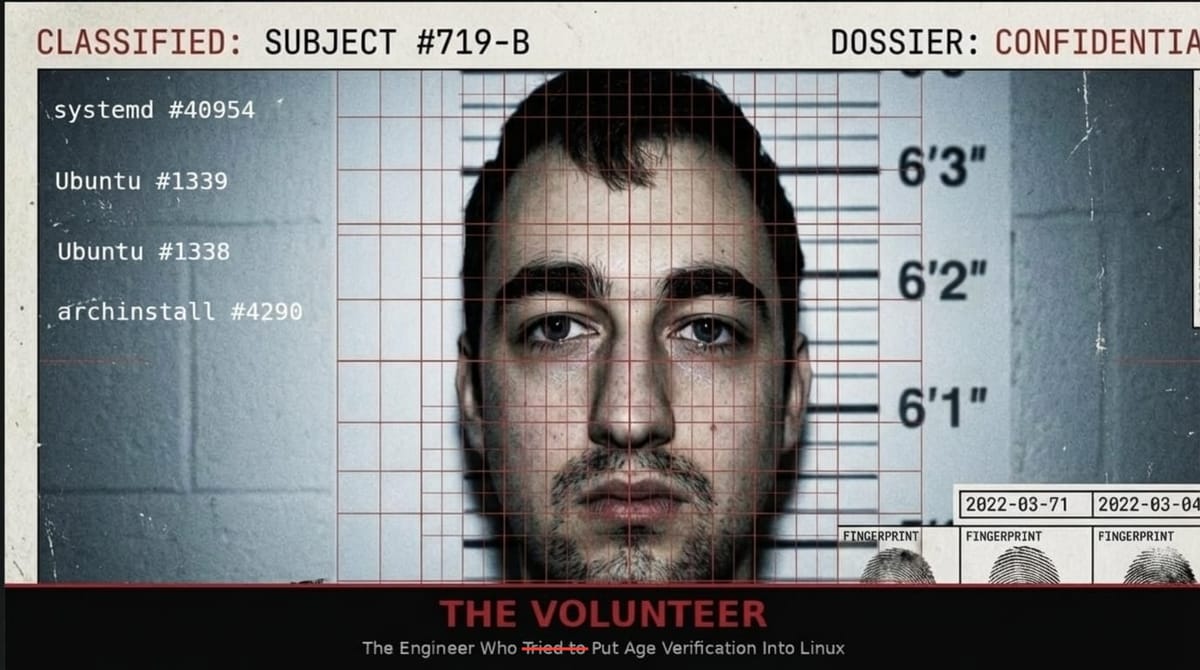
It paints him as an active danger, puts his picture on a wanted poster, includes his full name, workplace and the city and state where he lives and then writes up an article like an after action report of a cyberattack.
It then implies that he’s going to do it again and that he can’t be persuaded and so will be ‘harder to stop’.
So if he’s done a bad thing, he’s going to do it again, and you can’t persuade him.
If you can’t read the implied call to action then you’re being deliberately dense.
He’s not an active danger to the code and community? He’s volunteering to help implement the tools of fascism. I consider that dangerous. There is no call to action. If you were worried he was in danger, you’d contact the authorities, not try to identify yourself with him so vehemently.