

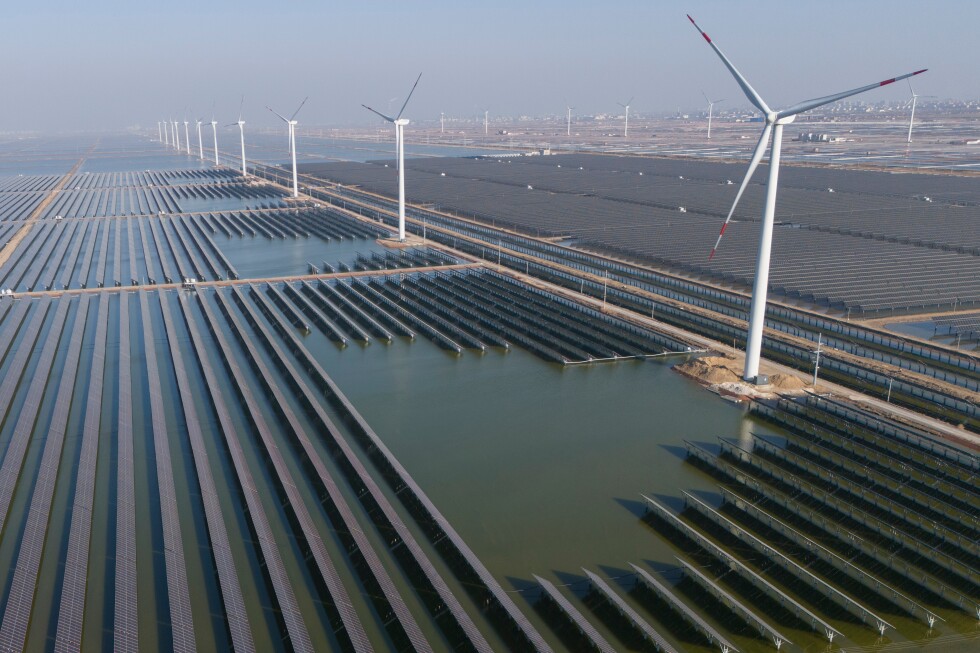
HANOI, Vietnam (AP) — The war in Iran is exposing the world’s reliance on fragile fossil fuel routes, lending urgency to calls for hastening the shift to renewable energy.
Fighting has all but halted oil exports through the Strait of Hormuz, the narrow waterway that carries about a fifth of the world’s oil and liquefied natural gas, or LNG. The disruption has jolted energy markets, pushing up prices and straining import-dependent economies.
Asia, where most of the oil was headed, has been hit hardest, but the disruptions also are a strain for Europe, where policymakers are looking for ways to cut energy demand, and for Africa, which is bracing for rising fuel costs and inflation.
Unlike during previous oil shocks, renewable power is now competitive with fossil fuels in many places. More than 90% of new renewable power projects worldwide in 2024 were cheaper than fossil-fuel alternatives, according to the International Renewable Energy Agency.
Yah but we get that reminder like every 2 years. Technology is slowly catching up though.
The technology for renewables is not the main limiting factor anymore. In recent years the economics have changed. Renewables are the cheapest form of power today and dominate (90-almost 100%) new global energy capacity because it’s so cheap. Grid scale batteries have become viable and are starting to be a significant portion of grid power in many countries
We haven’t gotten a reminder remotely like this since 1979. This one is only getting started, and some say it will be worse than the last.
We got one in 2020 to 2022. And then it went down so people forgot. As people we learn, as a species we do not.
I don’t think you looked into how bad it was in 1979. People couldn’t get gas for love or money. Many states set up rationing laws such that you could only get X gallons, and only every other day. At gas stations, cars lined up on the street for hours to get any. For the first time ever, the industry designed cars for their fuel efficiency.
A number of countries did speed up their roll out of renewables because of that, though
The amount of oil supply removed is significantly larger this time. With the war in Ukraine there were also some more obvious places to get oil from instead. It’s less obvious this time
deleted by creator
If the reduced usage isn’t offset by the burning oilfields, at least.
Guess who will sell the world all the solar, batteries and EVs.
The country where the government prioritised strategic foresight over the short term profits of legacy industries?