DDR4 isn’t as much a part of the memory shortage, though that seems to be shifting because DDR5 is jacked up. They’re pulling a solid for consumers by releasing a cheap motherboard where memory can be gotten, or giving a transition for users with older components.
I’m pondering whether to sell my 4x8Gb DDR4 sticks after recently upgrading to 2x32 or hold on to those if I want to build another system or my current sticks die all of a sudden.
The problem with this is that companies were winding DOWN DDR4 production before AI bought all the DDR5 RAM. So if no one can get DDR5, attention will shift to the already dwindling supply of DDR4 aaaaand… well, prices are already up and it’s not going to get better.
There is existing DDR4 in existing machines that can be scavenged that would otherwise probably just be thrown out. I understand that secondhand memory was an industry even before the surge, remember reading a recent article about some California company that would strip servers of old DIMMs and sell them, mostly to China. The CEO was being interviewed, said that sales had surged recently.
searches
I don’t think that these guys are them, think this is a different California company doing basically the same thing, but illustrates the point:
At Ram Exchange, we supply new, used, and refurbished RAM for a wide range of applications. Whether you’re upgrading a personal computer, laptop, data center, or need on-board ICs for custom projects, our team is here to help.
We also provide IT Asset Disposition (ITAD) services, dedicated to helping businesses securely and responsibly manage their end-of-life IT assets. We offer a comprehensive suite of tailored services—including certified data destruction, secure electronics recycling, remarketing, and asset redeployment—transforming IT disposal into a seamless process that maximizes value and environmental responsibility.
Large-Scale Purchasing Power
We buy excess memory in bulk from around the globe, including from publicly traded companies and Fortune 500 enterprises. With our extensive purchasing capabilities, no quantity is too large for us to handle.
I mean, I’ve thrown out old DIMMs. Wasn’t worth my time hassling with trying to resell them. But if they’re worth enough due to price increases, it’ll increase the number of companies who are willing to go to the effort to recoup some of the value of the DIMMs. Companies can buy them, re-certify them, and sell them.
Obviously, that’s not an unlimited supply, but the window in which it’s of increased interest is probably only something like three years, so it doesn’t have to last forever (or even fully offset the shortage to make sense to do, just partially-mitigate it).
The scavenging is making it more difficult looking for a SFF PC on fleaBay. More and more listings say “no RAM/no SSD” and the ones that have it are barebones or far more expensive. Even laptops are heading that way. Yuck.
Yeah, honestly, if it becomes enough of an issue, maybe eBay and similar should create separate sections for machines with memory and those without. I mean, there are reasons people would want to get a system without memory too, especially if one’s looking for other parts, but I do totally get that it’s super-obnoxious if there isn’t a way to filter those out and one is looking for one with memory.
checks
It doesn’t look like eBay has a “0 GB” memory category, annoyingly enough, but they do have a “Not specified” category with a ton of listings. That’s not absolutely the same thing, since if you filter “Not specified” out, I’m sure that it might also exclude some listings that have an unknown amount of memory, but I’d guess that that’d get you most of the way there, and I do see people clearly listing machines with no memory in that category.
EDIT: Honestly, the rate of mis-classified listings there by users is pretty bad, even aside from eBay not providing a “0 GB” category. I was very surprised to see that there were a bunch of 512 GB listings. Looks like that’s essentially all people selling machines with 512 GB SSDs and choosing the wrong option.
But if they’re worth enough due to price increases, it’ll increase the number of companies who are willing to recoup some of the value of the DIMMs.
meaning that prices of DDR4 HAVE TO GO UP in the first place for companies to even want to try to sell their old stock. So we’re still going to be suffering from increased prices as a result of AI.
So good that now there might be a market for people to NOT throw away their sticks, but it’s still going to get rough for people trying to make a new machine in 2026 and beyond.
I mean, there was a pre-existing used memory market, so some scavenging was already happening, but yeah, I’m not saying that increases in scavenging will fully cover the shortage. Just reduce it, which will reduce the degree to which prices rise relative to the scenario where the only memory available is newly-manufactured.
That’s why I said “as much”. Since DDR5 went crazy, people started buying DDR4, which is driving the price up, but still only at a 2x increase vs 5x for DDR5.
For me, it would be a great option if my B450 board goes belly up. I have 32 gig of DDR4 installed and would prefer to keep the system operational for a couple more years with the 5700X3D.
That said, I don’t quite see why they need to introduce new boards for AM4. Inexpensive B550 has been around for quite a while now.
I’ve heard it claimed that motherboards are much more likely to go bad than other components, so there’s a legitimate market for new motherboards on obsolete platforms, to be used with secondhand CPUs (and presumably, secondhand RAM). I think that sort of thing is especially popular in developing countries that have less access to top-of-the-line stuff and/or where it costs a much higher percentage of the average income.
For example, looking at Aliexpress, I’m seeing brand-new motherboards like this for about $40 and this for about $30 designed to be used with old Xeons that you can also get from the same site for like $10 or less. (The second board is a better example than the first, because it’s DDR3 whereas the first is DDR4.)
My guess — without trying to dig up statistics — is that the single component most-likely to fail in an old PC is gonna be rotational hard drives. Virtually all of my rotational drives have eventually died, aside from a few that were just so small and taking up space where I could mount other things that I no longer bothered using them.
I’ve seen fans die (not necessarily completely wedge up, but have the bearings go and become increasingly-obnoxious in sound).
And those are basically the only mechanical components in a computer.
Behind that, there’s input devices with keyswitches wearing out, but unless you’re using a laptop, replacing the input device is just unplugging the old one and plugging in a new one.
I’m not gonna say that motherboards don’t fail, but I can’t immediately think of something that would die. Decades back, I remember that there was a spate of bad capacitors that made their way to a bunch of motherboards and would eventually fail, but I haven’t seen anything like that recently.
The capacitor plague was a problem related to a higher-than-expected failure rate of non-solid aluminium electrolytic capacitors between 1999 and 2007, especially those from some Taiwanese manufacturers,[1][2] due to faulty electrolyte composition that caused corrosion accompanied by gas generation; this often resulted in rupturing of the case of the capacitor from the build-up of pressure.
High failure rates occurred in many well-known brands of electronics, and were particularly evident in motherboards, video cards, and power supplies of personal computers.
A 2003 article in The Independent claimed that the cause of the faulty capacitors was due to a mis-copied formula. In 2001, a scientist working in the Rubycon Corporation in Japan stole a mis-copied formula for capacitors’ electrolytes. He then took the faulty formula to the Luminous Town Electric company in China, where he had previously been employed. In the same year, the scientist’s staff left China, stealing again the mis-copied formula and moving to Taiwan, where they created their own company, producing capacitors and propagating even more of this faulty formula of capacitor electrolytes.[3]
Those would probably be from the DDR/DDR2 era, though.
I do think that it’s probably possible that some motherboard components might age out. Like, people may want to use newer versions of radio stuff, like WiFi or Bluetooth. You can maybe do that via USB, but the on-motherboard stuff might become more of a liability than the CPU or something.
I don’t think that I’ve ever personally had other computer components just up and fail other than the 13th and 14th gen Intel CPUs that internally destroyed themselves. It’s always been non-solid-state stuff, things with moving parts, that fail for me. I mean, I’ve damaged solid-state components myself via things that I’ve done, but it’s always damage that I incurred.
thinks
Oh, CMOS batteries eventually fail, but they’re usually — not always — mounted on motherboards with holders that permit replacement. I’ve had to replace those.
I did have a headphones amplifier that was attached to my computer where some solder joints got a bad connection and I had to open it and resolder it, but I don’t know if I’d call that a “computer component” just because it was plugged into a computer.
thinks more
I did have the power supply used for a fluorescent backlight in a laptop display start to fail once. But, honestly, my experience has been that unless you actively go in and damage something, most solid state parts will just keep on trucking.


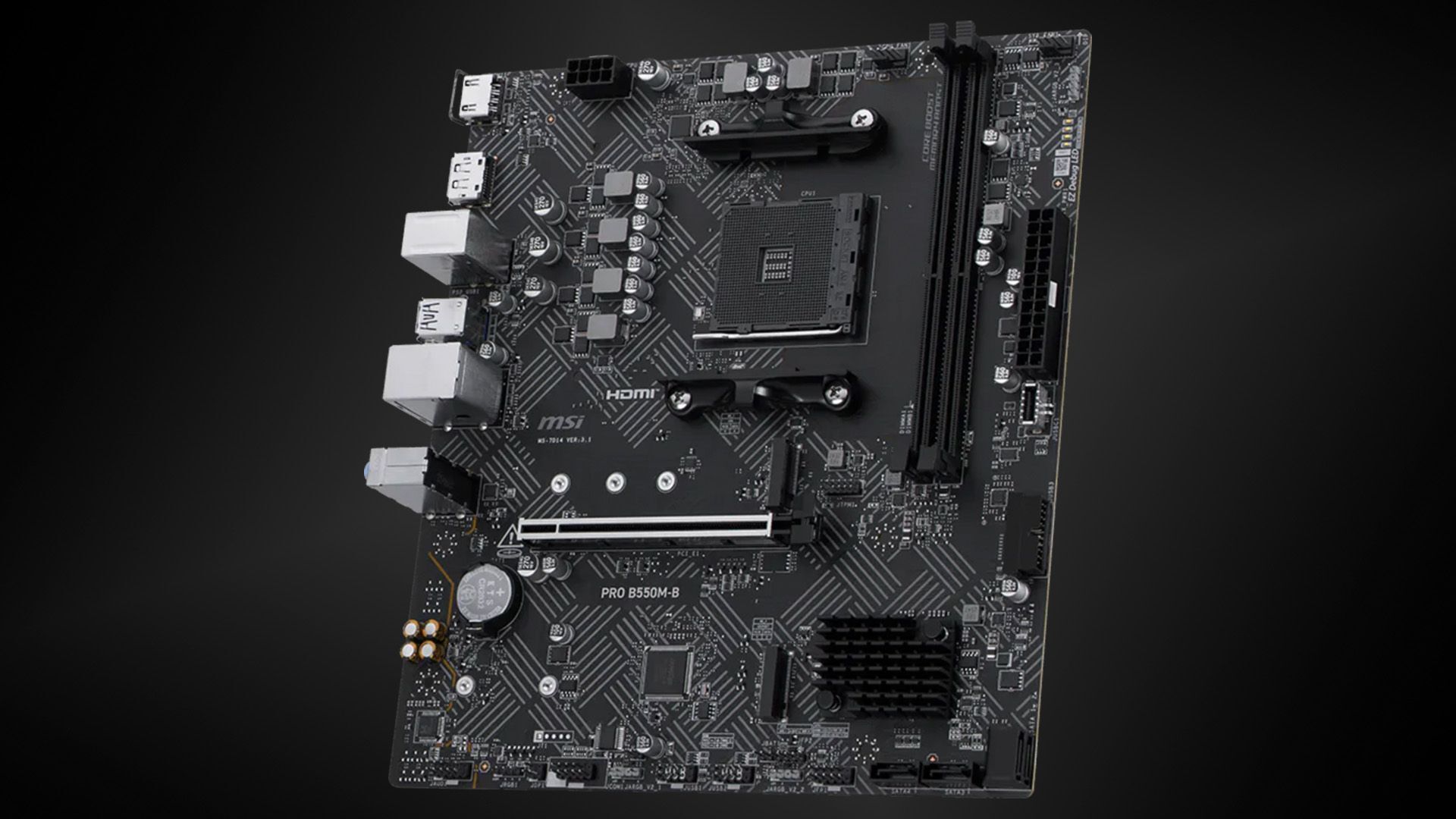
Wat good is a board of there’s no memory? AM4 has been happily humming along for years too, why is MSI special now?
DDR4 isn’t as much a part of the memory shortage, though that seems to be shifting because DDR5 is jacked up. They’re pulling a solid for consumers by releasing a cheap motherboard where memory can be gotten, or giving a transition for users with older components.
yep
https://pcpartpicker.com/trends/price/memory/
ddr4 looks to have doubled in price but ddr5 is up 5x
I’m pondering whether to sell my 4x8Gb DDR4 sticks after recently upgrading to 2x32 or hold on to those if I want to build another system or my current sticks die all of a sudden.
I sold all my back-stock of RAM. It helps relieve pressure and all that RAM was destined to sit in a box for years otherwise.
You know the right answer to this question.
The problem with this is that companies were winding DOWN DDR4 production before AI bought all the DDR5 RAM. So if no one can get DDR5, attention will shift to the already dwindling supply of DDR4 aaaaand… well, prices are already up and it’s not going to get better.
There is existing DDR4 in existing machines that can be scavenged that would otherwise probably just be thrown out. I understand that secondhand memory was an industry even before the surge, remember reading a recent article about some California company that would strip servers of old DIMMs and sell them, mostly to China. The CEO was being interviewed, said that sales had surged recently.
searches
I don’t think that these guys are them, think this is a different California company doing basically the same thing, but illustrates the point:
https://www.ramexchange.net/
I mean, I’ve thrown out old DIMMs. Wasn’t worth my time hassling with trying to resell them. But if they’re worth enough due to price increases, it’ll increase the number of companies who are willing to go to the effort to recoup some of the value of the DIMMs. Companies can buy them, re-certify them, and sell them.
Obviously, that’s not an unlimited supply, but the window in which it’s of increased interest is probably only something like three years, so it doesn’t have to last forever (or even fully offset the shortage to make sense to do, just partially-mitigate it).
The scavenging is making it more difficult looking for a SFF PC on fleaBay. More and more listings say “no RAM/no SSD” and the ones that have it are barebones or far more expensive. Even laptops are heading that way. Yuck.
Yeah, honestly, if it becomes enough of an issue, maybe eBay and similar should create separate sections for machines with memory and those without. I mean, there are reasons people would want to get a system without memory too, especially if one’s looking for other parts, but I do totally get that it’s super-obnoxious if there isn’t a way to filter those out and one is looking for one with memory.
checks
It doesn’t look like eBay has a “0 GB” memory category, annoyingly enough, but they do have a “Not specified” category with a ton of listings. That’s not absolutely the same thing, since if you filter “Not specified” out, I’m sure that it might also exclude some listings that have an unknown amount of memory, but I’d guess that that’d get you most of the way there, and I do see people clearly listing machines with no memory in that category.
EDIT: Honestly, the rate of mis-classified listings there by users is pretty bad, even aside from eBay not providing a “0 GB” category. I was very surprised to see that there were a bunch of 512 GB listings. Looks like that’s essentially all people selling machines with 512 GB SSDs and choosing the wrong option.
I get where you’re coming from but
meaning that prices of DDR4 HAVE TO GO UP in the first place for companies to even want to try to sell their old stock. So we’re still going to be suffering from increased prices as a result of AI.
So good that now there might be a market for people to NOT throw away their sticks, but it’s still going to get rough for people trying to make a new machine in 2026 and beyond.
I mean, there was a pre-existing used memory market, so some scavenging was already happening, but yeah, I’m not saying that increases in scavenging will fully cover the shortage. Just reduce it, which will reduce the degree to which prices rise relative to the scenario where the only memory available is newly-manufactured.
The RAM I just bought last week was 4 times the identical purchase 14 months ago.
You sure it’s not part of the shortage? Who’s making new ddr4?
That’s why I said “as much”. Since DDR5 went crazy, people started buying DDR4, which is driving the price up, but still only at a 2x increase vs 5x for DDR5.
Hence, the release of this motherboard.
I wish it was only double. You saw where I said it was 4x? 4x is really close to 5x ; 80% of the way, you know.
If they have RAM from an older build that can be reused with a newer mobo and cpu then it could be a significant upgrade.
For me, it would be a great option if my B450 board goes belly up. I have 32 gig of DDR4 installed and would prefer to keep the system operational for a couple more years with the 5700X3D.
That said, I don’t quite see why they need to introduce new boards for AM4. Inexpensive B550 has been around for quite a while now.
Did exactly this, the ryzen 7 died and now I have a ryzen 9 5950x. I paired it with an rx 9070xt and I should be good to go for another 7 years or so
I’ve heard it claimed that motherboards are much more likely to go bad than other components, so there’s a legitimate market for new motherboards on obsolete platforms, to be used with secondhand CPUs (and presumably, secondhand RAM). I think that sort of thing is especially popular in developing countries that have less access to top-of-the-line stuff and/or where it costs a much higher percentage of the average income.
For example, looking at Aliexpress, I’m seeing brand-new motherboards like this for about $40 and this for about $30 designed to be used with old Xeons that you can also get from the same site for like $10 or less. (The second board is a better example than the first, because it’s DDR3 whereas the first is DDR4.)
My guess — without trying to dig up statistics — is that the single component most-likely to fail in an old PC is gonna be rotational hard drives. Virtually all of my rotational drives have eventually died, aside from a few that were just so small and taking up space where I could mount other things that I no longer bothered using them.
I’ve seen fans die (not necessarily completely wedge up, but have the bearings go and become increasingly-obnoxious in sound).
And those are basically the only mechanical components in a computer.
Behind that, there’s input devices with keyswitches wearing out, but unless you’re using a laptop, replacing the input device is just unplugging the old one and plugging in a new one.
I’m not gonna say that motherboards don’t fail, but I can’t immediately think of something that would die. Decades back, I remember that there was a spate of bad capacitors that made their way to a bunch of motherboards and would eventually fail, but I haven’t seen anything like that recently.
searches
Looks like it was 1999–2007:
https://en.wikipedia.org/wiki/Capacitor_plague
Those would probably be from the DDR/DDR2 era, though.
I do think that it’s probably possible that some motherboard components might age out. Like, people may want to use newer versions of radio stuff, like WiFi or Bluetooth. You can maybe do that via USB, but the on-motherboard stuff might become more of a liability than the CPU or something.
I don’t think that I’ve ever personally had other computer components just up and fail other than the 13th and 14th gen Intel CPUs that internally destroyed themselves. It’s always been non-solid-state stuff, things with moving parts, that fail for me. I mean, I’ve damaged solid-state components myself via things that I’ve done, but it’s always damage that I incurred.
thinks
Oh, CMOS batteries eventually fail, but they’re usually — not always — mounted on motherboards with holders that permit replacement. I’ve had to replace those.
I did have a headphones amplifier that was attached to my computer where some solder joints got a bad connection and I had to open it and resolder it, but I don’t know if I’d call that a “computer component” just because it was plugged into a computer.
thinks more
I did have the power supply used for a fluorescent backlight in a laptop display start to fail once. But, honestly, my experience has been that unless you actively go in and damage something, most solid state parts will just keep on trucking.