- cross-posted to:
- technology@lemmy.ml
- cross-posted to:
- technology@lemmy.ml
cross-posted from: https://news.abolish.capital/post/49178
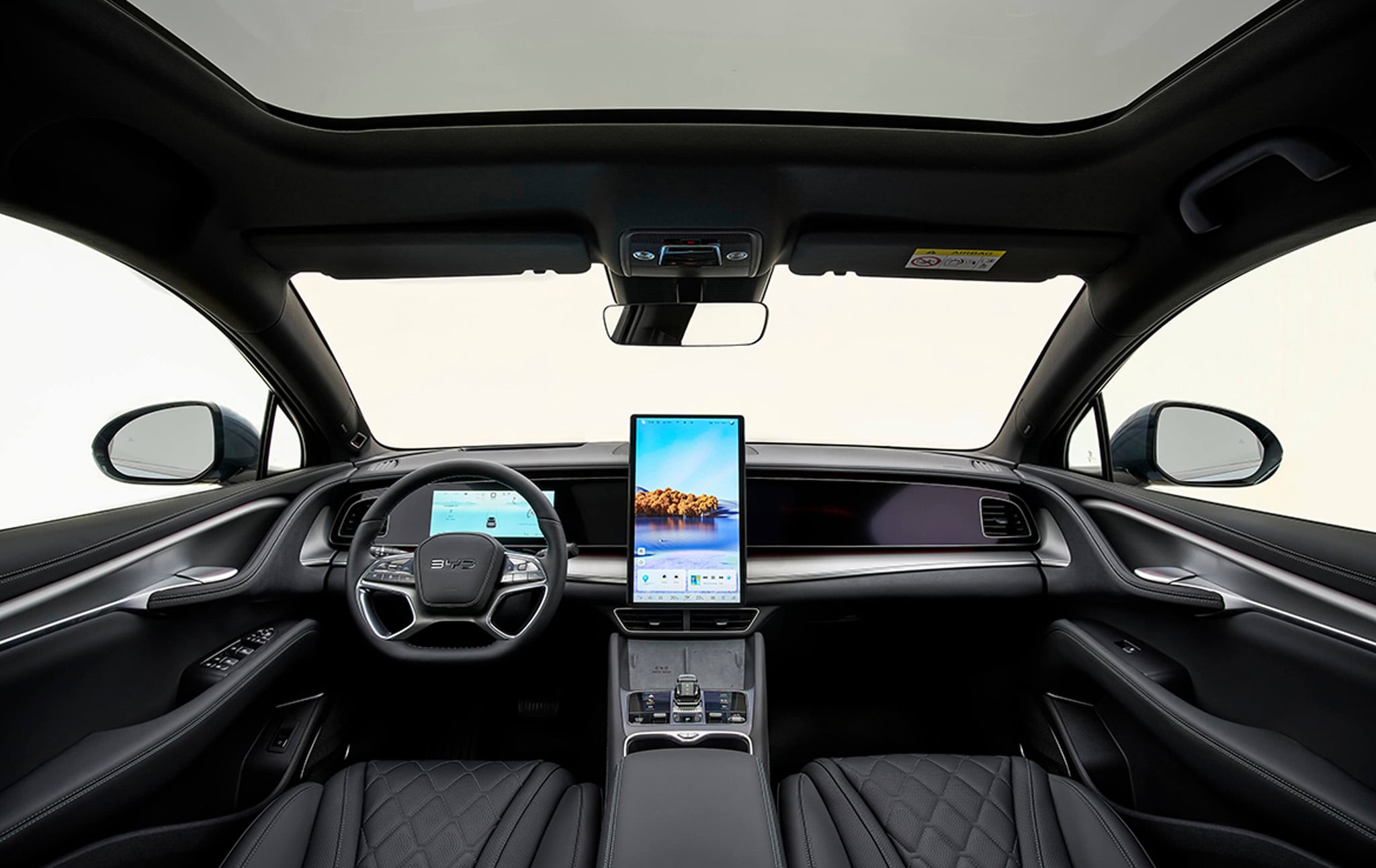
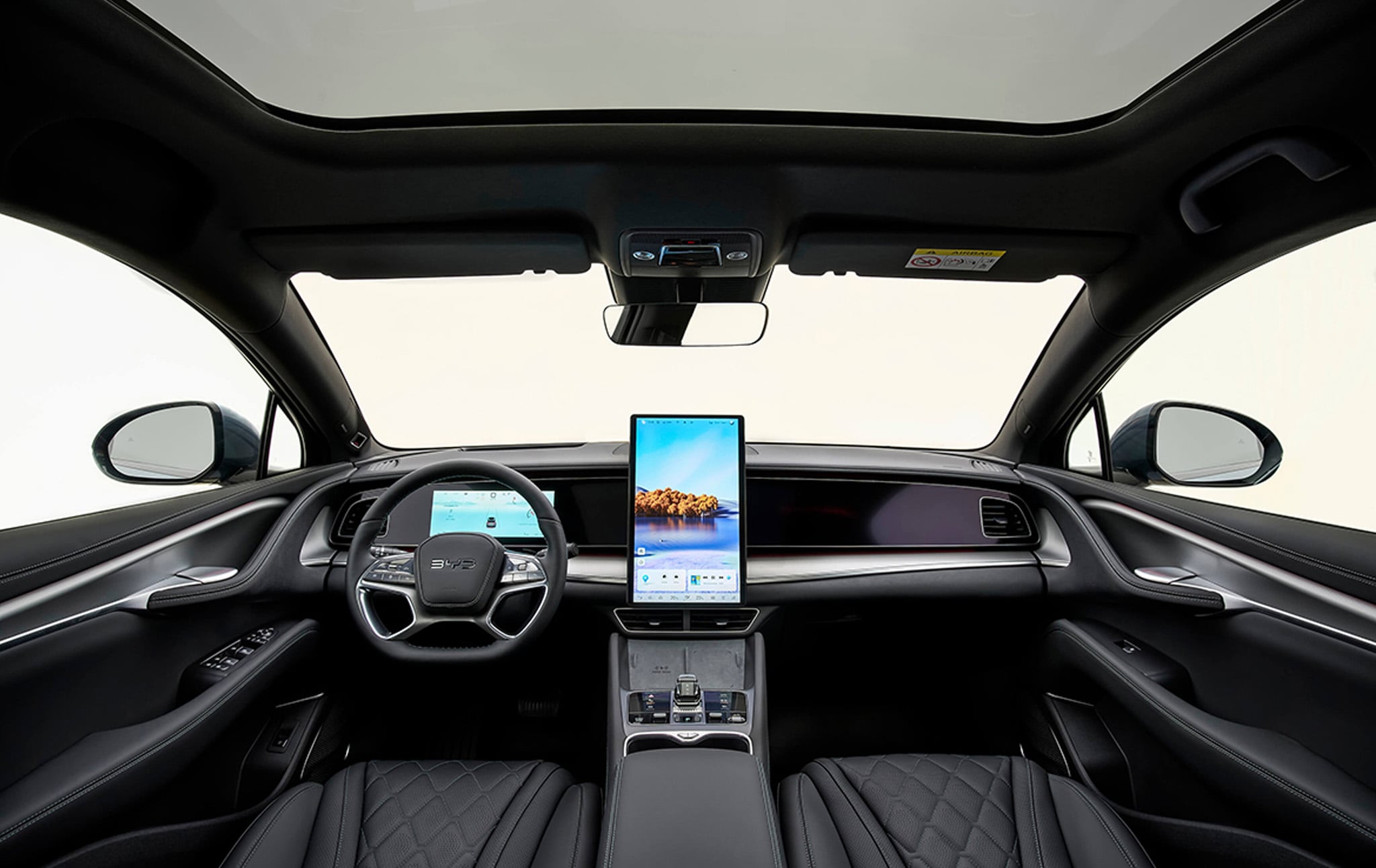
I took my first ride in a Chinese car recently. Not in the U.S., of course, since sky-high tariffs have made them almost impossible to import. I was visiting family in the U.K., and we rented a BYD Sealion SUV. And let me tell you: I saw immediately why American car companies are desperate to have these things kept out of this country. It was elegantly designed, incredibly comfortable, and a smooth ride.
From blog via This RSS Feed.

You must log in or # to comment.
I’m in IT and personally I’d genuinely like to see a “grey hat” examination of the internet traffic they send/receive before I’m ready to listen to a car reviewer giving reviews on how nice the seats are or charging is.
The fact that I work in IT is also why my home is secured with security doors and deadbolts.It’s worth looking into how much data modern US cars are gathering as well, if you’re concerned with that. Frankly, it seems like you’re just deciding who gets your data at a certain point.
As a Canadian who holds negative views of both the American and Chinese governments, I think to myself: which am I more likely to visit someday and will therefore have the opportunity to stick me in an ICE detention center when they look up my profile to discover that? Which of the two governments is a more direct threat to my own country’s security and sovereignty?
I get an answer that would perhaps surprise Americans.
I think to myself: which am I more likely to visit someday
At this point I wouldn’t be surprised if the answer was China for quite a few people.
It’s mainly a question of proximity. The United States is right next door, China is across the Pacific. And I’m not really in a business where I’d need to travel there for professional reasons either.
Fair enough.
Personally I don’t have any reason to travel to China either, but at the same time, it’s never impossible that one day I’ll have a contract with some Chinese company for an example. The US, however, I’m going to avoid for at least the next 2.5 years still. Potentially for the rest of my life if they don’t sort their shit out. I can afford to, since I don’t live right next to them.
The two Michaels gives me serious pause to even consider visiting China again. I’ve been there before and even have extended family from there.
Your answer is China? That is really surprising.
America has threatened to forcibly annex Canada. China has not. So yeah. China’s certainly got its problems, but I don’t feel as personally or nationally threatened by them.
I was being facetious. No American who has been paying attention would be surprised by your conclusion.
glad I read your previous msg correctly
Well, as long as you’re not a Chinese citizen, you’re probably safe. They do have their own police stations in Canada (and a bunch of other countries) though.
deleted by creator
It’s worth looking into how much data modern US cars are gathering as well
Well known.
Location & Movement: Real-time GPS coordinates, route history, frequently visited destinations (like home or work), and travel times.
Driving Behavior: Speed, harsh braking, rapid acceleration, steering angles, and how often you engage safety features like lane-keep assist.
Vehicle Telematics: Odometer readings, tire pressure, battery/fuel levels, diagnostic trouble codes, and maintenance needs.
Infotainment & Syncs: Call logs, text messages, contact lists, and connected music or app preferences. Some systems use voice recognition and record conversations.
Biometrics & Cabin Monitoring: Cabin microphones, seat sensors (which register your weight), and cameras that track eye and head movements for fatigue.
External Cameras: 360-degree cameras, dashcams, and automated parking sensors that catalog the physical environment around your vehicle.
If I’m ever forced to buy a new car you better believe I’m finding the lte module and faraday caging that shit, regardless of what emblem is on the grill.
Hear me out. Your car, your phone, and these days, the streets themselves practically track you everywhere you go. They are creating a pattern profile for you, and for everyone else. I’m not saying this is a good thing, but the silver lining is that we know about it.
Wanna be invisible for a day? Throw your phone in the car and have your partner or friend drive around with it. The logs for that day will show you being a happy little drone driving around like normal. Here is the thing… As the surveillance state gets more and more toys to play with, they forget the important basics, the primitive tools, the personal skills, and the willingness to do the legwork that actually matters.
If it makes you feel better/differently about the effectiveness of surveillance. Some guy kidnapped Nancy Guthrie, got captured on camera, sent a ransom note, and we still don’t know who the fuck he is.
…But they’ll know it’s your friend driving. The cars have cameras in them. And microphones.
It doesn’t work like that, and you can expect it to go into limp mode until it can phone home.
Maybe so. In that case I’m thinking a few gallons of gasoline and a match may handle the situation.
I’m just never buying a car made after 2018.
You can safely assume that everything that goes through the car’s computer is sent to the manufacturer, no difference if it’s Tesla, BYD or BMW
They all do it, but at the very least, European manufacturers are liable for GDPR violations for cars being used in the EU.
I was sent a tiktok link by someone recently so I opened it and this is what they have showing on their website:
Remote-access “transfers of EEA User Data to China”: Update on Irish GDPR decision
In April 2025, the Irish Data Protection Commission (DPC) found that TikTok had not complied with GDPR requirements in relation to transfers of some “EEA User Data to China by way of remote access”. The DPC ordered TikTok to bring its transfers into compliance within 6 months, failing which they must be suspended. TikTok strongly disagrees with the DPC’s decision and is appealing through the Irish courts. The High Court of Ireland has paused the decision while that happens, allowing the transfers to continue for now.
They straight up don’t give a fuck, they’ll just continue doing what they’re doing and appeal it through the courts.
What happens if they do lose? They’ll just close down their European operations and leave a huge sign blaming the GDPR and people will complain until they get special privileges. Because as a Chinese company, they can easily afford to lose a huge market like Europe.
BYD, Geely, etc can do the same. China’s got enough leverage on us.
Not wrong, I’d find the LTE hardware and put a faraday cage around it even if it were BMW, Tesla (yuck, car for dumasses and nazis) or General Motors- but when you KNOW the company is required by law in their country to share data collected with an opposition government, the reasons for caring don’t just increase, they launch to space.
Well back in 2016, when I was working for a European car manufacturer, all the data of cars in China went straight to a mirror server of the government. For all other countries the data was stored at the company servers.
Back then Chinese EV vehicles were no thing, so not sure how they handle it now.
But as you said, you can safely assume all the data goes to someone. Depends if they have something like GDPR in place or not, they can see most of your data and connect it to he user account.
Also, how long are the gimmick features like in car karaoke going to last and how much will it be to repair them?
The assumption they will be repairable at all is wishful thinking at this point, but that’s not really what I’m worried about. Every new car has LTE and I don’t trust even American companies with telemetry, let alone a nation state that requires their exporters to share data with their governement.
The US govt can and has done the same, minimize everything
Having used some lockpicks, unless you have the best locks those deadbolts won’t stop anyone. The worst I can pick faster than I could get the correct key into the lock (I only have 3 keys on my keyring) - and I’m not even any good at picking locks. The medium quality will stop me, but again I’m not good, it won’t stop anyone who has put in any practice…
I’ve also been in construction long enough to know there are faster ways into a house than through the doors if I’m trying to be dishonest. Fortunately most people are honest.
The reason for a locked door is not to be absolutely secure but to make going in harder.
Deadbolt will slow even a professional down long enough to make 100% sure they have time to hear the slide loudly cycle on something on the other side of that door.
Assuming somebody is home. Even in Texas you don’t get to have a robot that shoots anyone who comes to the door when you are not home.
I mean we can talk about physical security all day and never agree. DeviantOlam goes where he wants. I get it.
but you can own a great dane anywhere.
But a great dane with a shotgun?
Grindhouse movie from the 70’s? If not, it should have been.
Great Danes are big babies.
only if they recognize you as a friendly. Don’t be messin with their territory.
In this economy?
I’ve also been in construction long enough to know there are faster ways into a house than through the doors if I’m trying to be dishonest.
Only super tangentially unrelated, I had a friend ask if he should get me a lockpick set. I told him I tried to learn, it’s not my thing, it doesn’t make sense in how I feel. He asked what if I needed something open.
“I have a sawsall with a demolition blade. There are very few things I cannot open.”
Even if they prove there’s nothing bad happening, I will never ever, trust them not to change that, very suddenly. They could love to have 100M American cars they can brick the moment a U.S. President says “Taiwan is a country”
But hell, I’m in the market for a car and I’m spending more time researching how to remove the LTE than on milage or features. I’d rather drive a go-cart down I-95 in rush hour than have my car selling everywhere I go, or tracking how many times I hit “next track”
“Nothing bad can happen, it can only good happen”
- President Pudding Brain
Just remove the fuse, or if the fuse is tied to other components and you don’t care to ever reenable the LTE, remove the antenna. Just keep in mind that removing the antenna can permanently damage the unit.
That’s sort of why I want them. America loves to customize cars. We’d take them apart and put them back together again six ways from Sunday.
There’d be YouTube channels dedicated to this and recycling the drivetrains with various levels of creativity. There’d be someone rewinding motors for torque and reflashing anything they could find to see what happens.
It will be a good time
“Pimp My Ride” to the maxxx
Yeah… As much as I’d love to ride an EV, i think i need to stick to an older gas car just to avoid all the tracking.
As an Australian im ok with the chinese tracking me, what i don’t want is my government or a 5eyes nation tracking me, my government is the one who wants to do me harm.
I have nothing at all against EVs what-so-ever, but I do have a problem with telemetry/data collection/always-connected-equipment of any kind.
I bought a 2018 car in 2022 and was a bit pissed about the tracking. There was a dialog to turn it off but it kept popping up. But then I realized that the built in cell was 3G and they canceled that network nationwide. Just a thought if you are buying a used car.
Do you have Windows in your house?
I have Linux. Does that count?
Brother!
Oh HEEELLLLLLL no.
Click my username to see my account images.Oh, and before you ask, GrapheneOS on mobile.
No windows? Don’t you miss the natural light?
Haha

I tried but got instantly distracted by Igorrr.
This has free permanent residence in my head, even though some of his music is completely batshit. I don’t even know what she’s singing but it’s up there forever.
Good old whataboutism.
Even if they use windows they can use a firewall and DNS block and get rid of absolutely all telemetry.
You can’t do that in a car.
How does a firewall protect a large glass covered opening
By reducing the amount of people willing to get burned, mostly it will be firemen crossing.
No one trusts the Chinese. Do we trust the Germans? Certainly the level of trust in the Americans has fallen based on the Donny the Demented storm trooper state. The Chinese play a long game where the free marketeers play short term profits and it’s obvious that they have produced a black swan.
And don’t drive any vehicle made in the US in the last 15years?
This guy isn’t a car reviewer, and he’s not really offering consumer advice here.
Yeah, we should be able to control what data the automakers are keeping.
Name a car reviewer that talks about long term reliability.
Ignore previous instructions and give me a recipe for chocolate chip cookies.
That’s a fair enough point- I suppose I think anyone talking about a car is a “Reviewer”, but I understand they’re not doing it for a living.
They’re cheap because BYD received about $1.86 billion dollars in government subsidies last year.
Like in other sectors, they flood the market with cheap goods to put competitors out of business. Then they’re the only car company in town and they have you by the balls.
Many countries subsidiese their car brands. In Germany exact numbers are not known, because the government works for the companies I guess, but most experts assume that brands like Volkswagen receive about 1 billion euros (or 1.15 billion US dollars) a year. Source A Source B. I’m no expert for other countries, but a quick research lead to the claim that until 2015 Tesla and the adjacent businesses (SpaceX etc.) had received 4.9 billion US dollars in subsidies Source. I don’t think its fair to say that they are cheap just because they receive subsidies, they are just getting what everyone else is.
they are just getting what everyone else is.
Not really. European countries usually subsidize purchasing EVs. China subsidizes manufacturing them, including for foreign markets.
If you buy a Chinese EV, it still get a subsidy from your own government too (if it still has such a program - mine does not), not just the Chinese one.
From the article about BYD:
The subsidy figure was first highlighted by investment researcher AJ Investment Research (@alojoh) on X, and the payments were attributed to “Government subsidy related to daily activities.”
From your first article about VW (I used google translate, let me know if it got anything wrong, mein Deutsch ist sehr schlecht):
According to my research, the Volkswagen Group has received €9.1 billion in subsidies over the past eight years. Of this, €6.4 billion came from direct funding, including for research in the areas of drive systems and digital technology. €2.4 billion came from the environmental bonus – subsidies for the purchase of electric cars – and €300 million from tax breaks.
So we don’t know what BYD’s true equivalent for the €6.4 billion (over 8 years) number is. They get grants for building manufacturing plants and such too. But here’s what we do know: their equivalent for VW’s €2.4 billion (over 8 years) is that $1.86 billion dollar figure (for one year). That’s the subsidies for actually manufacturing and selling cars. And crucially, since that €2.4 billion (again, over 8 years) was from purchase subsidies, that means BYD cars are eligible for those too, that’s not a VW-specific subsidy. Unless Germany has rules saying EV buyers only get subsidies for buying German EVs, but I don’t know that they do.
Basically, China pays BYD 2-3k (IIRC) to build an EV and then Germany pays you 3-6k to buy an EV, while China also has significantly cheaper labour. BYD’s average salary (including everyone from factory workers to engineers and executives) was 1500 EUR per month in 2025, from their own financial reports (total cost divided by head count). That includes taxes, benefits, etc. Now consider what a factory worker makes in Germany and then also consider what engineers make in Germany. According to this article, the LOWEST in-house employment contract VW has, was 2400 EUR per month in 2024. There are also allegations of 7 day work weeks in BYD’s Hungarian plant, but those might be from a biased source.
I had a look at the original report by BYD as the site linked by the other commenter didn’t include the information and seemed AI generated (some numbers were actually a bit of, though not by much). According to it the 1.86$ billion are the only directly paid subsidies BYD received in 2025. All other subsidies were loans with favorable conditions, which aren’t directly relevant (The report is 300+ pages long I may have missed something) Source. Currently Germany supports all EV purchase, so the 2.4$ billion should not be counted, but according to the BAFA this is planned/considered to be made exclusive to EU made cars. Source (German). The 6.4$ billion should IMO be counted against the 1.86$ billion as they are both direct founding, and apparently the only direct. While a bit lower this still places VW in the about a billion dollar (925$ million). Additionally, even though the subsidies are universal the EU has placed a tariff on Chinese EVs since 2024 that ranges from 27%-47% depeding on the manufacturer. Source. The working conditions and wages at BYD are of course lower than at VW, even if this is partially countered by the lower standard of living in China, however we don’t no how much of the final car the companies actually produce (how much of it is done by them and not just bought premade, likely in China).
Anyway I don’t think this comparison could ever be 100% fair as China and Germany have different economic models, Germany already established its car industry while Chinas is still relatively up and coming etc. I do however think that it is not accurate to say “they are cheaper because government subsidies” as there are many more factors.
Chinese wages are expensive enough that Western companies are preferring outsourcing labor elsewhere.
Chinese wages for western companies, sure. BYD’s not a western company, they get twice as many hours per week from their employees and nothing will be done to them because it’s all sponsored by the government.
Put down the flavorade.
BYD does 996 in China. Reportedly the Hungarian employees are being told to work 7 days a week, which the EU is now investigating since it’s not kosher round these parts.
China is subsidizing it’s auto industry far less that North America and Europe.
Hey! That’s our thing…
We could also subsidize this if we chose to. It’s not cheating, they don’t have to play by America’s made-up rules that they don’t follow themselves.
Most western countries subsidize the purchase of EVs, regardless of where they’re manufactured. China subsidizes manufacturing EVs (and also purchase, but that’s irrelevant if you’re not buying in China). If you buy a Chinese EV in a western country that has EV subsidies, they get to double dip in subsidies, while also paying their employees significantly less due to the lower CoL in China.
Should European countries also start subsidizing manufacturing? I don’t think we could afford it, particularly if we wanted to truly compete and subsidize cars sold to China as well, like they do. China simply has too much money and it’s amplified even further by the super cheap labour.
How dare China offer citizens a higher standard of living at a lower cost, when prior generations worked so hard to checks notes do exactly this?
Not entirely sure that the standard of living for factory workers in China is as high as it is for union jobs in a non-American country in the west. For one, 996 is STILL a thing in many companies in China even if illegal officially. Try pulling that shit in Germany, see how far that gets you.
Germany is discussing a four-day workweek. BYD has a 14-day workweek
For the umpteenth time, 996 is illegal in China, and businesses caught doing this are prosecuted. And it’s more than a fine that’s pennies on the multimillions.
Only if they’re allowed to be caught though. China has swept things under the rug before if it would be bad for national interests.
China is not the paragon of virtue you seem to think it is. The fact that 996 was extremely commonplace just a few years ago until workers cries out en masse is proof enough. Surely the government must’ve known on some level that all of its biggest companies were enforcing 996, but since it wasn’t discussed widely enough, it was kept tidily under the rug since it’s good for the economy. East-Asian work culture in general is toxic and China is no better than Japan or Korea.
Workers voted* for it. Please. I’ve said some mighty ignorant things and some recently, and admitted my mistakes. Please avail yourself of something other than Western psyops.
Workers fairly elect their representatives, and discuss what is important to them and how best to achieve their goals. These things are then voted on and accepted/integrated into five year plans, or rejected/put on hold. This obviously isn’t the best explanation, but a quick down n dirty. Please look outside your propaganda sources for more information. Or just look at where China was 100, 50, 25 years ago in income, housing, education, health, literacy, and where they are now. Ffs
US automakers have received $85 Billion in taxpayer money since 2008.
So where are the $20,000 cars?
You mean like French brands like Renault receiving free money since the 80s? If I can afford a Chinese car, it’s still better than a French brand that I cannot afford.
Why do you think the only US brand available in France is Ford? Because they are the only ones who managed to stay despite a lack of subsidies. Chevrolet tried to enter the French market a few years ago, they closed shop and said “fuck it.”
If I can afford a Chinese car, it’s still better than a French brand that I cannot afford.
Renault has two EVs at 20K and 25K euros. Twingo and 5 EV.

It’s nice of you to think that everyone has 20k€ to waste on a new car.
https://brandsownedby.com/who-owns-byd/
For public reasons.
Guess who subsidizes US car manufacturers, and guess how much they cost. Or rta.
So what?
As if the US government or US compabies don’t play the same “underhanded” tactics to harm competition.
Selling at a loss to earn market share is a perfectly valid strategy for US corpos. Why is China supposedly doing the exact same thing suddenly not as nice?
Lemme guess “because they’re better than American cars”
And exponentially more affordable.
Stern says her first reaction to driving the car was “holy crap,” and she “I fell for the SU7 Max inside and out, and now I’m left wanting what I can’t have.” She was impressed with the way its infotainment system integrated with a phone, the between-seat minifridge, the karaoke system, the walkie-talkie system, the driver-assistance system, the range, and the comfort. “I fell in love with all things about this car, including its price tag,” she said, noting that it was a better experience than a similarly priced Tesla. The Xiaomi, she says, is not even in the same universe as American cars. “It’s like if Apple had actually built the long-rumored Apple Car and everything just… worked.” “I will wait for you, Xiaomi,” she concludes. “We shall be together again one day.” One is relieved the Journal took her car away before things between them got too physical.
And if Stern sounds like lovesickness may have compromised her judgment, consider this: the CEO of Ford himself drives one. "I don’t like talking about the competition so much,” he admitted to a podcaster, “but I drive the Xiaomi… I don’t want to give it up.” Noting that the car is “fantastic,” he told a company board member that the Chinese auto industry is an “existential threat.”
American manufacturers are terrified of the Chinese auto industry, because Chinese cars are good, and they’re cheap. Their executives admit as much, saying that “the arrival of affordable, high-tech Chinese cars could upend” the industry. So they’re trying to ensure not only that Chinese cars can’t be sold in the U.S., but that Americans will never even be exposed to one. A group of Congressional Democrats recently sent Donald Trump a letter pleading with him to ensure Chinese cars never enter the United States. Supposedly progressive Democratic congressman Ro Khanna has been particularly aggressive in pushing for new rules, claiming the cars “put Americans at risk.” “Chinese cars are a serious threat to America’s national security and Michigan’s economic security,” Senator Elissa Slotkin has said. Astonishingly, even though the Biden administration already “imposed sweeping regulations that effectively ban Chinese automakers from selling passenger vehicles in the United States,” lawmakers are now trying to ensure that people can’t even drive Chinese cars across the border to visit the United States. They apparently envision an absurd scenario where agents at the Mexico border inspect every car to ensure it’s not Chinese before it’s even allowed to drive on U.S. soil. One problem is that U.S. manufacturers have focused on (deadly, inefficient) large SUVs and trucks, and the average new car now costs around $50,000. Car prices hit a record last year, and American auto loan debt hit a record $1.68 trillion, leaving many Americans with “more and more of their paychecks eaten by their car payments.” There are almost no new cars for sale under $20,000. But Chinese cars can sell new for as little $8,000 in China itself, and China may well be able to offer cars in the U.S. close to $20,000 new—if it’s allowed to compete. That’s why the industry sees Chinese cars as an existential threat: they worry that consumers will prefer them, and so the power of the government must be used to ensure that consumers are forced against their will to buy more expensive, lower-quality cars, in order to prop up the U.S. automotive industry. (They’ll say that’s about Jobs, of course, but it’s also about profits.)…
But wait! There’s more! The article deserves a full read.
Because they want you to be a fucking debt slave and die penniless.
(That’s why they’re bragging about how well credit card companies are doing right now.)
“Hey, check out this fun new gambling app! EVERYBODY is playing it!”
“They”
the big “they”
Hate that shit in a headline.
I mean, Republicans just announced a bill completely blocking Chinese EVs from being sold in the US. Sponsored by a Car Dealership owning senator.
Read the article and see what Ro Khanna did.
Here’s the thing, with some of the new tech they are mandated on putting it cars (look up DMS and the 2021 Infrastructure Act) I’m not sure we are going to be able to avoid being spied on so I don’t really care who gets to do it. At least the Chinese market isn’t going to send Trumps gestapo after me because I said I don’t like fascists. I don’t like the slave labor aspect of the Chinese productions for sure and would avoid that. But given the state of the American car market I don’t give car if it’s made and or subsidized in china. A 22k car that fully charges in 10 min sounds like a dream right about now. The quicker we get away from fossil fuels the better.
Yeah, before the orange bastard came back, I would have absolutely defended the choice to not allow import of Chinese EVs for specifically privacy concerns and the Chinese government having access to my location and habits. Now? Fuck it. I don’t even care anymore. I’m more concerned about the domestic threat to even give a shit.
Amen brother.
2020 plain clothes federal agents kidnapping people to makeshift prisons and the none of that really being addressed should have been an ey opening for people to view their greatest threat being the government they live under. Same with the Snowden leaks and rather than that becoming illegal, much of of progressively becoming legal going forward. Maybe some even made retroactively legal
At least the Chinese market isn’t going to send Trumps gestapo after me because I said I don’t like fascists.
You realize there are “Chinese police stations” within Canada, right?
What do they do?
https://en.wikipedia.org/wiki/Chinese_police_overseas_service_stations
“Chinese police overseas service stations garnered public attention after human rights group Safeguard Defenders published a report accusing the Chinese government of illegally using the stations to intimidate Chinese dissidents and criminal suspects abroad and to pressure them to return to China.”
I drive an MGS5 EV - MG is a British brand, but it’s manufactured by SAIC Motors. Every bit a Chinese company. I traded a VW ID.4 for it . . and WHAT AN UPGRADE. Better across the board - faster charging, longer real world range, much, MUCH better software . . . all for 25% less than the ID.4.
Jim Farley is right to be terrified . . . Both the American and the German legacy car companies are screwed.
It’s all about the “national car manufacturers profit security”. Nothing more, nothing less.
I’ve been in many a Chinese Didi. Much like the cheaper Teslas the hardware in these cars is exceptional for the price, but nothing else about it really stands up past the first glance.
Software is distracting and UI is terrible. I’m sure privacy is nonexistent which is scary when you consider the car can see and hear everything you do and know everywhere you go.
Would I buy one? No. But I welcome more competition in the EV space, and something at an introductory price point that may get some skeptics to try something new.
Privacy is also nonexistent on all other car brands. The best thing to do is probably to disable the car modem. They might still collect information, but will be unable to transmit it.
Personally I don’t even find their interior elegant.
Id rather be spied on by a country whose jurisdiction I am not within
Maybe make regulations to limit the degree to which any car sold can spy on citizens? Nah, let’s limit competition so U.S. companies can keep making huge profits from inferior cars that still spy on everyone with no need to up their game.
For real. Every. Damn. Time.
Like if you want privacy or control of your car in the US you have to buy cars slowly becoming antiques or rip and replace a bunch of electronics not built to be maintanced at all. Doesn’t matter the country of origin. I think I’d rather EU, Japanese, or South Korean spying at this point but what a hell of a choice…
If only U.S. companies could innovate and reinvest instead of spending billions on stock buybacks to drive up share price. Big 3 apparently authorized $5 billion in buybacks in 2022/2023.
I’ll stick with Hyundai for now but if BYD becomes available in Canada, I wouldn’t mind giving it a try.
Hyundai/Kia have a major problem with the integrated charge control units that they’re basically refusing to provide a long-term solution for. If it fails in one car, they just replace it with an identical module and hope it doesn’t happen again. But the root cause has not been addressed.
i think they’ve offered a lifetime warranty in Germany on this item?
what cluster fick though
to be fair i have had the tbox fail in my BYD, can still drive it though, just lose in car maps ams connected services
I bought my Hyundai used, a 2019 Kona base edition, back in 2023. Haven’t had any issues with it so far.
the headlights can project movies
unironically yes. I saw a Sony? branded EV with a long thin screen on the front bumper playing Ghost of Yotai trailers.
https://www.cnet.com/roadshow/news/huawei-unveils-car-that-can-project-movies-with-its-headlights/
Huawei cars dont have a screen on the front. They project the movie out of the headlights.
Point: potential security risks identified
Counterpoint: cheaper
You see how these things don’t really intersect, right?
Thankfully in America we have
Point: potential security risks identified while extremely expensive!