So the concerns related to LED frequencies are real?
I saw some chatter about them causing headaches, eye strain, and disturbing circadian rhythms, but I hadn’t looked further into it to see if it was legit or a “you should use red light on your balls” health influencer type of thing.
I would get headaches from watching PAL (50Hz) CRT TVs for a long time. 60Hz monitors were noticeably better, and 75 or more was good to endure all day. Modern screens don’t go blank between refreshes (except PWM-based AMOLED) so the refresh rate is mostly irrelevant unless you want to shave off a few milliseconds of latency for serious gaming (then it’s best to match the refresh, render FPS and video signal).
But as I’m walking down the street and move my eyes, I notice cheap lighting whose drivers don’t smooth the 100Hz ripple of rectified AC. Especially if they reach 0% brightness during the ripple. This applies to:
sodium and mercury vapor lights in street lamps
single-board (aka mains-voltage) LED modules in cheap, powerful reflectors
any LED bulb or fixture with a constant-current driver whose mains smoothing capacitor is too small or has failed due to heat (however, some such as EMOS and Solight spherical 18W ones refuse to turn on if the capacitor gets too bad, making for an easy repair)
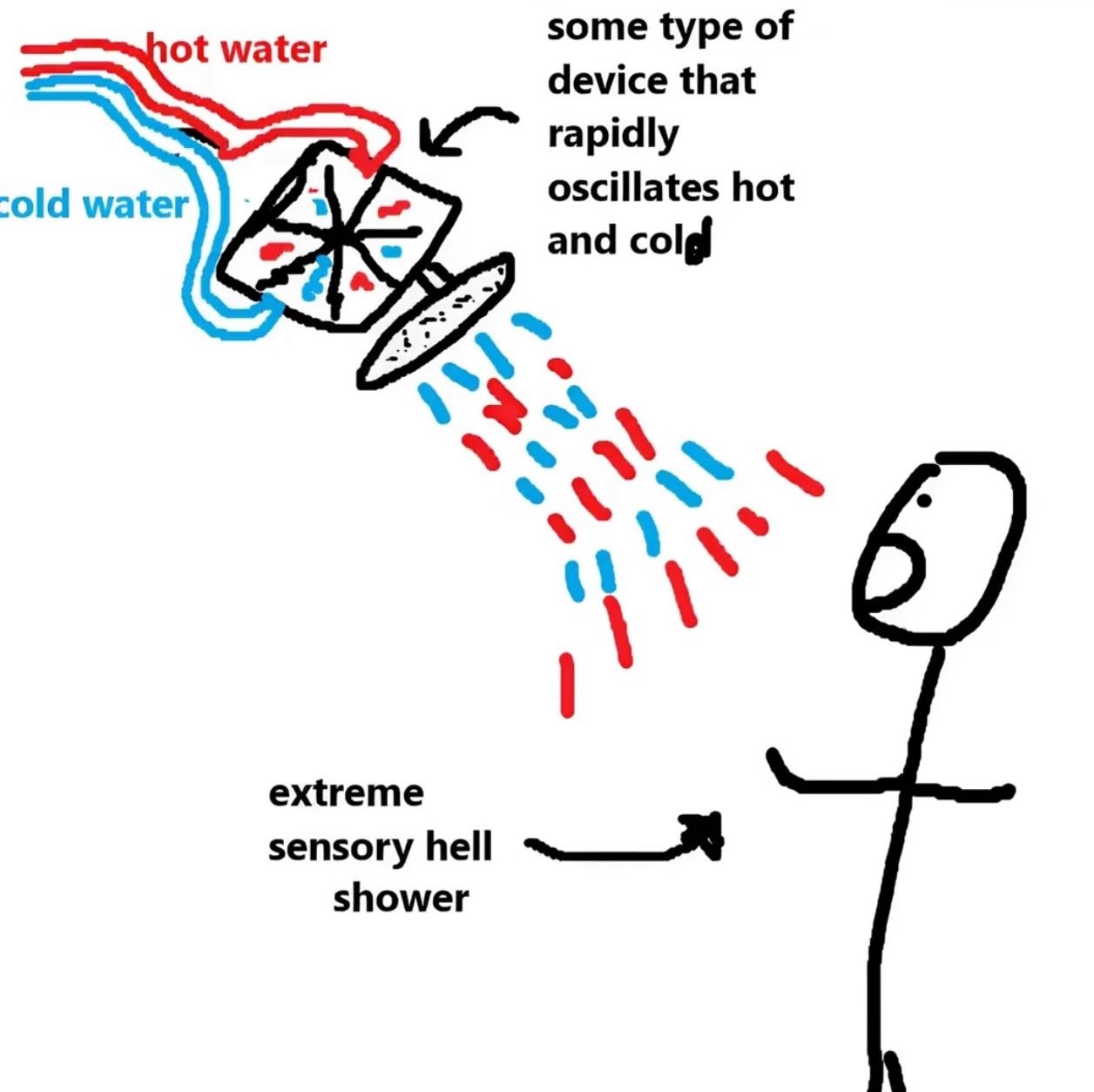
any dimmable light powered from DC (like 12V and 24V non-addressable LED strips with those cheap flat remotes, or multi-mode flashlights) whose manufacturer was too cheap for a constant-current driver (fair enough) but could have very easily set a higher PWM frequency YET DIDN’T and therefore deserve a PWM shower.
This is especially annoying with RGB ones because the hue changes during the cycle, creating off-color fringes or even “rainbows” when moving my eyes. I can’t believe some people use things like that in/on/around their battlestation: this would totally distract me as my eyes dashed around the monitor while gaming.
multiplexed displays, especially with low duty cycles (look up charlieplexing, chances are your powerbank or similar gadget uses that to minimize the pin count of its chip) - these are usually over 100 Hz though
So yeah, it’s not unhealthy, especially above 60 Hz. But it’s annoying for me to look around badly smoothed Christmas lights. And if they are of different phases (this is uncommon for Christmas lights (and even impossible in most American homes because they have 180° aka split-phase 240 V, not 120° 400 V) but always the case with multiplexed displays), I say a long rolling R to vibrate my face and see them wiggle.
When very drunk, I’ve seen the flicker of normally-functioning fluorescent lights and was theorizing whether my “nervous system was desynchronizing” or if it was nystagmus-related, or if there was even a difference between those two.
The ends of fluorescent tubes with traditional EM ballasts flicker at 50/60 Hz because the filaments take turns being the cathode and anode based on the current polarity of AC, which is perceptible in peripheral vision. And some long tubes have waves on their arcs, causing travelling ripples of bright spots. But without a more advanced ballast, there’s just the phosphor smoothing the 100/120 Hz ripple, which is not very effective (and usually, yellow phosphor lasts longer than blue, resulting in color banding in video) but that’s not normally perceptible.
I never thought alcohol would make the brain work faster though, thanks for sharing!
Wait, I’m a specialist lighting designer and i haven’t heard about this < 100hz LED is bad stuff. From my experience, frequencies at around 50hz or lower is what usually causes eye strain/headaches etc.LEDs are typically 60hz.
I’m guessing the >100hz crowd just need to go outside and touch grass for a few hours a day.
LEDs aren’t 50Hz or 60Hz or anything else. They’re DC devices and they don’t flicker at all if you run them on a clean DC power supply.
The issue with LED bulbs is that they don’t have clean power supplies. They have very simple AC to DC, usually a capacitive dropper. Without filtering, this type of cheap power supply produces a lot of ripple which manifests in visible flicker at the same frequency of the input AC mains power.
Yup. Except they flicker at double the mains frequency because they use both the positive and negative half-cycle thanks to a FULL BRIDGE RECTIFIER.
And see my other comment: it’s not unhealthy, just annoying. To be honest, I use trash-picked LED bulbs and repair them, and I don’t normally care to replace a poor smoothing capacitor. In rooms I spend much of my time, I make sure most bulbs in the fixture are low-flicker (it’s arbitrary but generally don’t get below 75%) for comfort. I’m not peculiar about light quality like CRI and matching color temperature unless it’s very obviously bad, although I do notice the circadian effects of cold white light. I do mark badly flickering bulbs though so I know not to put too many of them together unless it’s somewhere non-consequential like a cellar. I also hold my phone camera to any neutral-white E27s I salvage to find and mark true flicker-free ones because I use them while filming.
That just means the driver is not flicker free, not the LED board itself, and there are flicker free drivers out there but they’re just not available for the average consumer.
But visible flicker? On an LED that’s just emitting light? I’ve never seen that before. Maybe it’s a UK and Europe thing.
I live in Canada (60Hz here) and I just installed a new range hood above my stove. It came with standard recessed halogen light fixtures with LED bulbs. Rather than being fully dimmable, the switch has high and low settings. When set to low, I can definitely see visible flicker.
I also have this same style of lights above my bathroom mirror and a dimmer switch there. They also display more and more flicker when dimmed.
Ah. That’s a driver issue again. The dimmer is adjusting the voltage, and it the voltage dips too low, the LED chips don’t have enough juice to run. Hence the flickering. If there is a driver attached to your LEDs, you might want to consider a 0-10V driver or one that specifically says flicker free.
EldoLED drivers are excellent for this but costly because they’re commercial grade.
Ah connected to mains. There would be a way to add a driver in between but will require an electrician and it’s just not worth it if you can just put it to high output.
Poorly made LEDs actually flicker at 120Hz on 60Hz mains, see my other comment. And it’s more like a pet peeve, only below 60 Hz is actually headache-inducing. Unless it’s specific circumstances (I couldn’t stand a cheap 120Hz PWM RGB strip close to a gaming monitor because I’d see annoying “rainbows” as my eyes dash across the screen). More details in my other comments.
Very interesting! My pet peeve is glare and LEDS produce an ungodly amount of glare and I absolutely hated them in car headlights. I’ve never heard of anyone irritated by hz that high before. The more you know. Thanks for clarifying.
Glare? That’s not a physical property of LED light but an effect of overly bright headlights enabled by LED and laser technology.
Except my eyes do a kind of color aberration where I see different wavelengths in slightly different spots when squinting, and the peak of blue that most white LEDs’ spectra have makes for a clearly visible fringe. I wouldn’t really call that “glare” though.
Red light on your balls? Sounds plausible - no more balls ache from PWM. I’ve got to give it a try. But how am I going to get the lamp into my pants? Also, the power chord is too short to leave the room.


So the concerns related to LED frequencies are real?
I saw some chatter about them causing headaches, eye strain, and disturbing circadian rhythms, but I hadn’t looked further into it to see if it was legit or a “you should use red light on your balls” health influencer type of thing.
I would get headaches from watching PAL (50Hz) CRT TVs for a long time. 60Hz monitors were noticeably better, and 75 or more was good to endure all day. Modern screens don’t go blank between refreshes (except PWM-based AMOLED) so the refresh rate is mostly irrelevant unless you want to shave off a few milliseconds of latency for serious gaming (then it’s best to match the refresh, render FPS and video signal).
But as I’m walking down the street and move my eyes, I notice cheap lighting whose drivers don’t smooth the 100Hz ripple of rectified AC. Especially if they reach 0% brightness during the ripple. This applies to:
So yeah, it’s not unhealthy, especially above 60 Hz. But it’s annoying for me to look around badly smoothed Christmas lights. And if they are of different phases (this is uncommon for Christmas lights (and even impossible in most American homes because they have 180° aka split-phase 240 V, not 120° 400 V) but always the case with multiplexed displays), I say a long rolling R to vibrate my face and see them wiggle.
When very drunk, I’ve seen the flicker of normally-functioning fluorescent lights and was theorizing whether my “nervous system was desynchronizing” or if it was nystagmus-related, or if there was even a difference between those two.
The ends of fluorescent tubes with traditional EM ballasts flicker at 50/60 Hz because the filaments take turns being the cathode and anode based on the current polarity of AC, which is perceptible in peripheral vision. And some long tubes have waves on their arcs, causing travelling ripples of bright spots. But without a more advanced ballast, there’s just the phosphor smoothing the 100/120 Hz ripple, which is not very effective (and usually, yellow phosphor lasts longer than blue, resulting in color banding in video) but that’s not normally perceptible.
I never thought alcohol would make the brain work faster though, thanks for sharing!
Wait, I’m a specialist lighting designer and i haven’t heard about this < 100hz LED is bad stuff. From my experience, frequencies at around 50hz or lower is what usually causes eye strain/headaches etc.LEDs are typically 60hz.
I’m guessing the >100hz crowd just need to go outside and touch grass for a few hours a day.
50Hz is what you’ll find in the UK and Europe.
LEDs aren’t 50Hz or 60Hz or anything else. They’re DC devices and they don’t flicker at all if you run them on a clean DC power supply.
The issue with LED bulbs is that they don’t have clean power supplies. They have very simple AC to DC, usually a capacitive dropper. Without filtering, this type of cheap power supply produces a lot of ripple which manifests in visible flicker at the same frequency of the input AC mains power.
Yup. Except they flicker at double the mains frequency because they use both the positive and negative half-cycle thanks to a FULL BRIDGE RECTIFIER.
And see my other comment: it’s not unhealthy, just annoying. To be honest, I use trash-picked LED bulbs and repair them, and I don’t normally care to replace a poor smoothing capacitor. In rooms I spend much of my time, I make sure most bulbs in the fixture are low-flicker (it’s arbitrary but generally don’t get below 75%) for comfort. I’m not peculiar about light quality like CRI and matching color temperature unless it’s very obviously bad, although I do notice the circadian effects of cold white light. I do mark badly flickering bulbs though so I know not to put too many of them together unless it’s somewhere non-consequential like a cellar. I also hold my phone camera to any neutral-white E27s I salvage to find and mark true flicker-free ones because I use them while filming.
That just means the driver is not flicker free, not the LED board itself, and there are flicker free drivers out there but they’re just not available for the average consumer.
But visible flicker? On an LED that’s just emitting light? I’ve never seen that before. Maybe it’s a UK and Europe thing.
I live in Canada (60Hz here) and I just installed a new range hood above my stove. It came with standard recessed halogen light fixtures with LED bulbs. Rather than being fully dimmable, the switch has high and low settings. When set to low, I can definitely see visible flicker.
I also have this same style of lights above my bathroom mirror and a dimmer switch there. They also display more and more flicker when dimmed.
Ah. That’s a driver issue again. The dimmer is adjusting the voltage, and it the voltage dips too low, the LED chips don’t have enough juice to run. Hence the flickering. If there is a driver attached to your LEDs, you might want to consider a 0-10V driver or one that specifically says flicker free.
EldoLED drivers are excellent for this but costly because they’re commercial grade.
There’s no driver. These are bulbs designed for traditional halogen fixtures which connect directly to 120V mains AC.
Ah connected to mains. There would be a way to add a driver in between but will require an electrician and it’s just not worth it if you can just put it to high output.
Electrician? I do my own electrical work! This issue is pretty low priority for me though. I have a ton of other things to fix around the house!
Has to be 8k 240fps grass, though.
Grass is bad, anyway. It’s photosynthesis uses up most of the visible light.
Poorly made LEDs actually flicker at 120Hz on 60Hz mains, see my other comment. And it’s more like a pet peeve, only below 60 Hz is actually headache-inducing. Unless it’s specific circumstances (I couldn’t stand a cheap 120Hz PWM RGB strip close to a gaming monitor because I’d see annoying “rainbows” as my eyes dash across the screen). More details in my other comments.
Very interesting! My pet peeve is glare and LEDS produce an ungodly amount of glare and I absolutely hated them in car headlights. I’ve never heard of anyone irritated by hz that high before. The more you know. Thanks for clarifying.
Glare? That’s not a physical property of LED light but an effect of overly bright headlights enabled by LED and laser technology.
Except my eyes do a kind of color aberration where I see different wavelengths in slightly different spots when squinting, and the peak of blue that most white LEDs’ spectra have makes for a clearly visible fringe. I wouldn’t really call that “glare” though.
Red light on your balls? Sounds plausible - no more balls ache from PWM. I’ve got to give it a try. But how am I going to get the lamp into my pants? Also, the power chord is too short to leave the room.